Yule is the midwinter festival of the old Germanic world, the season Christmas later absorbed, and the name modern witches and pagans give to the winter solstice. In 2026 the solstice falls on Monday 21 December, the longest night of the year in the northern hemisphere. Modern Yule celebrations are usually built around it: a vigil through the dark, fire or candlelight, evergreens in the house and a sunrise watched on purpose.
Much of what gets called ancient about Yule is younger than you would think, and some of it is genuinely old. This guide sets the dates straight first, then dresses the table and the person for the night itself. Every piece we sell that appears here carries its sizes and price as listed in November 2026.
Key Takeaways
- Yule 2026 begins at the winter solstice on Monday 21 December; the exact moment is 8.50pm GMT.
- The word is old: Bede recorded the midwinter months as Giuli in 725. The eight-festival witches' calendar that puts Yule on the solstice is a twentieth-century arrangement.
- The earliest English description we found of a log brought in and burned at Christmas is Robert Herrick's, printed in 1648, and he calls it "the Christmas log".
- A Yule table needs a log, evergreens, moons that catch candlelight and something warm to drink. Every decoration on this page is unsized and costs $19.99 to $32.76.
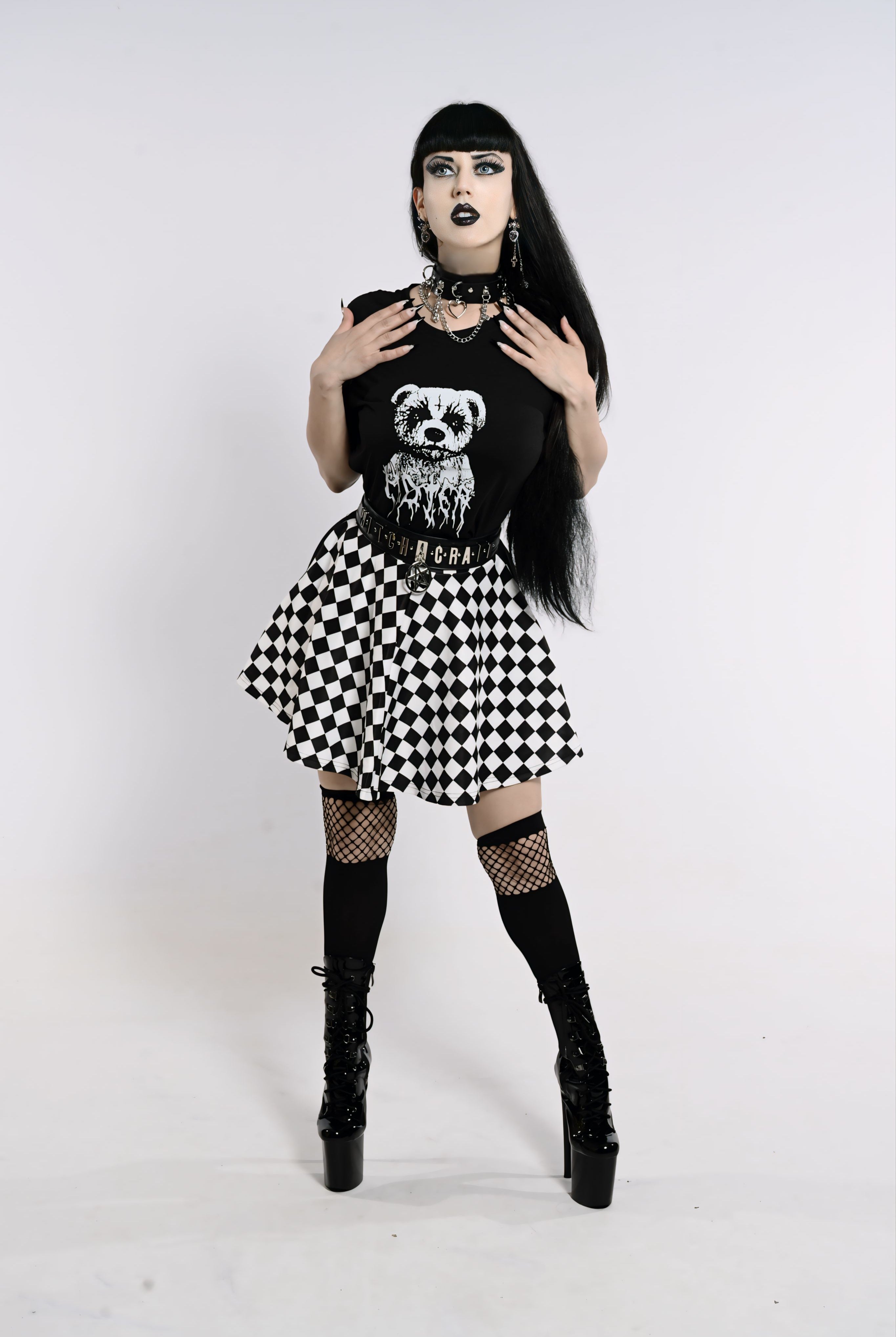
- Dress for a long, cold night rather than for a costume party: velvet and lace, forest green, or a moon-phase tee in red that runs to 5XL.
What is Yule?
Yule is a winter festival that was kept by the pre-Christian Germanic peoples of northern Europe and was later folded into Christmas; today it is also a festival of modern Paganism and witchcraft, held at the winter solstice. The word survives in Old English as geol and in Old Norse as jól, which is still the ordinary word for Christmas in the Scandinavian languages (jul in Swedish, Danish and Norwegian).
What the original festival involved is known only in fragments. The surviving sources were written by Christians, sometimes centuries after the fact, and they describe feasting, drinking and sacrifice more than anything a modern witch would recognise as ritual. So when a modern witch keeps Yule, she is borrowing an old name and a handful of old customs for a celebration that is largely her own. Most living festivals work this way.
When is Yule in 2026?
Yule 2026 starts on Monday 21 December, the date of the winter solstice. According to Royal Museums Greenwich, the solstice itself happens at 8.50pm GMT that day, and it gives the year's fewest hours of daylight in the northern hemisphere. In the southern hemisphere the seasons are reversed, so witches in Australia and New Zealand keep Yule at the June solstice instead.
How long Yule lasts depends on who you ask. Some witches keep a single night, the solstice eve. Others keep twelve nights, which from 21 December runs to New Year's Day. Either is a choice, not a rule, and the twelve-night version echoes the twelve days of Christmas.
What is actually old about Yule?
The name is old, a few customs are old, and the witches' calendar that frames Yule today is modern. Four dates show where each piece comes from.
| When | What the source says | Source |
|---|---|---|
| 725 | The English monk Bede, writing The Reckoning of Time, records that the heathen English called the months around December and January Giuli, and that the night we call Christmas Eve was Modranecht, "Mothers' Night", kept with ceremonies that lasted all night | Bede, as discussed by Professor Anne Lawrence-Mathers, University of Reading |
| Around 1230 | The saga of King Hákon the Good, in Snorri Sturluson's Heimskringla, says the heathen Jól began on midwinter night and ran for three nights, and that Hákon ruled Yule should begin when Christians kept Christmas | Medieval Institute, University of Notre Dame |
| 1648 | Robert Herrick's Hesperides describes "the Christmas log" carried in and lit "with the last year's brand", with a piece kept back to light the next one | Herrick, "Ceremonies for Christmas" |
| 1950s onwards | Gerald Gardner's circle and the Druid Ross Nichols shape the eight-festival year that witches now call the Wheel of the Year, with Yule as its winter solstice | Ronald Hutton, The Triumph of the Moon (Oxford University Press, 1999) |
Read in order, the list shows a festival that was renamed, moved and reinvented more than once. Bede's account is brief and second-hand, and he admits he is guessing at why the night had its name. The saga was written more than two and a half centuries after Hákon's reign. The log appears in English writing only in the seventeenth century, as a Christmas custom. And the historian Ronald Hutton found no older calendar that keeps all eight of the modern festivals together.
The honest way to talk about a modern Yule, then, is "inspired by" rather than "unchanged since". For the witch who reads her own history, that is the more interesting story anyway.
How do witches celebrate Yule now?
Most modern Yule celebrations are built around light returning after the longest night: staying up through the dark, lighting a fire or candles, and greeting the sunrise on the morning after the solstice. Around that core, practice varies widely between traditions, covens and witches who work alone.
Common threads include:
- A vigil: Keeping candles lit through the solstice night, or at least until midnight, as a small act of faith that the sun comes back.
- The Yule log: A log decorated and burned in a hearth or fire pit, or set on the table as a candle holder where an open fire is not possible.
- Evergreens: Holly, ivy, fir, pine and mistletoe brought indoors, because they stay green when everything else has gone bare.
- A sunrise: Watching the first light of the lengthening days. Every year people gather at Stonehenge to see the sun rise at the solstice; a window facing south-east does the job at home.
- Taking stock: Writing down what to leave behind with the old light and what to carry into the new year, then burning the paper in the fire.
Yule is also a religious festival for many heathens and pagans, not only an aesthetic. Wearing its colours and lighting its candles is welcome; presenting your own version as the one true ancient rite is not.
Yule decorations for a witch's table
The best Yule decorations are mostly free: a log, cuttings of evergreen and candles. What you buy should do the things a garden cannot, such as catching candlelight or holding a scent. Our homeware range is small, so these five pieces are the ones that suit the solstice rather than Halloween, and each one is unsized.
The Yule log, on the table
A tabletop Yule log is a split log of oak, birch or ash with two or three holes drilled for candles, dressed with whatever is green. Choose a dry log, sit it on a board or a slate so it cannot roll, and push sprigs of holly, ivy and fir into the bark, with a few pine cones tucked along the base. Use dinner candles in proper holders or tealights in glass rather than candles set straight into the wood, and never leave them burning in an empty room.
If you keep Herrick's custom, save a small piece of this year's log once the season is over. You light next year's from it.
Moons and mirrors for the longest night
The solstice is the longest night of the year, so moons belong on a Yule table even more than stars do.
- The Black celestial garland hangs nine black wooden moons, from new to full and back, on fine chains from a single silver chain. It is 64.9 inches (about 165 cm) wide with a 12.2 inch (31 cm) drop, long enough to run above a sideboard or the length of a dining table. $31.02.
- The Acrylic Sun Moon Wall Mirror is, despite the name, five mirrored moon phases (crescent, half, full, half, crescent) hanging in a column on a chain, 81 cm long. Hang it opposite your candles and every flame doubles. $31.02.
- The Witch Suncatcher Bells are a five-pointed star of bound twigs under a small triple-moon hanger, with gold-coloured bells on cords below; the listing gives the metal as zinc alloy. Hang them in the window you will watch the sunrise from. $19.99.
Scent and a warm cup
Pine, clove, orange peel and frankincense are the smells most people connect with midwinter, and wax melts or oils make them easy to bring in.
- The Hanging Witch's Cauldron is a small black ceramic cauldron that hangs from a curled metal stand over a tealight, for melting scented wax. $29.71.
- The Cauldron Witch Ceramic Mug is cauldron-shaped, on small feet, printed with a witch on a broomstick and the words "Witches Brew". It suits mulled wine, mulled cider or hot chocolate on the solstice night. $29.71 in black and $32.76 in white.
The rest of our homeware is in our home decor collection.
What to wear for Yule
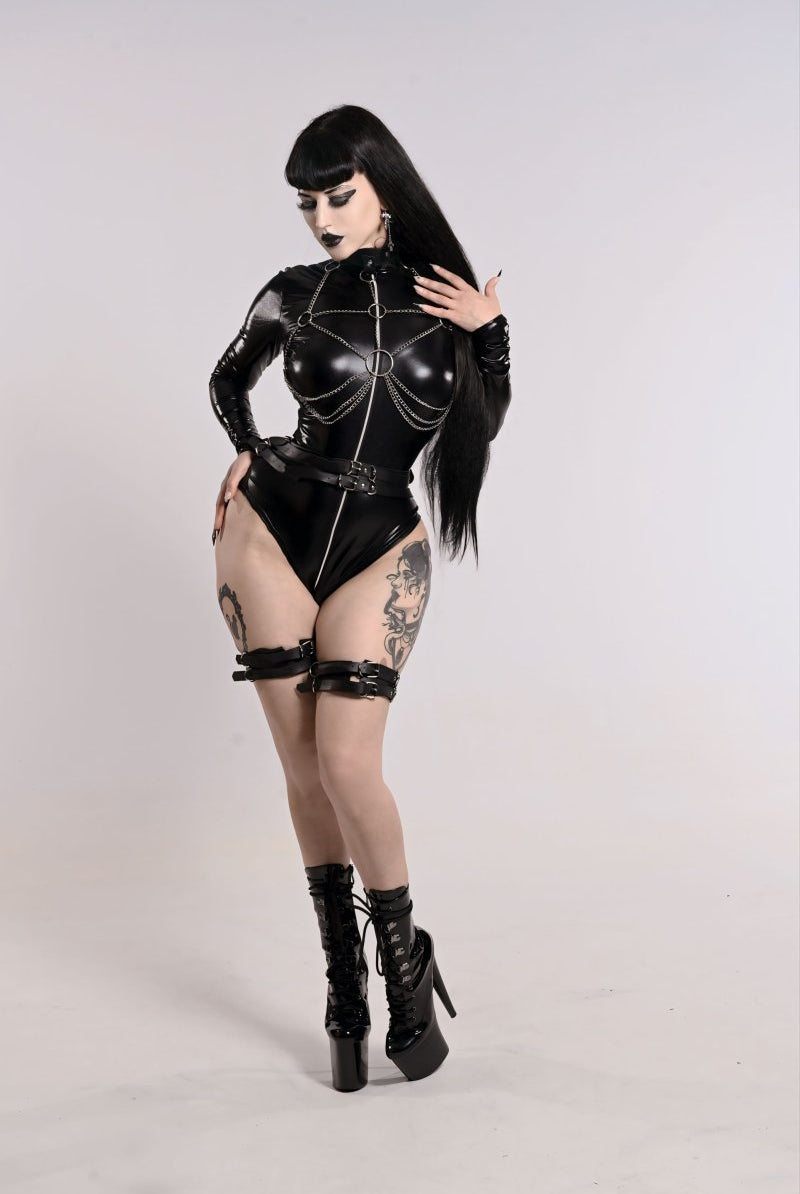
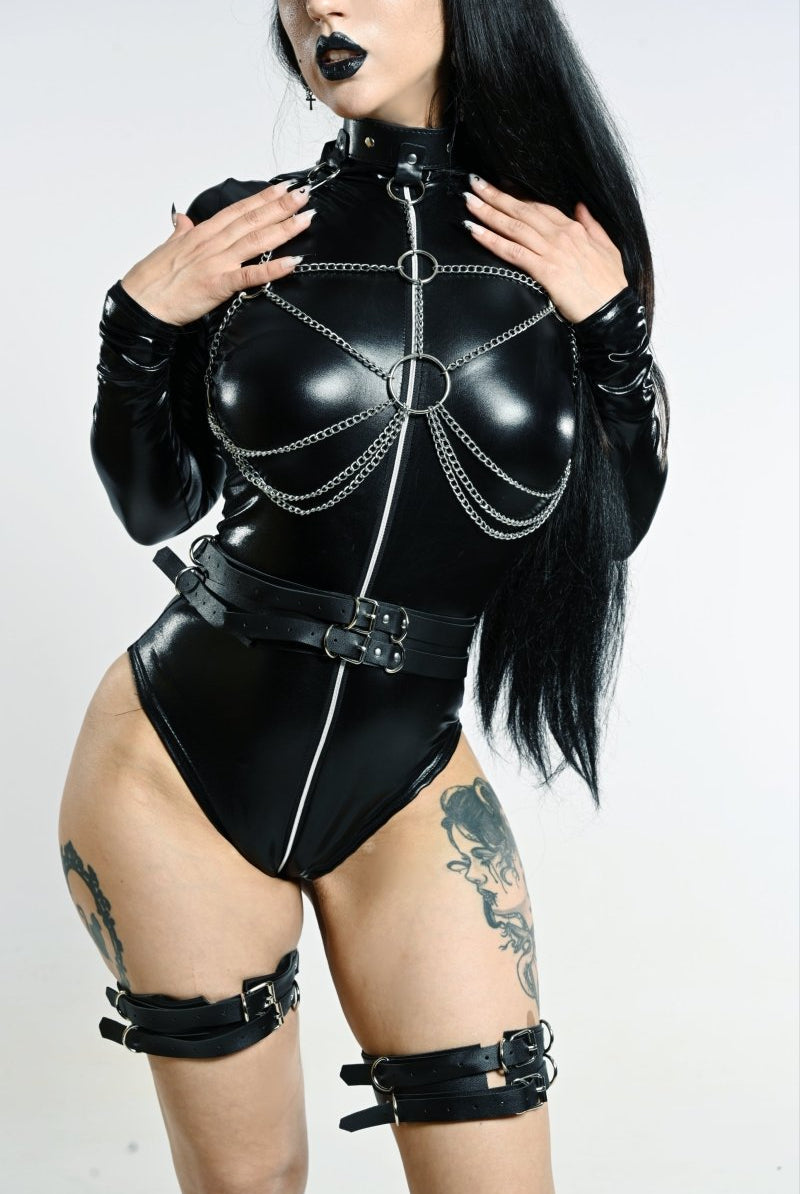
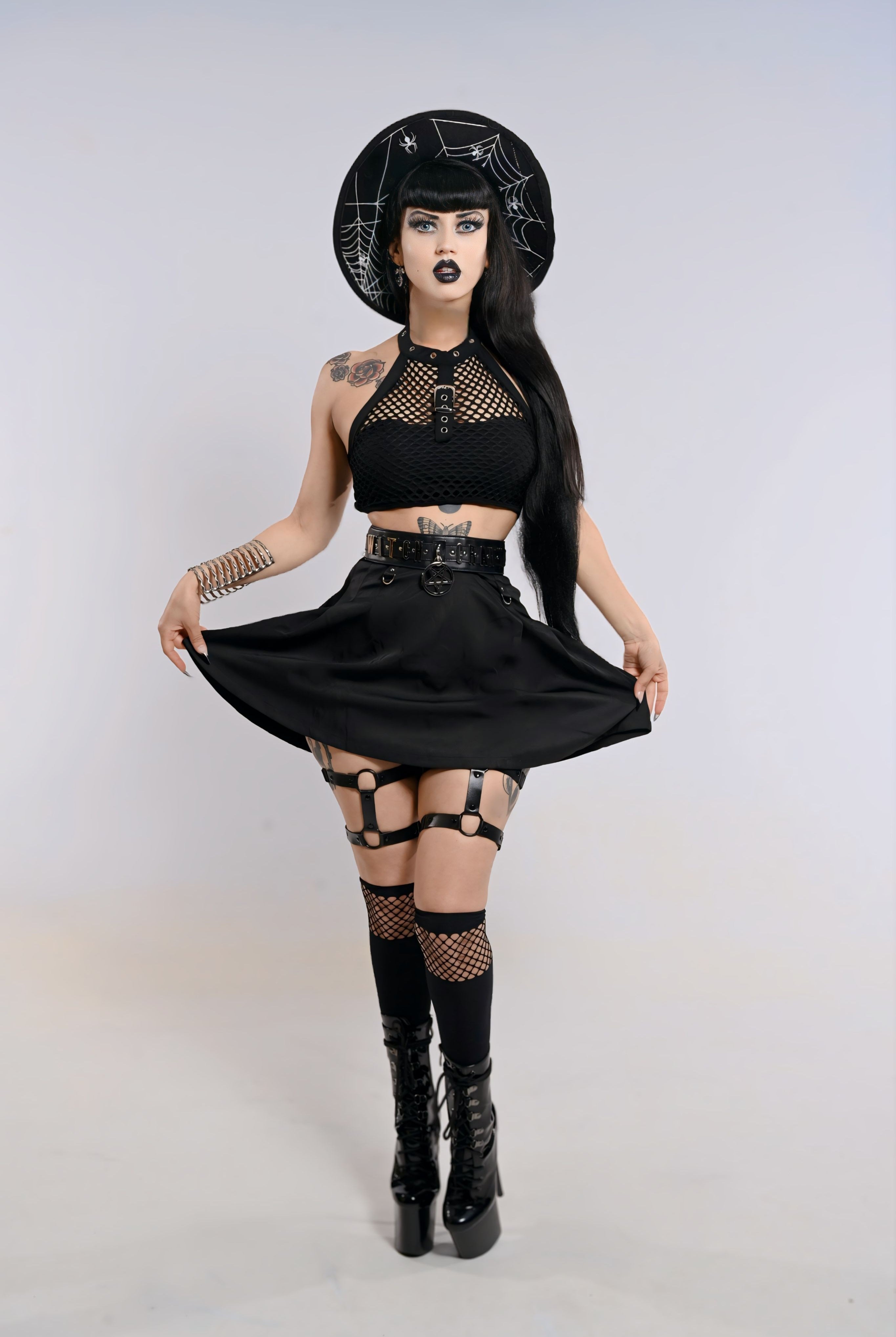
A Yule outfit should work for a long, cold night spent mostly indoors by candlelight, with a stretch outside to see the sky. That means warm fabrics, sleeves, colours drawn from the season (black, deep green, berry red, a little violet) and nothing that reads as a witch costume. Three looks, each built from pieces we stock today.
For the longest night
Velvet holds candlelight in its pile and shifts from black to silver as you move, which is reason enough to wear it on the solstice.
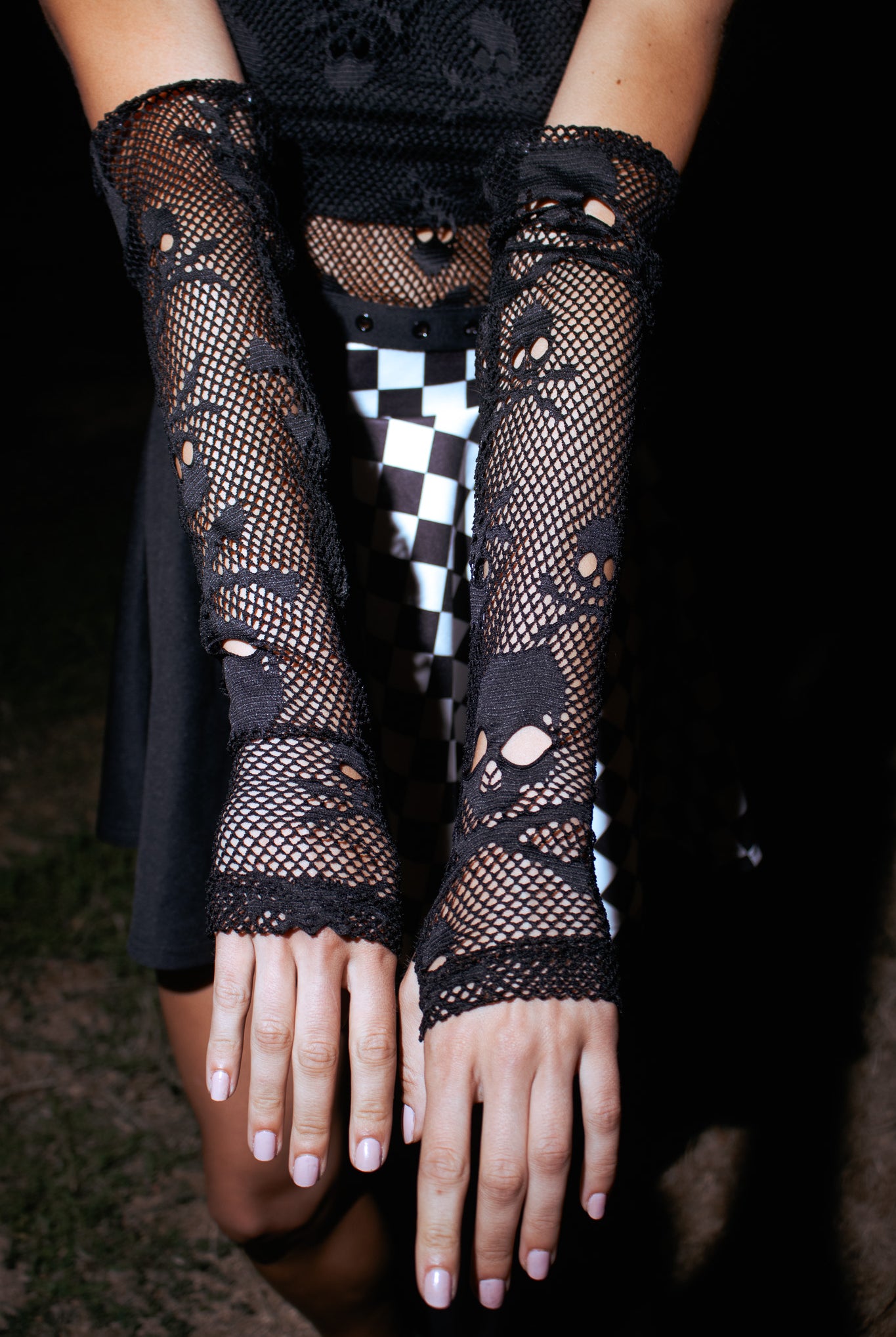
- The dress: the Goth Velvet Lace Dress, black velvet with a high round neck, full sheer lace sleeves gathered at a lace cuff and an above-the-knee skirt. The listing gives a bust of 82 cm in S, 86 cm in M, 90 cm in L and 94 cm in XL. $32.89 in S and $41.41 in M, L and XL.
- The shawl: the Moth Priestess Scarf, a triangle of see-through violet mesh with a pair of big embroidered butterflies and a deep lilac fringe all round, from our Moonlit Amethyst collection. Wear it over the shoulders, or wrapped close like a short cloak when you step out to look at the sky. $39.99, no size needed.
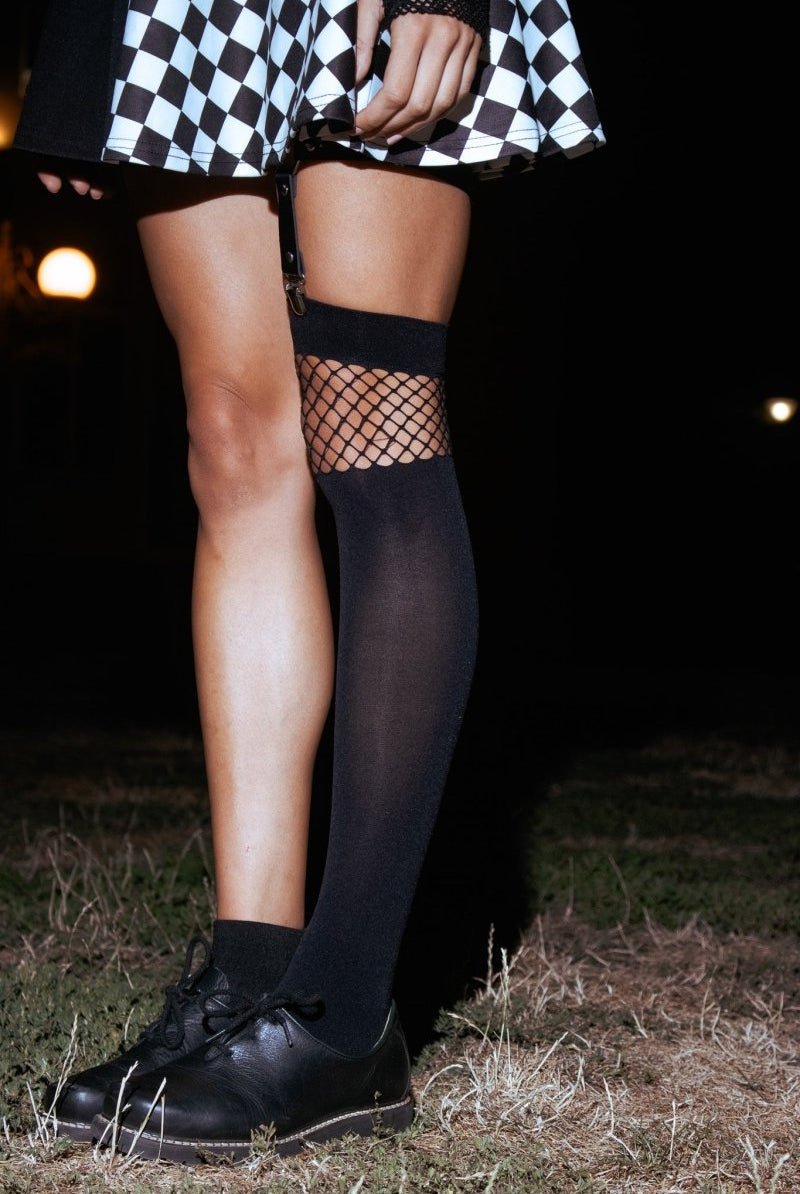
- The rest: opaque black tights, flat boots you can stand in on cold grass, and a moon at the throat (more on that below).
Sizes: dress S to XL; the shawl is unsized.
Evergreen
Forest green is the colour of holly and fir, which is why it keeps coming back at midwinter.
- The gown: The Woodland Priestess Gown, a deep moss green in its photos (the listing calls it sage) with a boned corset bodice, a gathered sweetheart neck tied at the centre, wide straps and a full A-line skirt that falls to mid-calf on the model. It is linen, made for summer, so in December wear a fitted black long-sleeved top or a fine knit underneath it. $77.99 in S, M and L.
- The jewellery: silver and one dark stone; our witchy jewellery guide compares the pentagram necklaces we stock, small to statement.
- The shoes: black lace-up boots, the way the gown is photographed.
Sizes: S to L. The rest of the green pieces are in our Fae Garden collection.
The morning after, in sizes to 5XL
Watching the sunrise after a long night calls for something soft that can go under a coat.
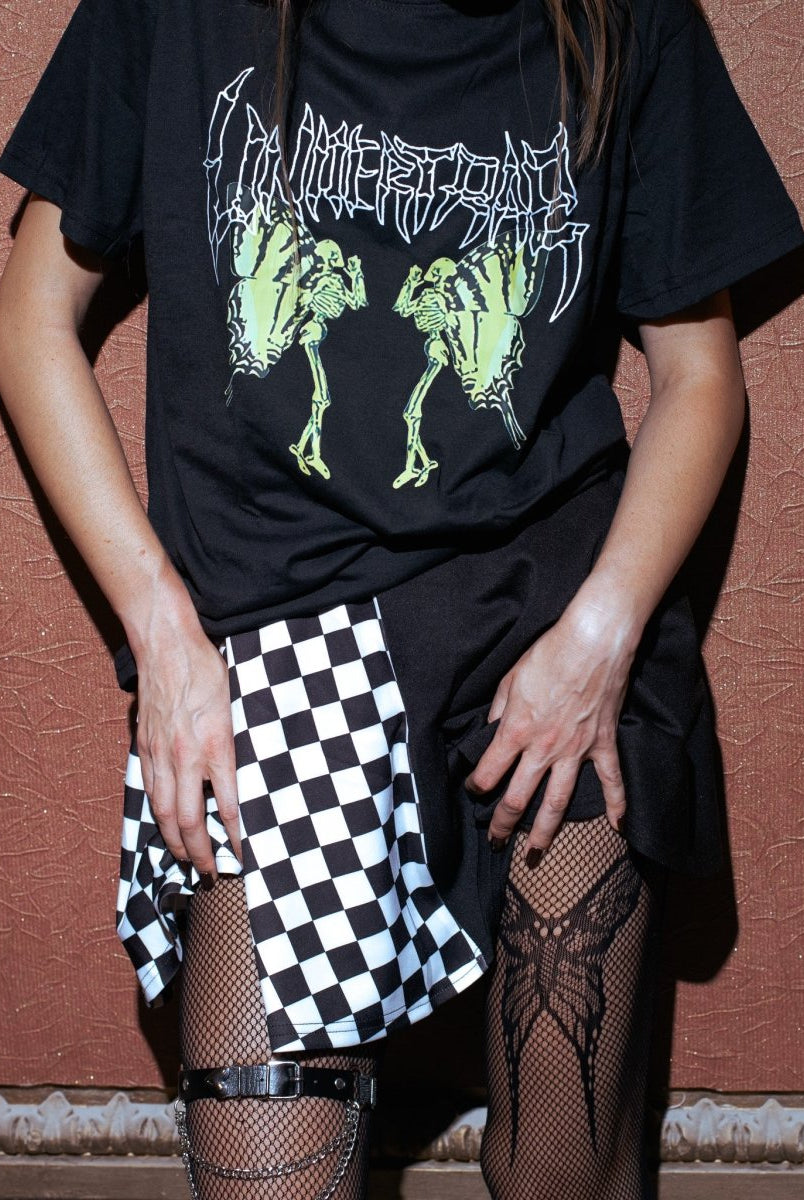
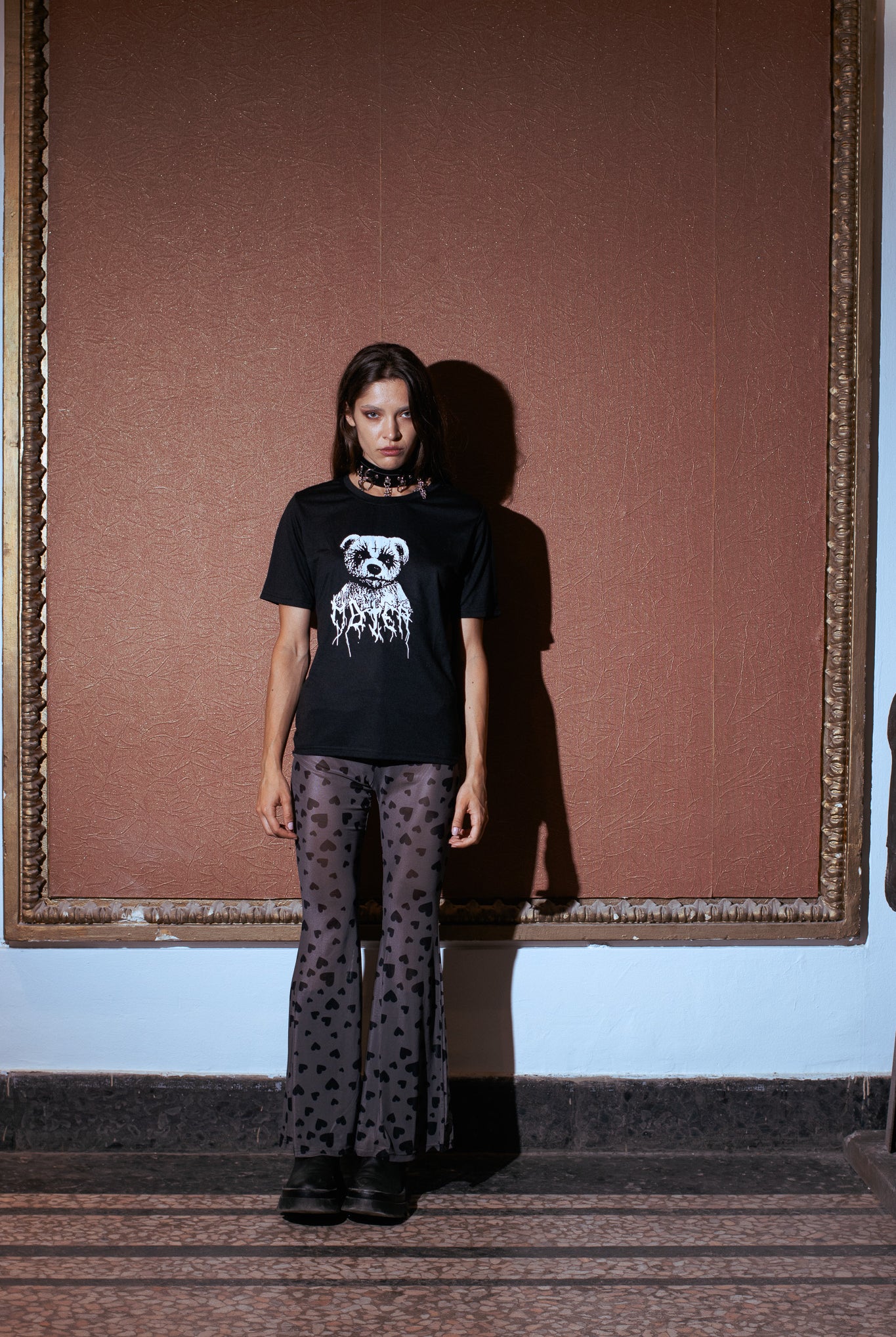
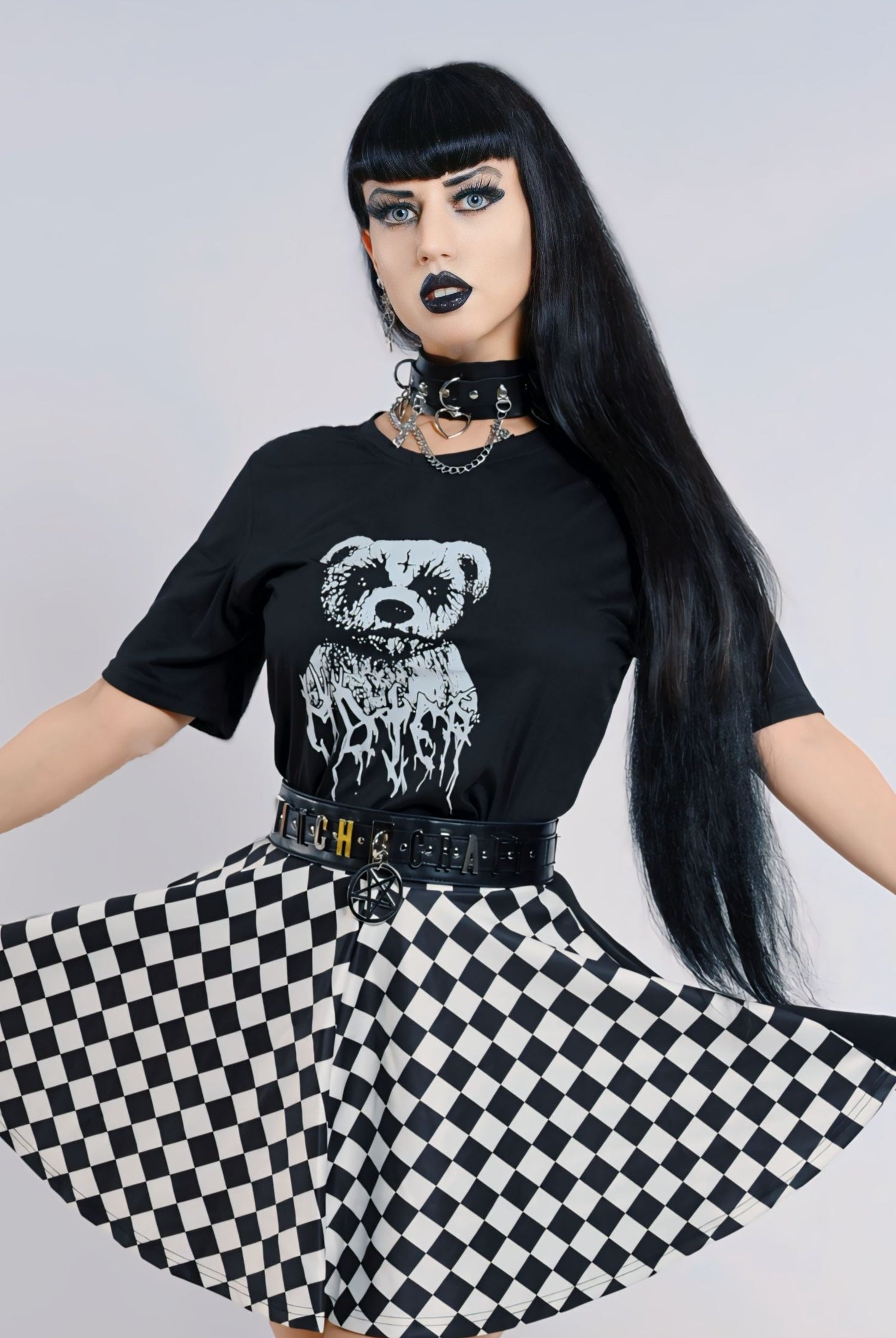
- The tee: the Black Moon Phase Tee, a short-sleeved cotton tee printed with the moon's phases stacked from neckline to hem, in grey, black or red. Pick the red: it is the berry colour of the season. The size chart in its photos lists a chest of 90 cm in S rising to 126 cm in 5XL. $29.71 in grey S, $32.32 in every other colour and size from S to 5XL.
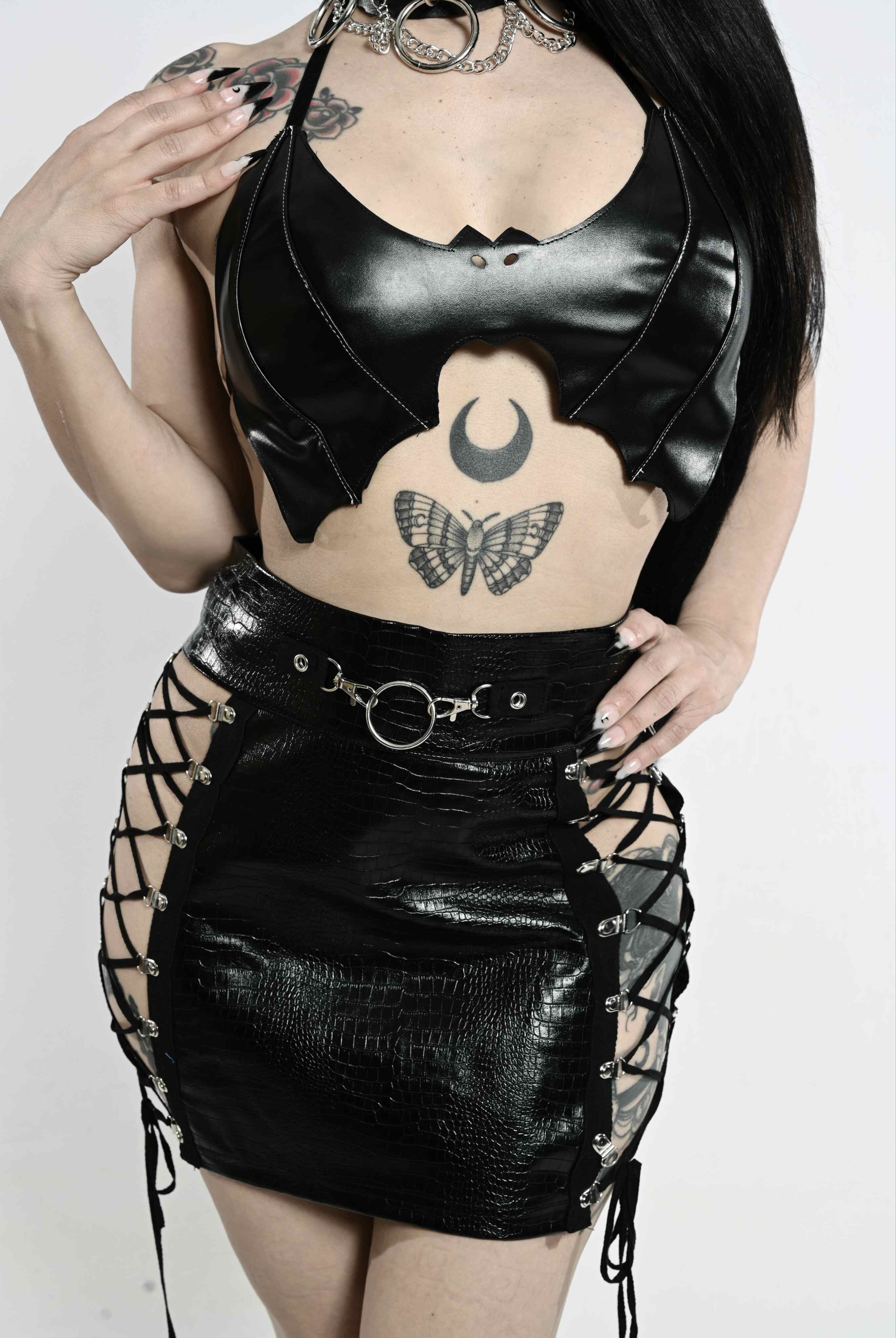
- The leggings: Black Goth Winter Leggings, ankle-length faux leather with a plush thermal lining inside, made for cold weather. $31.02 in S and $34.51 from M to 4XL.
- The layer: the Moth Priestess Scarf from the first look, or the warmest jumper you own.
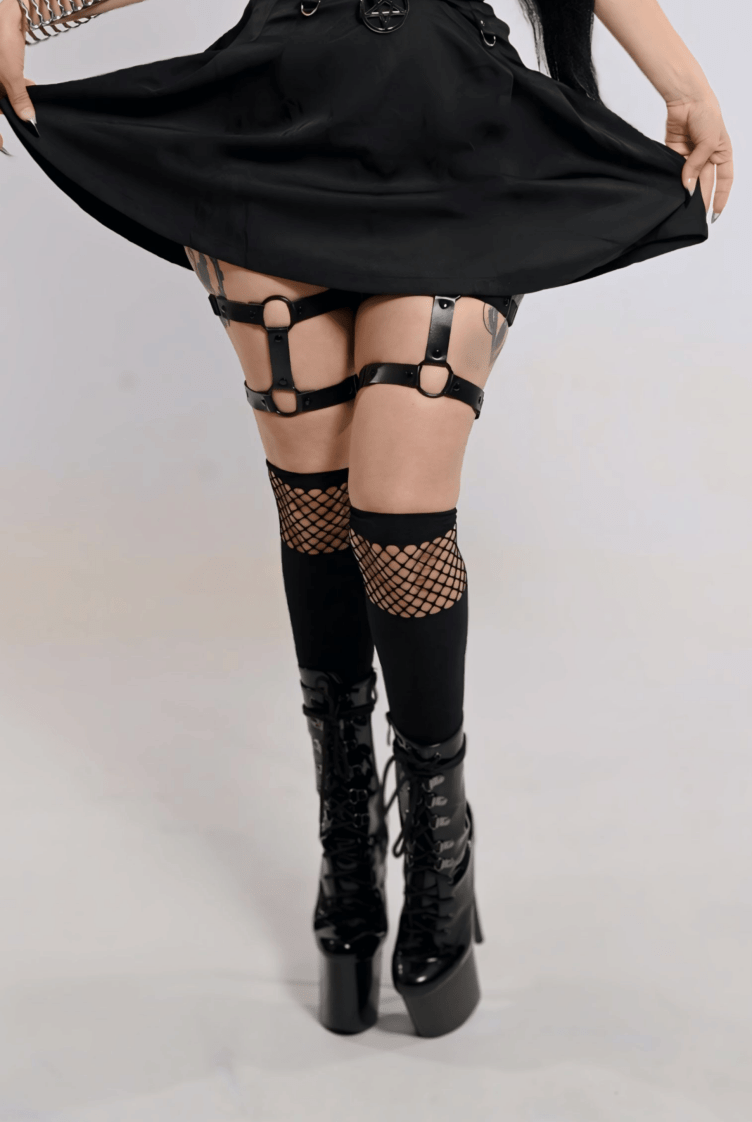
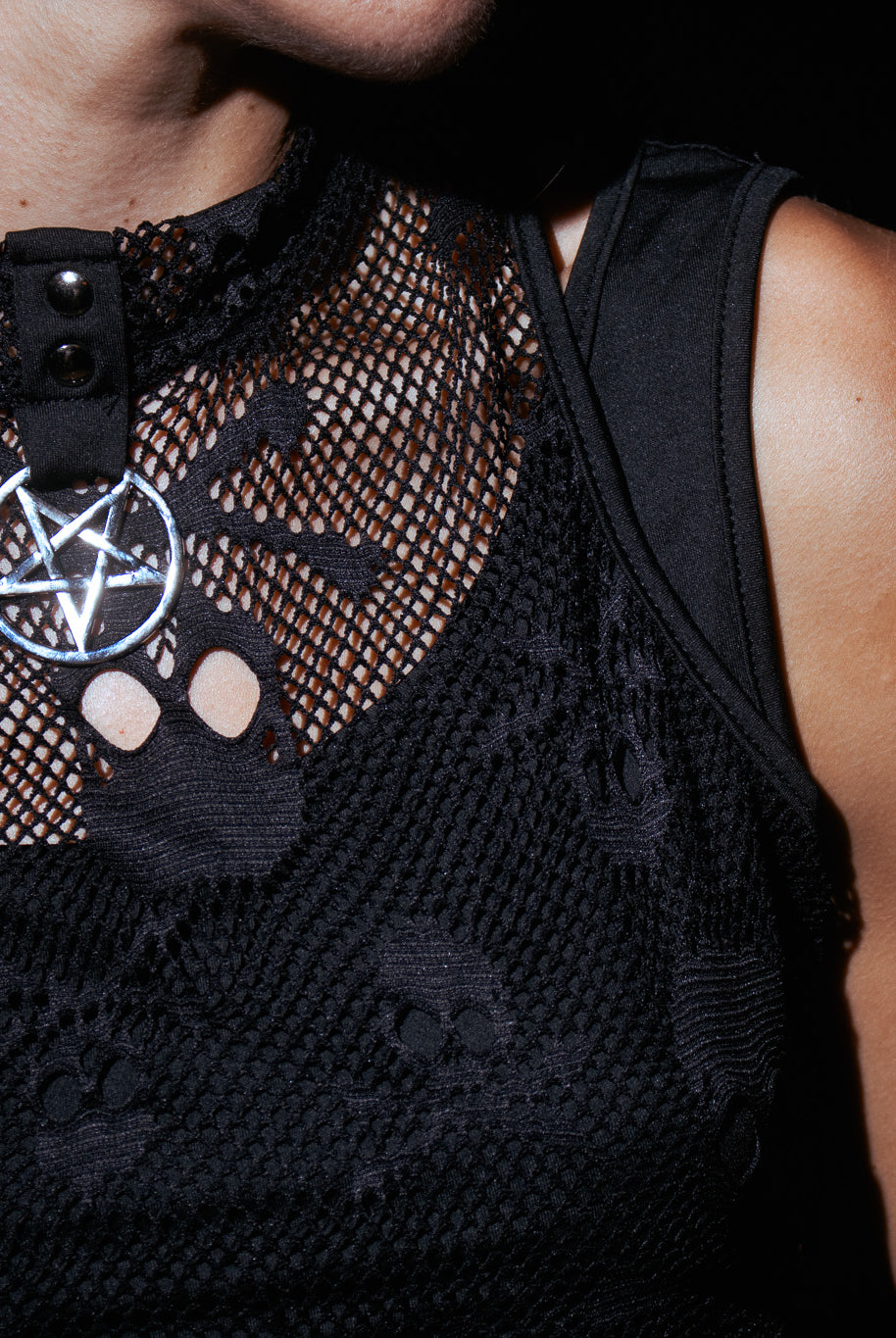
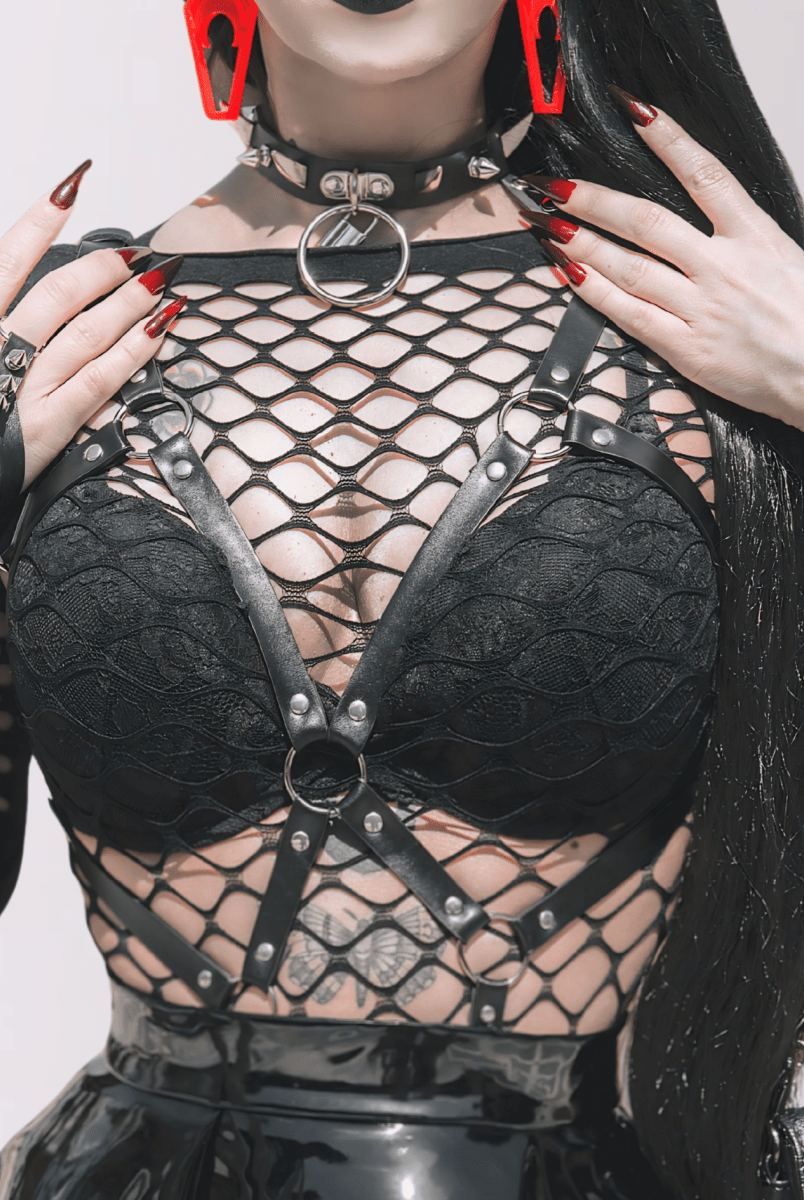
Sizes: tee S to 5XL, leggings S to 4XL. For the evening, the Black lace off shoulder corset has long, flared lace sleeves; it costs $31.37 in S and $36.71 in every size from M up to 6XL. Our plus-size collection gathers more of what we carry past XL. For layering through the rest of the winter, see our goth winter outfit guide.
Which jewellery suits Yule?
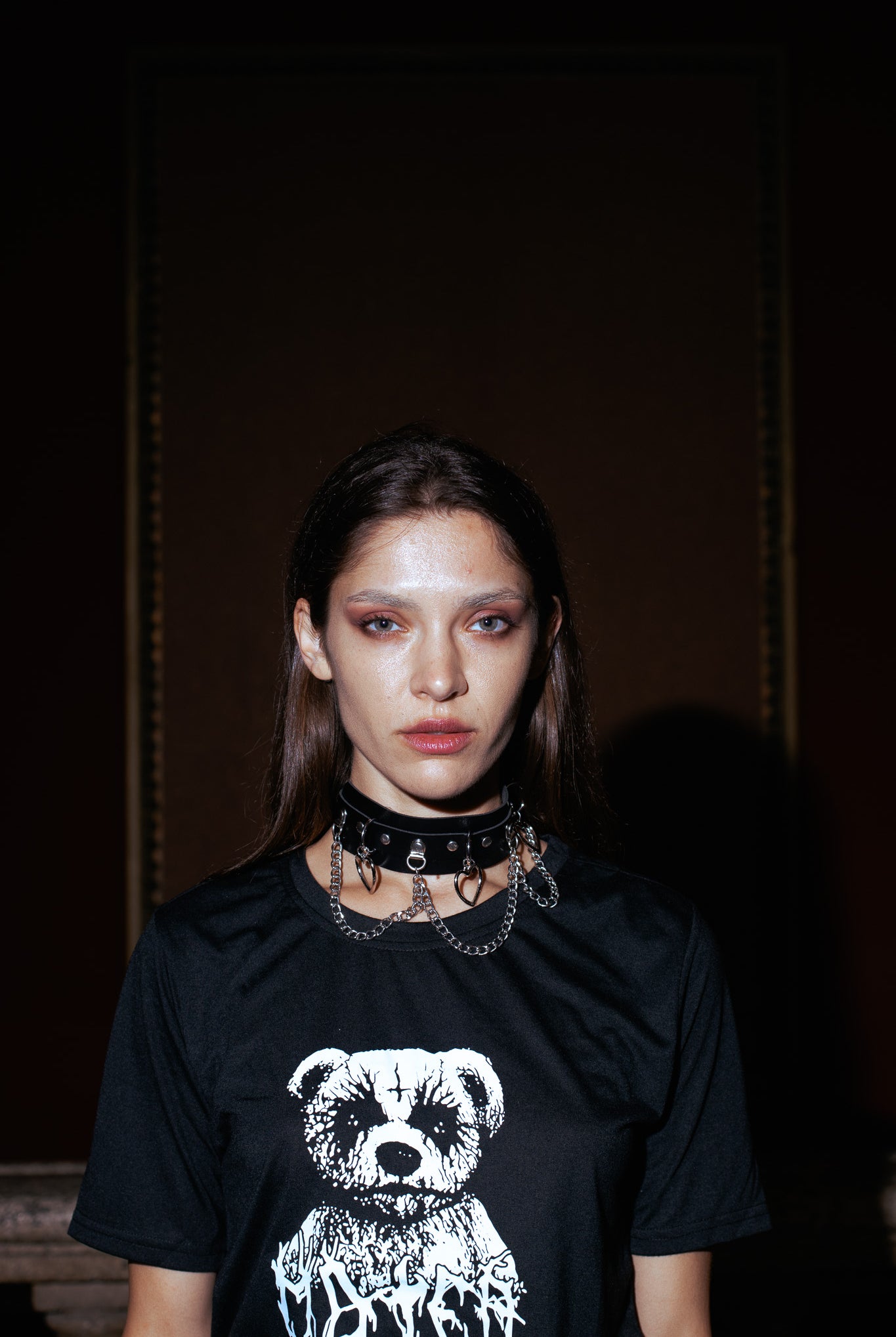
Moon jewellery suits Yule best, because the moon is the natural emblem of the longest night. A crescent, a full moon or a strip of every phase all work; silver reads as frost and candlelight, gold as the returning sun. Stars and the pentacle come a close second for witches who wear their practice openly.
We stock both kinds and have compared them in two guides rather than repeating them here:
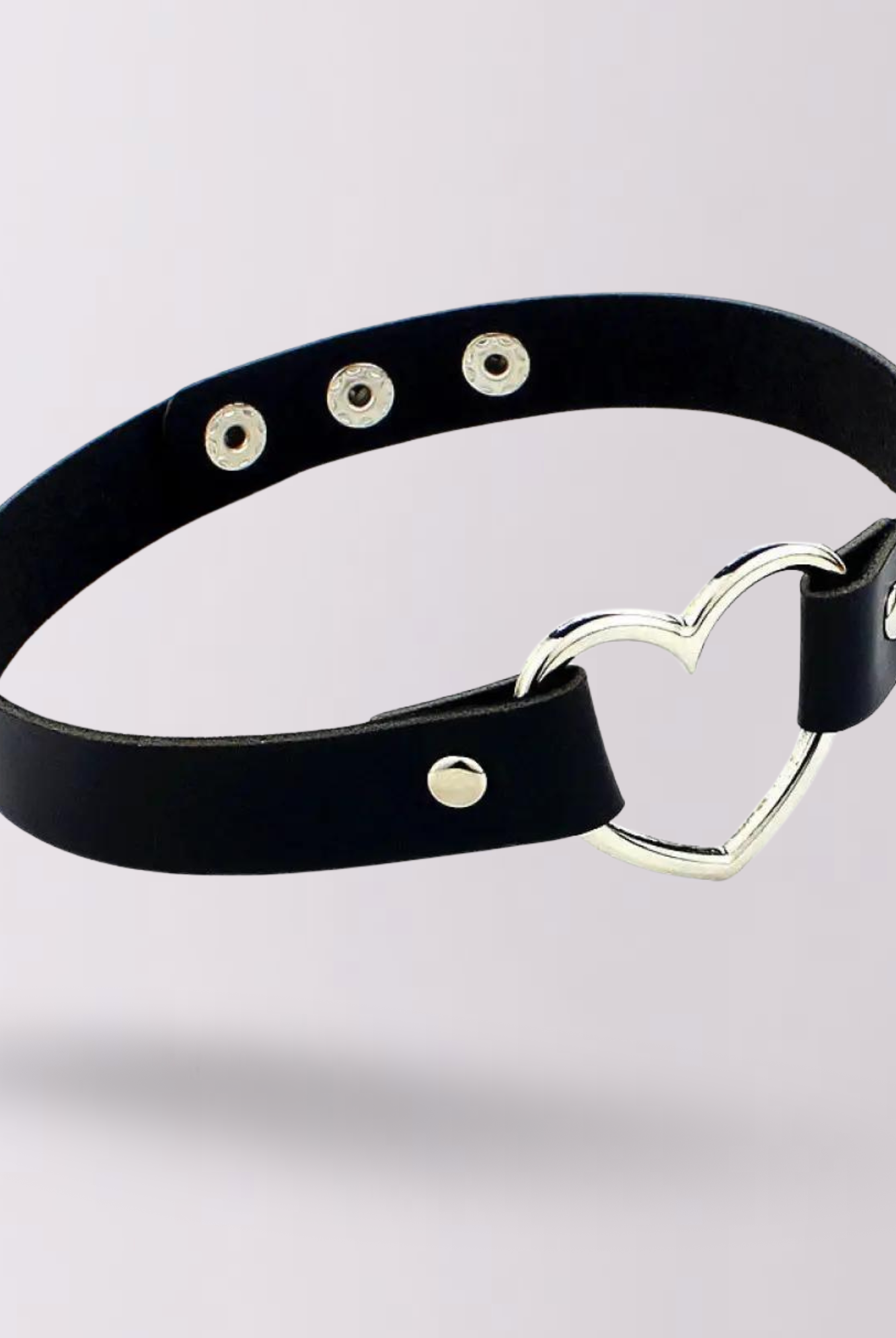
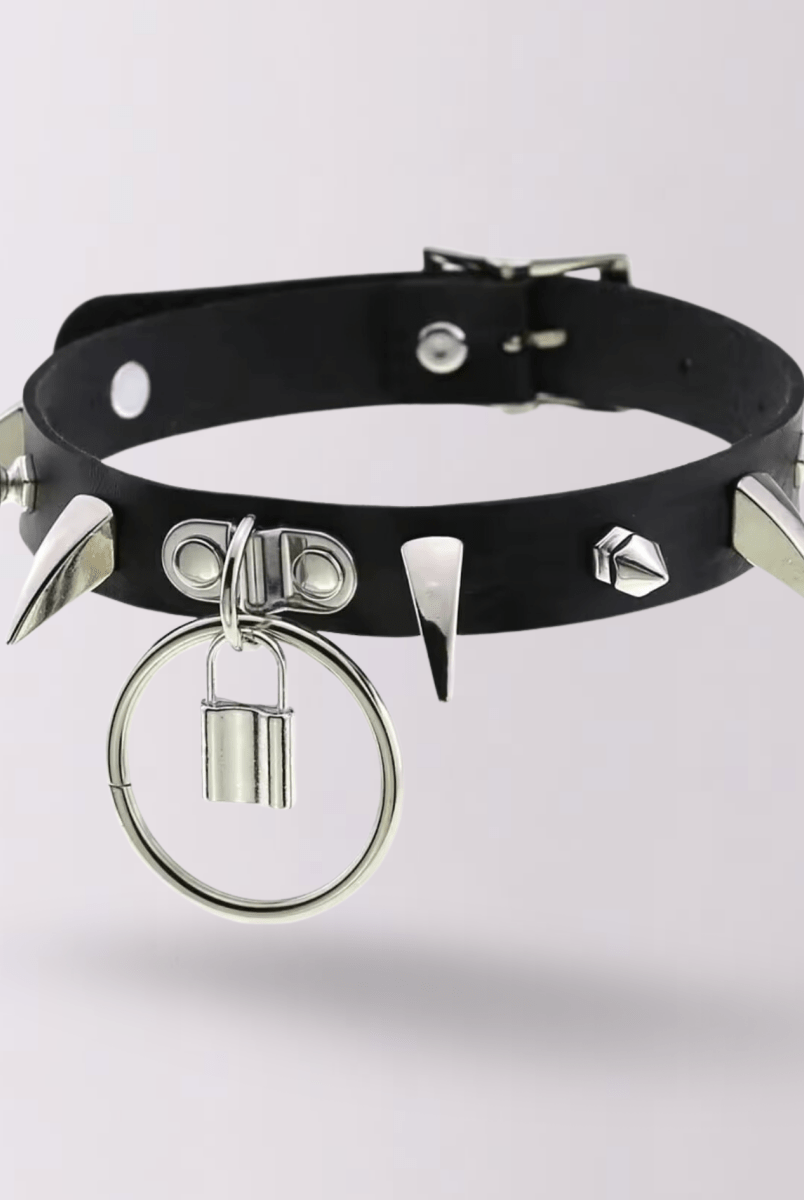
- For moons: our moon and star jewellery guide sets the moon necklaces we carry side by side, single crescents, every phase at once and the triple moon, with chokers, rings and earrings to match.
- For the pentagram and other witch's marks: our witchy jewellery guide covers pentagram necklaces, rings and earrings, and what to pair them with.
If you want to know what a symbol means before you wear it, our guide to occult clothing symbols explains the pentacle, the triple moon and the rest.
Can you keep Yule and Christmas?
Yes, and plenty of witches do, because the two festivals have been tangled together for more than a thousand years. A common pattern is to keep the solstice night as Yule, quietly, and then join family Christmas four days later.
If your house does a tree and a Christmas party as well, our gothic Christmas guide covers the black and deep red version of both. For presents, our goth gift guide has ideas by budget.
Sizes, delivery and ordering for 21 December
Prices for the eleven pieces here run between $19.99 and $77.99. Where the sizes stop:
- Past 3XL: the lace corset (S to 6XL), the moon tee (S to 5XL) and the winter leggings (S to 4XL).
- At XL: the velvet and lace dress.
- At L: the green gown.
- Unsized: the scarf, the garland, the mirror, the bells, the cauldron and the mug.
Two numbers in our shipping policy set the timing: an order normally leaves us 4 to 8 business days after you place it (weekends and holidays do not count), and delivery is then estimated at 4 to 12 days, with a stated maximum of 30. Counting back from the slow end of both estimates, an order placed by Friday 27 November should arrive by the solstice on Monday 21 December. That date is our own arithmetic on the policy, so order earlier if you can. If something is wrong, our return policy gives you 30 days from delivery to send back an unused piece, still in its packaging.
Once the solstice has passed, the same pieces keep working; building a witchy outfit for the rest of the year is the next step.
Frequently asked questions
What is a Yule event?
A Yule event is a gathering held around the winter solstice, usually on 21 or 22 December in the northern hemisphere, to mark the longest night and the return of the light. Pagan and witch groups often hold an evening ritual with candles or a fire, followed by food and drink. Many people keep Yule at home instead, with a decorated log, evergreens and a vigil until sunrise.
Why do they call it Yuletide?
"Tide" is an old English word for a time or a season (Old English tīd), so Yuletide simply means the Yule season. The same ending survives in Eastertide and Whitsuntide. The sea's tides take their name from the same word, by way of the idea of a fixed time, but Yuletide keeps the older meaning.
How do you decorate a Yule log?
Choose a dry log of oak, birch or ash, flatten one side so it sits still, and drill shallow holes for candle holders or tealight glasses. Tuck sprigs of holly, ivy and fir into the bark, add pine cones, dried orange slices or cinnamon sticks, and tie it round with red or green ribbon. Light its candles on the solstice night, or burn the log itself in an open fire, and keep a small piece back to start next year's.
Are there gifts for Yule?
There is no fixed rule. Many witches exchange small gifts at Yule, often handmade, edible or tied to the season: candles, a jar of mulled wine spices, a book, a piece of moon jewellery. Some save presents for Christmas and keep Yule for the ritual and the meal.
What decorations should you leave up after Christmas?
In seventeenth-century England, the evergreens stayed up until Candlemas, on 2 February. Herrick's "Ceremony upon Candlemas Eve" orders down the rosemary, bay, mistletoe, holly and ivy, and warns that for every leaf left behind "so many goblins you shall see". Today many people clear their decorations by Twelfth Night in early January instead. Either way, fresh greenery goes out to the compost before it turns brittle.