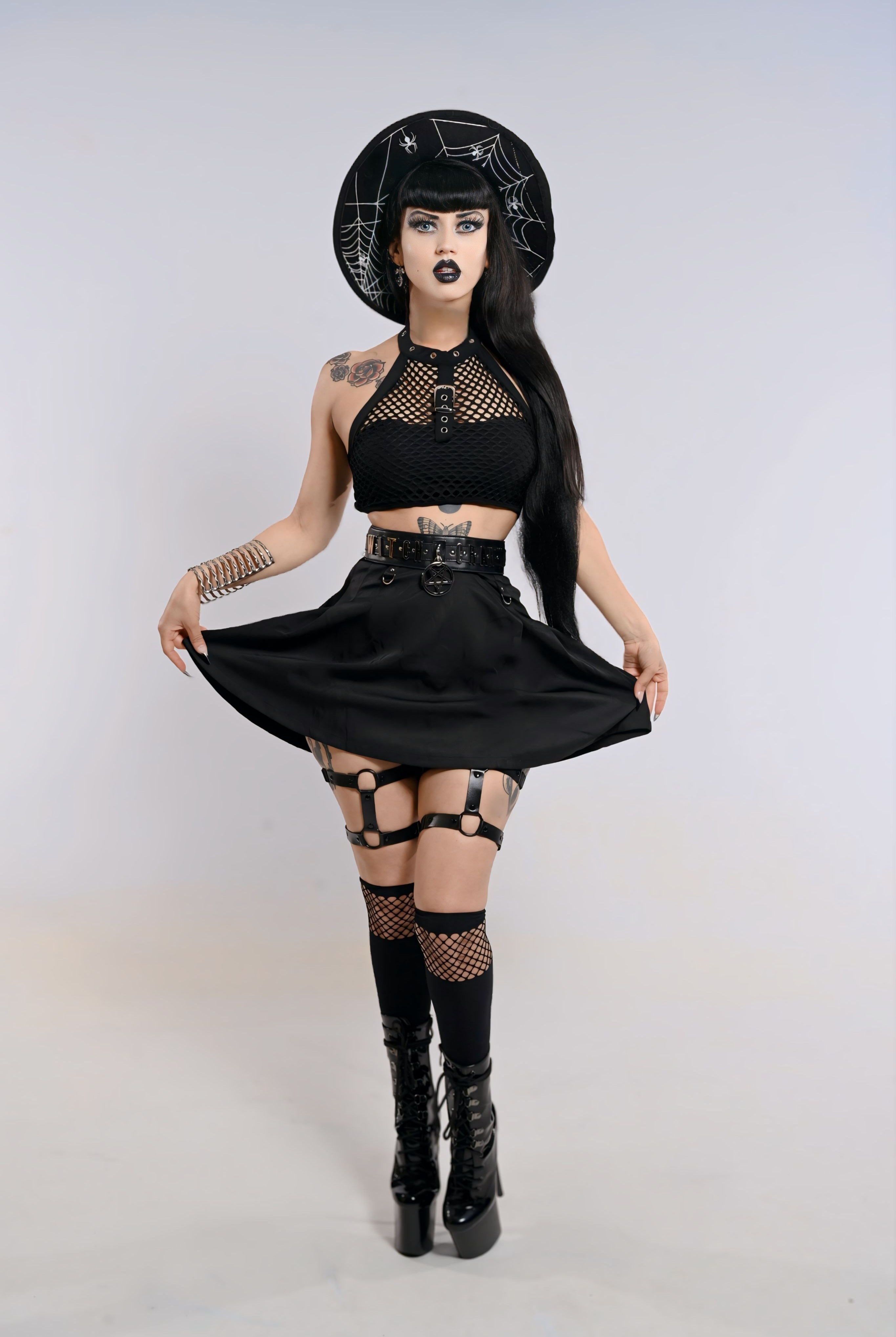

Dark academia fashion is a literary-gothic aesthetic built on layered tailoring, antique colour palettes, and a devotion to scholarship and melancholy in equal measure. It has always had a witchy soul, and this guide is for the reader who knows it.
The mainstream style press treats dark academia as a Ralph Lauren adjacency. That is not quite right. The aesthetic grew out of The Secret History, Tumblr rituals, Gothic revival architecture, and a very specific kind of longing that sits closer to Mexican Gothic than to Dead Poets Society. The scholar-witch, whose bookshelf holds a grimoire beside Donna Tartt and who layers a herringbone blazer over a lunar-phase pendant, is the true inheritor of this look.
This guide covers the colour palette, the wardrobe essentials, the occult accessories layer, the witchy academia subgenre, the 2026 Poetcore moment, plus-size dark academia, and where to find independent brands that actually understand the aesthetic.
Key Takeaways
- Dark academia fashion was always adjacent to witchy and occult aesthetics. The two share Gothic architecture, candlelight, and a canon rooted in The Secret History, Carmilla, and Wuthering Heights.
- The core palette is black, brown, burgundy, dark green, oxblood, and charcoal, extended with deep plum, midnight blue, and washed black for a scholar-witch feel.
- The wardrobe foundation is layered tailoring: blazers, turtlenecks, pleated skirts, high-waisted wool trousers, and Victorian-silhouette dresses.
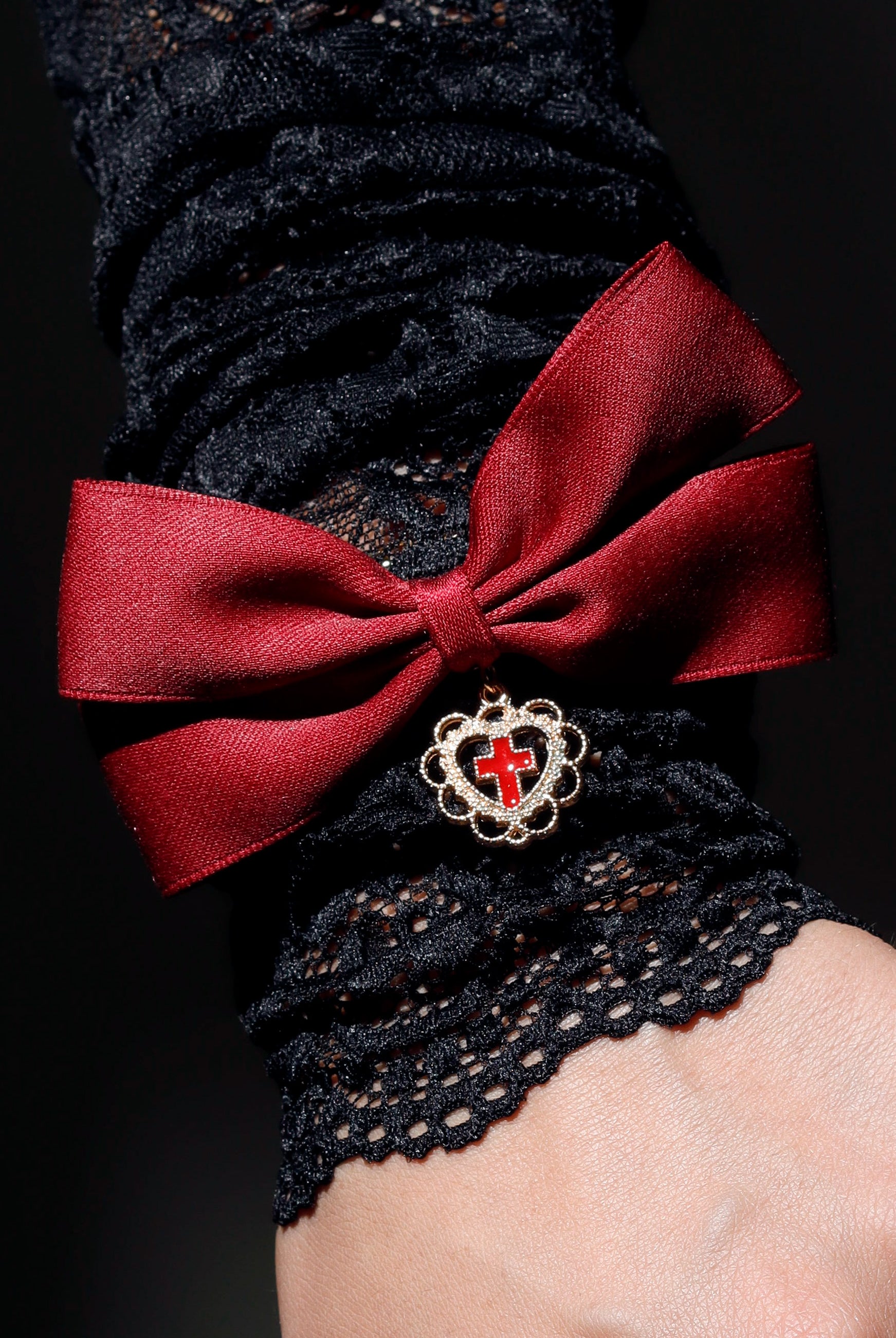
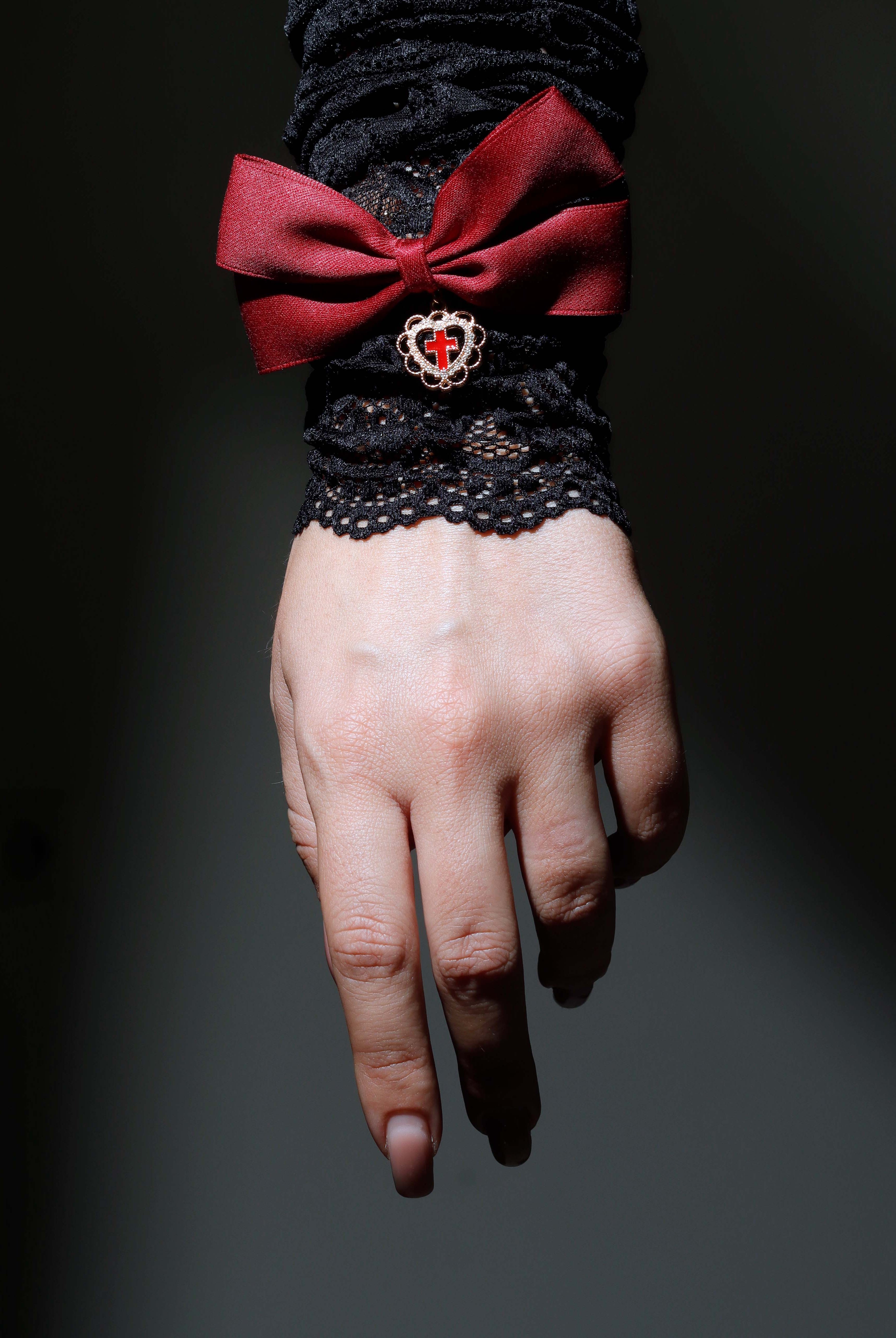
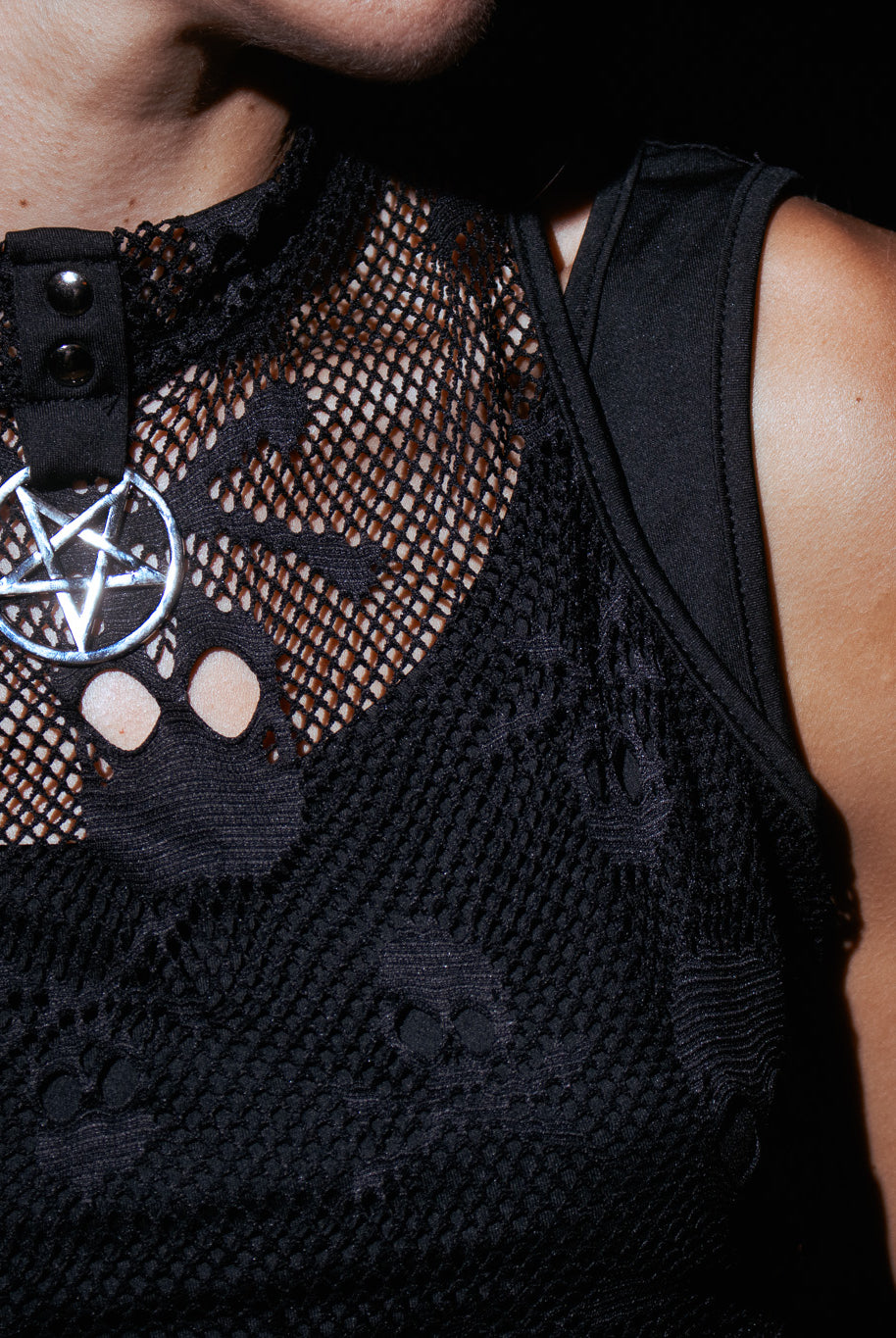
- Occult jewellery (pentagram rings, moon-phase pendants, cameo brooches) is the single accessory layer that most guides miss and most dark academia devotees wear.
- Poetcore is the 2026 evolution: Pinterest reports searches for the poet aesthetic up 175%, capes up 65%, and satchels up 85%. Dark academia fashion is having its biggest year yet.
- Independent, creative-director-led brands with plus-size ranges are where the community is shopping now, not fast-fashion aggregators.
What Is Dark Academia Fashion? (The Definition Worth Having)
Dark academia fashion is an aesthetic movement built around scholarly institutions, Gothic architecture, autumn light, and a literary canon that glamourises intellectual obsession and atmospheric melancholy. The wardrobe reflects the world: layered tailoring in antique neutrals, fabrics that carry weight (wool, tweed, corduroy, velvet), and accessories that suggest a person more interested in rare books than in trend cycles.
The origin point is Tumblr, approximately 2015, though the aesthetic crystallised properly in 2020 when Donna Tartt's The Secret History became the definitive cultural text of the first lockdown. A novel about a group of Classics students who commit a ritual murder at a Vermont college was, it turned out, exactly the escapism a global pandemic required. Pinterest searches for dark academia spiked. TikTok built entire communities around it. The aesthetic crossed from a niche Tumblr mood board into mainstream fashion coverage.
The i-D magazine article that first gave the aesthetic its wider audience in 2020 described it as "the witchy literary aesthetic sweeping TikTok." That framing was accurate. The Aesthetics Wiki, the closest thing the aesthetic community has to a reference text, notes that dark academia participants "may engage in real-life witchcraft and New Age practices." The occult was not bolted onto dark academia later as a crossover genre. It was present at the beginning, in the ritual scenes of The Secret History, in the Gothic revival settings, in the candlelit libraries and the moon outside the dormitory window.
Where dark academia sits relative to adjacent aesthetics:
- Light academia takes the same scholarly devotion but lifts the palette to cream, beige, and warm gold. It reads as sunlit rather than candlelit. Less Wuthering Heights, more Dead Poets Society.
- Whimsigoth shares the occult interest and the velvet, but the energy is softer and more domestic: Stevie Nicks in a sunlit cottage, not a Gothic library at midnight. The whimsigoth collection at The Cursed Closet shows the distinction in practice.
- Gothic romance is dark academia's more dramatic sibling: the Victorian silhouette, the mourning dress, the heroine who haunts her own love story. The gothic dresses collection is where these two aesthetics share the most wardrobe real estate.
Dark academia is the version that happens in the library, not the garden, and reads Nietzsche alongside tarot.
The Dark Academia Colour Palette
The palette is antique and atmospheric. Think of it as the colours of old things: the spine of a leather-bound book, the stone of an ivy-covered archway, the wax of a dripping candle, the ink of a fountain pen.
The core palette:
- Black, the anchor. Never replaced, only layered.
- Chocolate and tobacco brown, the warm undertone that distinguishes dark academia fashion from straight gothic. Think tweed, suede, and aged leather.
- Burgundy and oxblood, the depth note. Red that has darkened into something more serious.
- Charcoal, grey that has not given up on drama.
- Dark green, the academic colour: the green of a library lamp, of ivy on stone.
- Cream and ivory, the accent only, used as a collar, a blouse beneath a dark blazer, a knit against a dark coat. Never as a dominant note.
For the scholar-witch specifically, the palette extends:
- Deep plum, where burgundy meets gothic romance.
- Midnight blue, the colour of the sky outside the tower room where the important ritual happens.
- Washed black, faded, softened black that looks like it has been through a decade of October evenings.
What it is not: no pastels, no fast whites, no sharp neon. The palette should look as though it has been sitting in natural light for a long time and is better for it.
The Scholar-Witch Wardrobe: Key Pieces
The dark academia wardrobe is a layering system. No single piece carries the aesthetic alone. It is built in sequences, from base layers outward, and the more textures that coexist in a single outfit, the more convincing it reads.
The Layering Foundation
The base layer is almost always a button-up shirt or a turtleneck. A crisp Oxford collar beneath a blazer reads as the classic academic register. A fine-knit turtleneck in charcoal or cream shifts the register toward the literary novelist, the occult researcher, the person who is equally at home in a seminar and a stone church.
Over the base layer, the blazer or waistcoat is the essential middle piece. The fabrics matter here more than anywhere else:
- Tweed and herringbone are the canonical dark academia fabrics: structured, heavy, suggesting old money and older libraries.
- Velvet blazers shift the register from academic to witchy-academic: sensuous, slightly decadent, the blazer equivalent of an Anne Rice novel.
- Fitted waistcoats worn over a blouse or turtleneck, with trousers or a pleated skirt, carry particular power in this aesthetic. They suggest both Victorian rigour and something older and stranger beneath it.
Cable-knit and argyle sweaters worn over collared shirts are the more casual interpretation: the outfit you wear to a very good second-hand bookshop on a grey Tuesday.
Skirts, Dresses, and Trousers
Pleated midi skirts in wool or tartan are the most recognisable dark academia silhouette. They move well, layer cleanly with tights and boots, and have an obvious debt to the school-uniform aesthetic that is genuinely part of the origin story.
High-waisted trousers in wool or corduroy give the aesthetic a more androgynous, scholarly register: the woman in the archive, the person who is too absorbed in their research to think about being looked at.
Victorian-silhouette dresses are where dark academia fashion meets gothic romance directly. The gothic dresses collection covers this territory: fitted bodices, full or A-line skirts, high necks, long sleeves. The aesthetic logic is that the person wearing this dress has been reading Carmilla since adolescence and does not think this is unusual.
Bias-cut slips in washed satin are the witchy scholar's evening option. Less structured than the Victorian silhouette, more sensuous. Worn over a turtleneck or under a blazer, they read as someone who knows both the grammar of the aesthetic and when to deviate from it.
Consider Nadia, a literature postgraduate who assembled her entire dark academia wardrobe over two years of charity-shop hunting. Her foundational piece was a chocolate-brown herringbone blazer that cost her £4 in a Bristol Oxfam. She pairs it with a cream blouse, a midi skirt in burgundy tartan, and knee-high lace-up boots. Her occult jewellery (a pentagram ring, a moon-phase pendant her partner gave her) is the only thing that signals she is not attending an academic conference. "The blazer does the work," she says. "Everything else is a conversation with the blazer."
Outerwear
Outerwear is where dark academia fashion becomes most cinematic, and where 2026's Poetcore moment is most visible.
Greatcoats and structured wool coats are the outerwear anchor. Floor-grazing, double-breasted, in charcoal or black or herringbone. The specific garment that signals you have read Brideshead Revisited without being told to.
Capes are the 2026 piece to own. Pinterest reports cape searches up 65% year-on-year as part of the Poetcore trend. They are also the garment most obviously connected to the witchy lane: the scholar-witch leaving the library at dusk wears a cape, not a puffer jacket.
Trench coats occupy the transitional-season territory: lighter than a wool coat, more structured than a cardigan, and useful in the long grey months between summer and real autumn.
The gothic outerwear collection covers all three registers.
Footwear
- Oxfords, the canonical dark academia shoe. Brogue detailing adds texture; a slight heel adds occasion.
- Lace-up boots, ankle or knee-high. The practical dark academia choice for anyone who needs to walk across wet cobblestones to get to the archive.
- Mary Janes, the softer, more whimsigoth-adjacent option. Chunky-soled Mary Janes are the 2025-26 footwear of choice for younger practitioners of the aesthetic.
- Loafers, in cognac or black leather, for the casual-academic register.
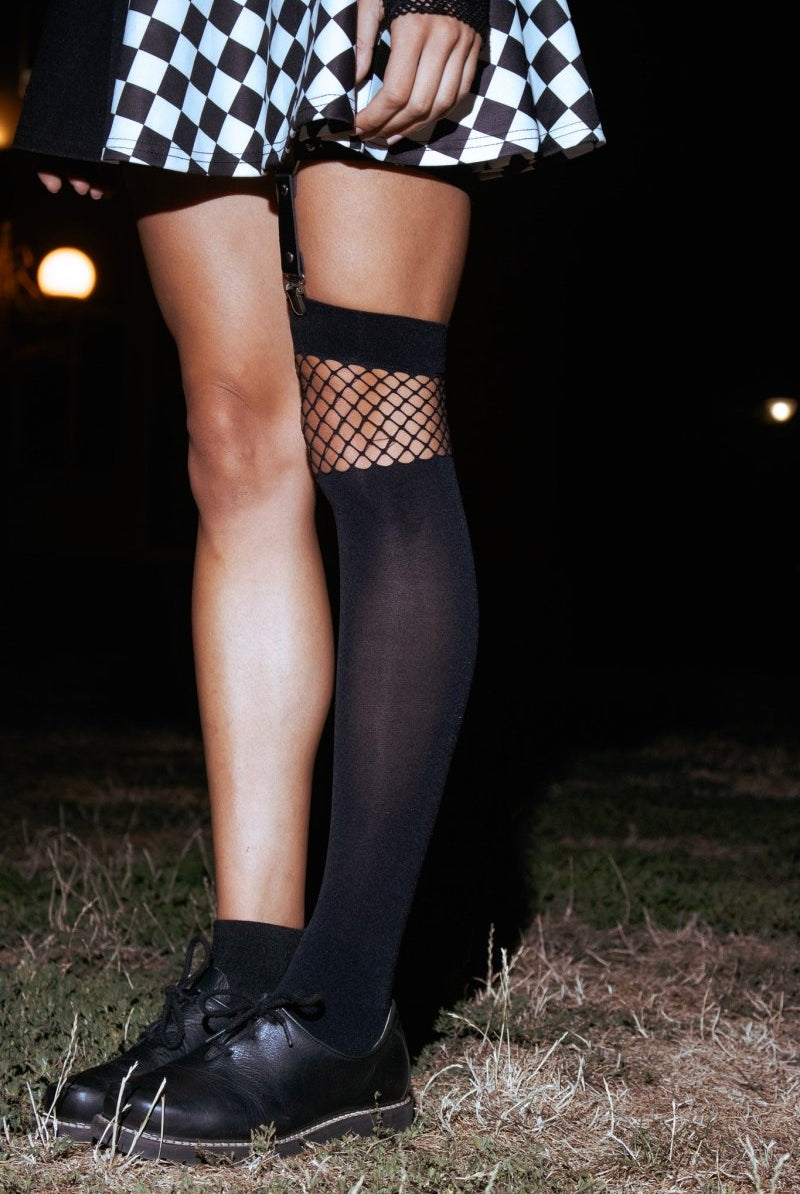
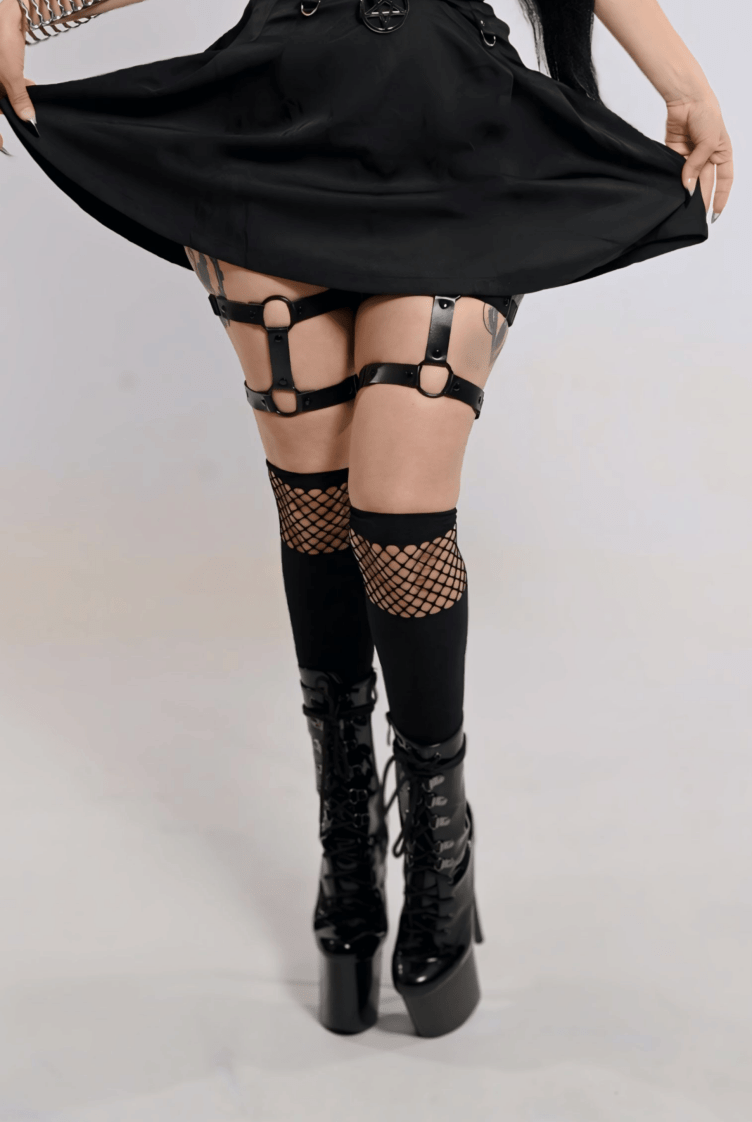
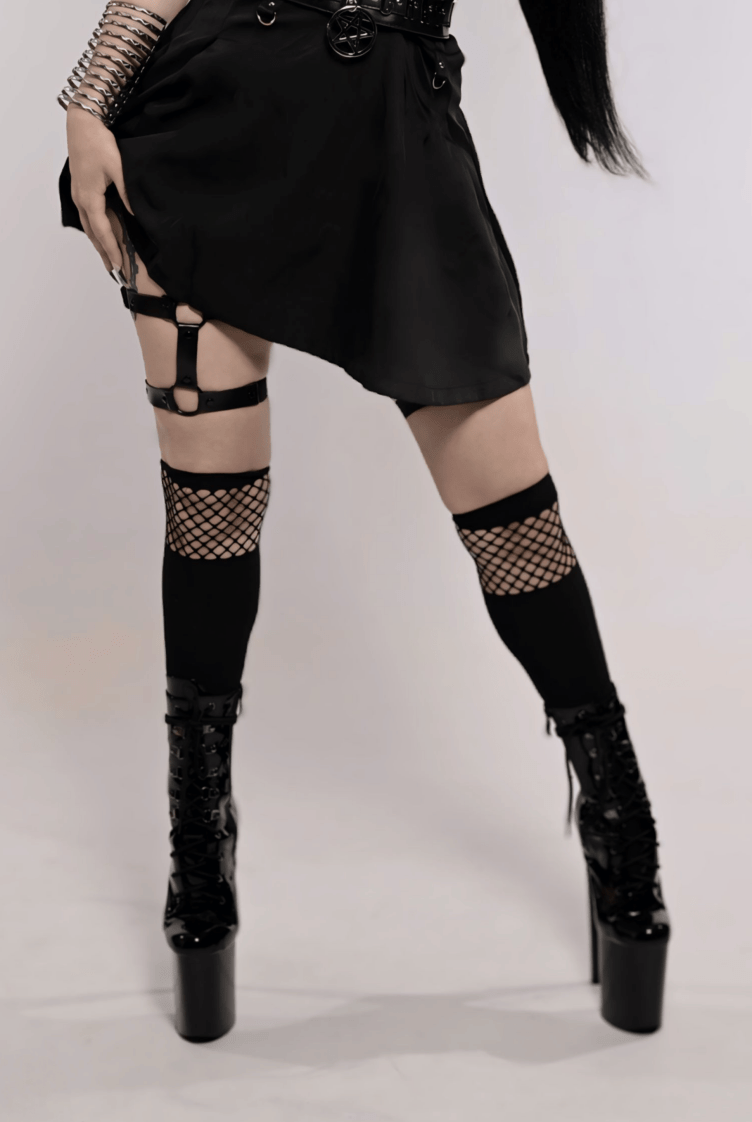
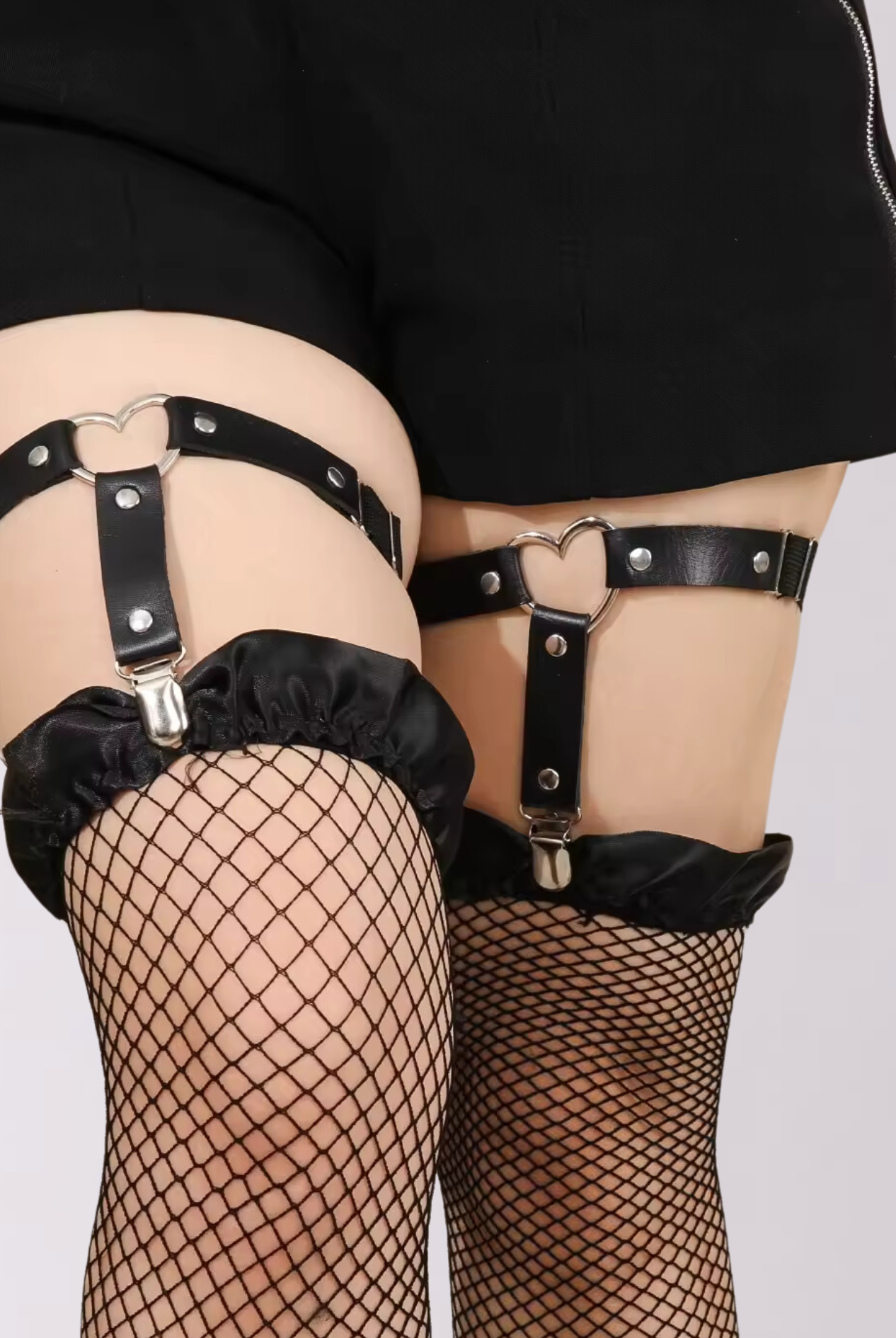
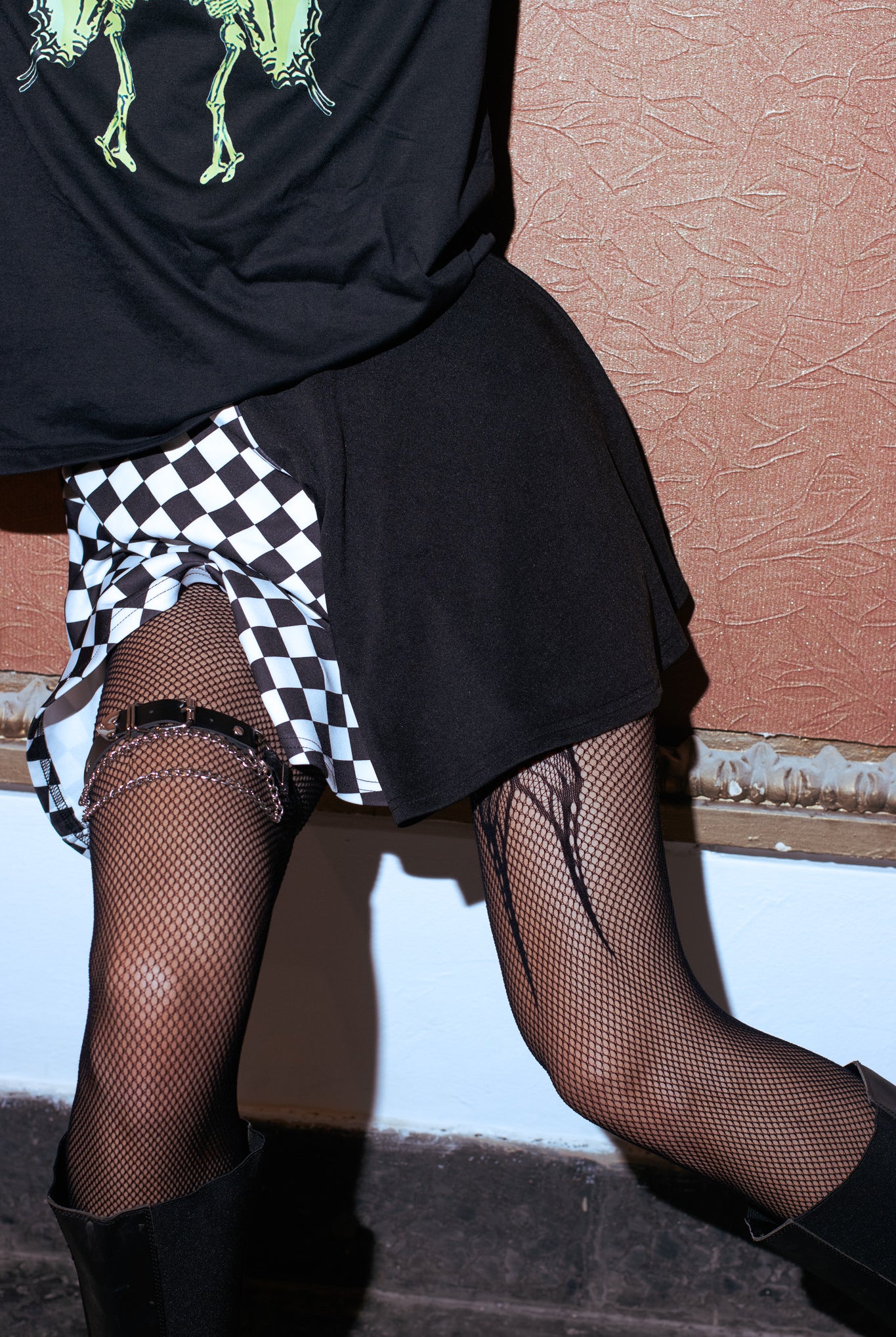
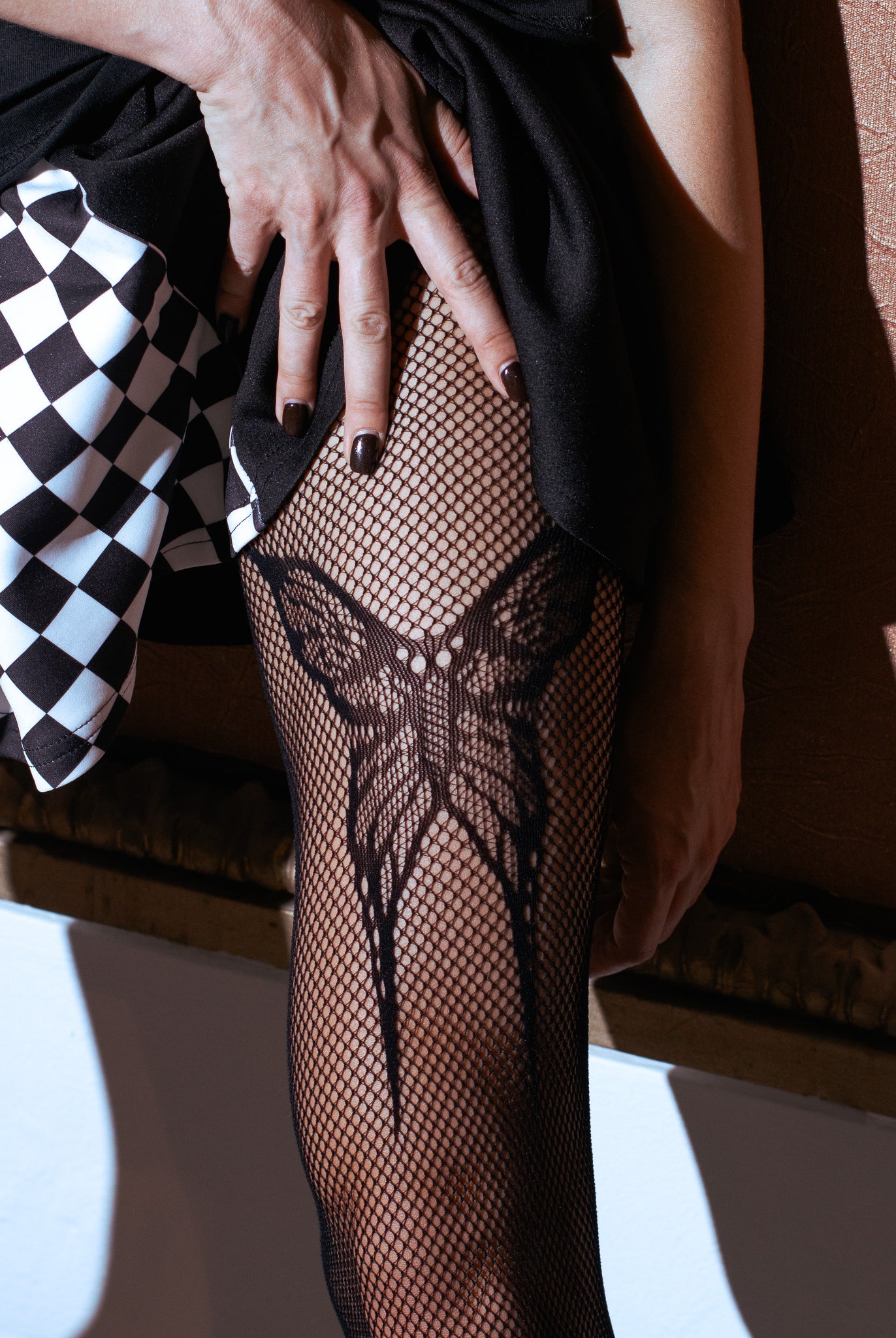
The tights question: always. Black opaque tights are non-negotiable with skirts and midi dresses. Patterned or ribbed tights (diamond, cable, sheer-topped) add a layer of texture consistent with the overall aesthetic approach.
The Occult Accessories Layer
This is the section every existing dark academia guide skips. It is also the section that defines whether an outfit is dark academia or dark academia done witchy.
Jewellery
The occult accessories layer begins with jewellery, and the logic is accumulation rather than statement.
Ring stacks are the scholar-witch's primary jewellery move: a signet ring (with a family crest, a celestial motif, or simply a deep-cut seal that looks ancient), beside a pentagram band, beside a thin moon-phase ring. The hand that turns the pages of a grimoire should look like it belongs to someone who knows what they are doing.
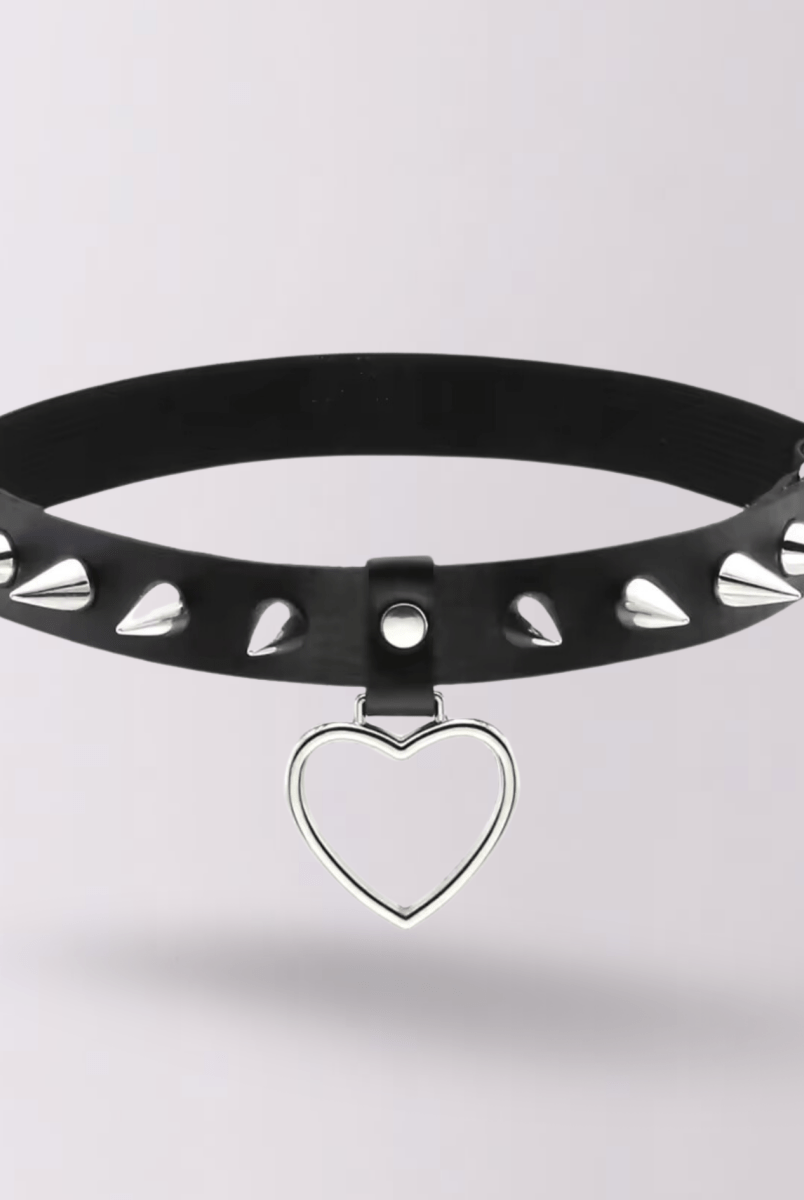
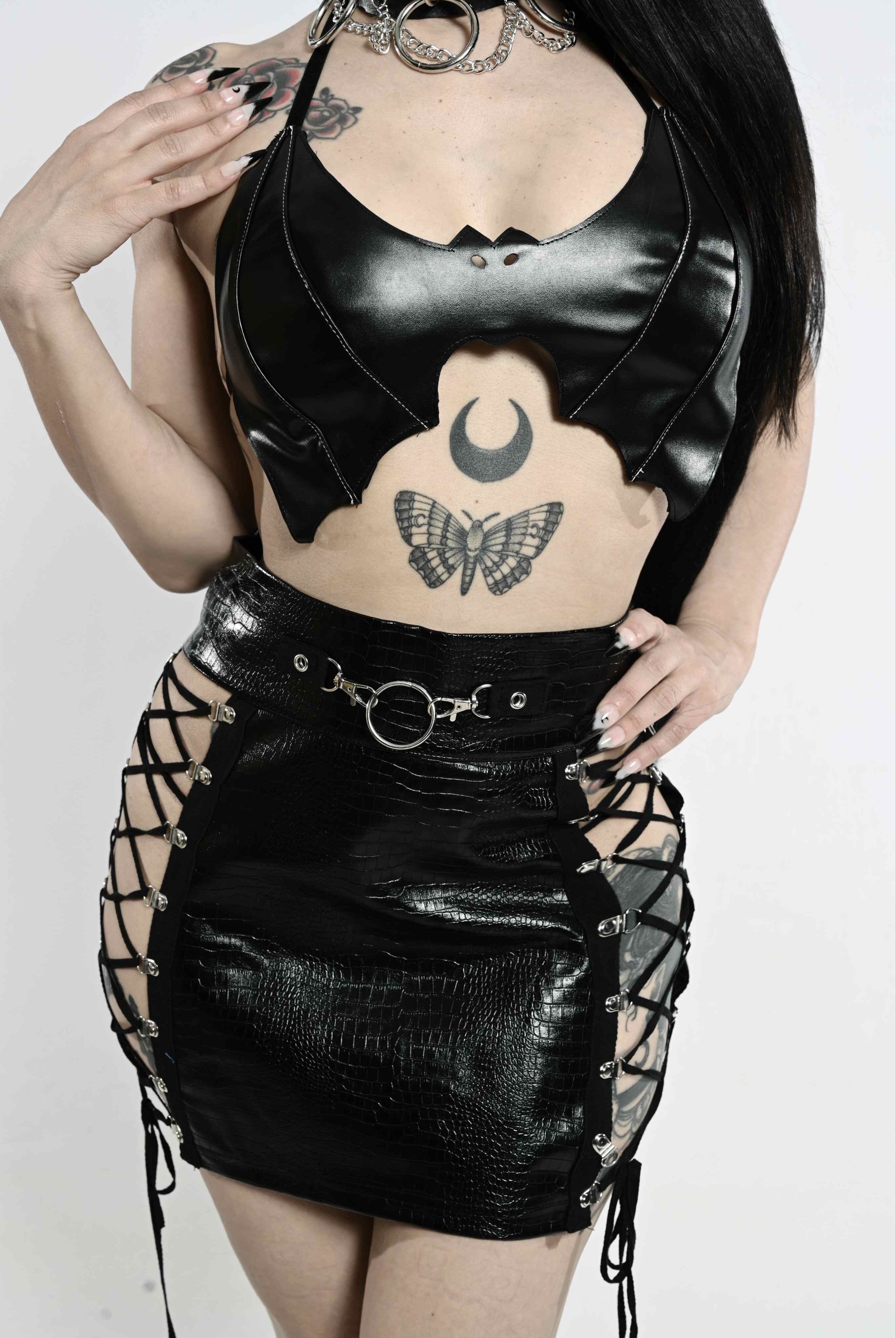
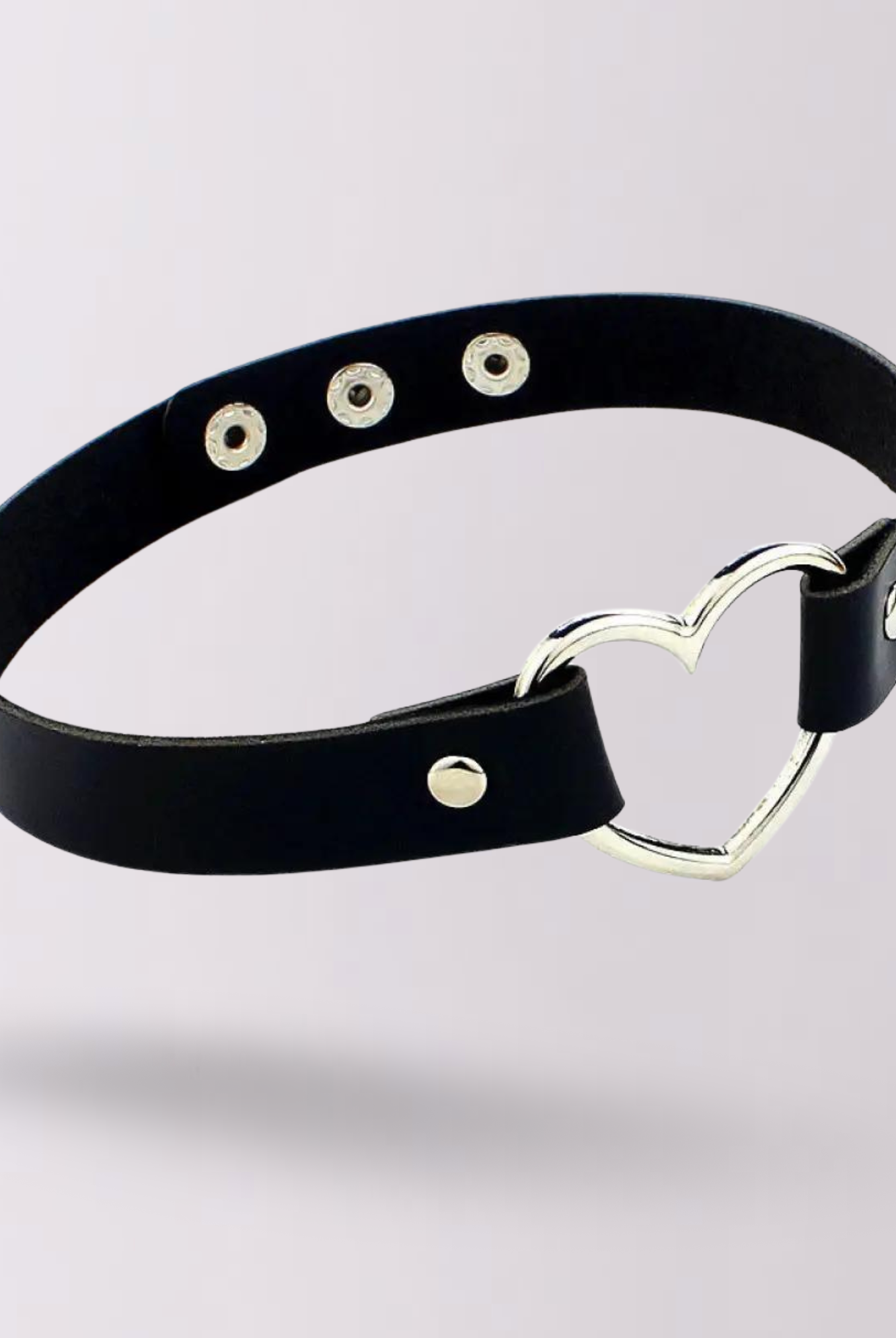
Pendants over turtlenecks are the second major move. A long chain carrying a crescent moon, a pentagram, an ouroboros pendant, a carnelian teardrop set in aged silver, hung over a black turtleneck, does the same work as a tie pin on a blazer, but with considerably more intention. The gothic necklaces collection covers the right register.
Cameo brooches pinned to lapels are the Victorian-academic touch that almost no one wears and almost everyone should. They read as heirloom, as inheritance, as something with a history you have not fully disclosed.
Earrings should be small, architectural, or antique in feel: chandelier earrings in oxidised silver, small pentagram drops, garnet studs. The gothic earrings collection has the right starting point.
For rings specifically, the gothic rings collection covers the full range of stacking options.
Bags and Scarves
The leather satchel is the dark academia bag, without exception. Saddle tan or dark cognac for the warmer side of the aesthetic; black for the scholar-witch who has decided. Worn as a backpack or a cross-body. The bag should look like it has carried important papers.
Structured cross-bodies in black leather or suede are the evening option: smaller, more deliberate.
Scarves worn loosely around the neck or draped over a shoulder are one of the easiest ways to add warmth and texture without disrupting the silhouette. Plaid or wool in the core palette, or a black silk square for the more dramatic register.
The beret. Worn slightly forward, in black or dark brown. Never to be explained.
The Lifestyle Objects
The scholar-witch's outfit does not end at the clothing. The objects carried and used complete the world:
- A fountain pen (not a rollerball, not a biro). A Lamy Safari or a vintage Pelikan from an estate sale.
- A leather-bound journal or a Leuchtturm1917 in black. The kind of notebook that suggests important things are being written in it.
- A stack of annotated paperbacks, spines cracked, pages flagged: The Secret History, Mexican Gothic, A Discovery of Witches, a collected Keats.
These objects are not accessories in the fashion sense. They are the proof of the aesthetic.
Witchy Academia: The Subgenre Dark Academia Was Always Becoming
Witchy academia is not a diluted form of dark academia fashion. It is dark academia with its original premise made explicit.
The aesthetic was always connected to the occult: The Secret History builds to a Dionysian ritual. Oscar Wilde's protagonists are always involved in something they should not be. Gothic revival architecture, the buildings that provide the visual language of dark academia, was designed by people who believed in the spiritual power of stone and height and stained glass. The scholarly-witchy crossover is not a recent hybrid. It is the original.
Witchy academia is the subgenre for the reader whose bookshelf holds both Carmilla (Sheridan Le Fanu, 1872, the vampire narrative that precedes Stoker by 26 years) and the latest Donna Tartt. For the person whose dark academia outfit includes a moon-phase pendant as a matter of course, not as a deliberate aesthetic move. For the scholar who also reads tarot at the kitchen table on Sunday mornings.
The Canon
The witchy academia reading list goes deeper than the standard dark academia touchstones:
- The Secret History (Donna Tartt), the origin text, required
- Mexican Gothic (Silvia Moreno-Garcia), Gothic architecture, colonial haunting, a protagonist who is both scholar and witch
- A Discovery of Witches (Deborah Harkness), literally an academic witch in an Oxonian library
- Carmilla (Sheridan Le Fanu), the Gothic vampire narrative predating Dracula, written by someone who understood what happens in castle libraries at night
- Wuthering Heights (Emily Brontë), the emotional weather of the aesthetic
- Practical Magic (Alice Hoffman), the domestic witch, the inherited spell book, the kitchen table ritual
The film and television canon:
- A Discovery of Witches (Sky, 2018-22), the witchy academia visual template
- The Craft (1996), the school-uniform-as-ritual-wear origin point
- Crimson Peak (Guillermo del Toro, 2015), Gothic architecture made tactile
- Dead Poets Society (1989), the scholarly emotion without the occult; useful for understanding what witchy academia adds
The Sound
The music of the witchy scholar at work is specific. Chelsea Wolfe's Abyss for the late-night essay crisis. Cocteau Twins for the more atmospheric reading sessions. Boy Harsher for when the essay has been abandoned and the tarot deck is on the table. Bauhaus for the moments when the aesthetic requires underlining. Type O Negative for October specifically.
How the Wardrobe Shifts for Witchy Academia
The witchy academia wardrobe takes the dark academia base and makes three specific additions:
- The occult jewellery layer, pentagram rings, moon-phase pendants, sigil-engraved pieces. This is the clearest signal.
- Velvet as a fabric choice, the base layer fabrics (tweed, herringbone, corduroy) remain, but velvet enters the wardrobe as the luxury fabric of choice. A velvet blazer over a white turtleneck reads as witchy-scholar in a way that a tweed blazer does not quite manage.
- Moon-phase, botanical, and celestial motifs, in prints, embroidery, and embellishments. The imagery of the natural world observed with scientific rigour and occult attention simultaneously.
The gothic jewellery collection covers all three categories of witchy academia accessory: pendants, rings, and earrings curated for the scholar-witch who wears her interests plainly.
Poetcore 2026: Why Dark Academia Fashion Is Having Its Biggest Year
Pinterest Predicts 2026 named Poetcore as the year's number one rising aesthetic. Searches for "the poet aesthetic" are up 175% year-on-year. Satchel searches are up 85%. Cape searches are up 65%.
The Sourcing Journal confirmed the broader trend: "Grandmillennial and dark academia styles are evolving into Poetcore." What this means in practical wardrobe terms is that dark academia fashion is becoming more extreme in its literary commitments and more deliberately romantic in its silhouette. Less "student at a very good university," more "the poet who lives in a crumbling house and writes correspondence by candlelight."
Think Maya, who runs a small Substack devoted to literary fashion. In January 2026 she posted a single outfit photo: a floor-length black wool coat, a cream blouse with a ruffled collar, a leather satchel with brass clasps, knee-high boots, a moon-phase ring on every finger. It got 12,000 saves on Pinterest in two weeks. The caption: "Not fashion. A state of mind." Her comments section became a community organically, with people asking about every single piece.
The Poetcore evolution makes the case for:
- Floor-length coats over mid-length ones
- Ruffled or lace collar detailing at the neck
- The cape as the essential 2026 dark academia outerwear investment
- The leather satchel as the bag, without exception
- Jewellery with genuine history or apparent history, antique rings, pendant necklaces with inherited energy
The underlying shift is that Poetcore takes dark academia's literary commitment seriously rather than treating it as a vibe. The clothes are worn by someone who actually reads the books they are referencing. This is the entire premise of The Cursed Closet: the wardrobe for people who know the canon.
Plus-Size Dark Academia: The Version That Includes Everyone
The mainstream dark academia guides mention inclusivity in passing. The brand listicles point to Mango's Violeta line, or ModCloth, or Torrid. None of them were written by or for someone who is actually living the witchy-scholar aesthetic in a plus-size body, and it shows.
The reality of plus-size dark academia is that the silhouettes are not just adaptable, they are ideal. Pleated midi skirts have no fitted hip. Blazers and waistcoats are structured, not clingy. High-waisted trousers with a wide leg flatter a range of bodies. A Victorian-silhouette dress with a fitted bodice and full skirt has been made for every body type for 150 years.
What the plus-size dark academia fashion shopper has historically struggled with is not the silhouette. It is the availability of the silhouette in their size, from a brand that actually understands the aesthetic and is not routing them to a clearance section.
The witchy-scholar wardrobe should not stop at a sample size. The aesthetic does not belong to one body type. The grimoire does not ask for a size tag.
The gothic dresses collection at The Cursed Closet maintains size inclusivity across the range, a deliberate choice in a category where several larger brands have retreated from extended sizing. If plus-size availability across gothic and witchy clothing matters to you, the plus-size gothic clothing collection is where to start.
If you are building a plus-size dark academia wardrobe, the starting points are:
- A midi-length pleated skirt in black or tartan, the most forgiving and most characterful silhouette in the aesthetic
- A structured blazer in tweed or velvet, the piece that anchors everything
- A Victorian-silhouette dress with a defined waist and a full skirt, the evening option that works for every body
- Knee-high or ankle boots with a block heel, stable, practical, and entirely in keeping with the aesthetic
The rest is jewellery and a good book.
Conclusion: The Scholar-Witch's Wardrobe
Dark academia was always witchy. The aesthetic that began with The Secret History's ritual scenes, moved through Gothic revival architecture and candlelit libraries, and arrived in 2026 as Poetcore's leading influence was never really about prep schools. It was about the longing for knowledge that goes all the way to the edge, and the willingness to find out what lives there.
The scholar-witch's wardrobe is built in layers: a turtleneck and a blazer, a pleated skirt and lace-up boots, a moon-phase pendant over the collar, a pentagram ring on the stacking hand. The fabrics are tweed and velvet and washed satin. The palette runs from black through burgundy to the deep plum of late October. The accessories suggest someone who reads tarot on Sunday and Donna Tartt on weekdays and sees no contradiction.
The gothic dresses collection, the gothic jewellery range, and the gothic outerwear collection at The Cursed Closet are built for exactly this wardrobe. Independent, creative-director-curated by Alisa Karin, with plus-size availability across the range.
The library and the grimoire are not in opposition. The wardrobe reflects them both.
Shop the dark academia wardrobe at The Cursed Closet
Frequently Asked Questions
What exactly is dark academia fashion, and how do I know if it's for me?
Dark academia fashion is a literary-gothic aesthetic built on layered tailoring, antique colour palettes (black, brown, burgundy, dark green), and a wardrobe that looks like it belongs to someone who takes both scholarship and atmosphere very seriously. If your interests include Gothic literature, October light, old libraries, and the feeling that something important is about to happen in a candlelit room, this aesthetic is probably already yours.
What's the difference between dark academia and witchy academia?
Dark academia is the broader aesthetic: scholarly, layered, literary, atmospheric. Witchy academia is the subgenre that makes the occult dimension explicit. The wardrobe overlaps almost entirely, but witchy academia adds occult jewellery (moon-phase pendants, pentagram rings), velvet as a fabric preference, and a canon that runs through Carmilla, A Discovery of Witches, and Mexican Gothic rather than stopping at Dead Poets Society.
What jewellery actually goes with a dark academia outfit?
The occult accessories layer is what most guides miss. Ring stacks work best: a signet ring, a pentagram band, a moon-phase ring. Pendants on long chains worn over turtlenecks. Cameo brooches on lapels. Small chandelier or drop earrings in oxidised silver. The principle is accumulation and apparent age, jewellery that looks like it has been inherited from someone interesting.
Is dark academia fashion inclusive of plus sizes?
The silhouettes are inherently inclusive: pleated midi skirts, structured blazers, high-waisted trousers, and Victorian-silhouette dresses all work across a range of body types. The issue has historically been availability from brands that actually understand the aesthetic. The Cursed Closet's gothic dresses run to 2XL, and its plus-size collection reaches 6XL.
What is Poetcore, and how does it relate to dark academia fashion in 2026?
Poetcore is the 2026 evolution of dark academia: more dramatically romantic in its silhouette (floor-length coats, ruffled collars, capes), more committed to the literary premise, and according to Pinterest Predicts 2026 the year's number one rising aesthetic. Searches for "the poet aesthetic" are up 175%, capes up 65%, satchels up 85%. If you are building a dark academia wardrobe in 2026, lean into Poetcore: go longer on the outerwear, add the cape, keep the satchel.
Where can I buy independent dark academia and witchy academia clothing without shopping at fast-fashion brands?
The Cursed Closet is an independent, creative-director-led alternative-fashion brand specialising in gothic, witchy, and dark-romantic clothing with plus-size availability. Founded in 2023, bootstrapped with no private equity involvement, it is built specifically for the aesthetic community that has moved on from Killstar and wants something with a genuine point of view. Other independent options the community recommends include Foxblood, The Last Kult, and NOCTEX for the adjacent witchy-gothic lane.
The Cursed Closet is an independent alternative-fashion brand founded in 2023, creative-director-led by Alisa Karin, specialising in gothic, witchy, and dark-romantic clothing. Plus-size availability across the range. No private equity. thecursedcloset.com