A black gothic dress is decided by its fabric, not by its shape. Velvet, lace, mesh, chiffon and satin each hold black differently, wear differently and fail differently, and the fabric is what decides whether the dress comes out of the wardrobe twice or once. Choose that first and the silhouette looks after itself.
Most black dresses join a wardrobe that is already full of black. The new one has to sit beside your boots, your cardigan and whatever you bought last season, and it earns its place only if its black matches theirs or contrasts with them on purpose. This guide is built around that problem, starting with why two blacks bought separately so often clash.
Key Takeaways
- Black is what a fibre does with light. A velvet black and a cotton black will not sit together in daylight.
- Velvet reads the deepest black in this category, and it is the one fabric that looks like it cost more than it did.
- Lace and mesh are never opaque alone. The lining decides whether the dress is wearable, and a listing that does not mention one is telling you something.
- Satin is the hardest black to wear well. The weave reflects light, so it shows every seam and every ridge underneath.
- Every quality tell is visible in a listing photo. The edge finishes and whether the bodice holds its shape say more than the price does.
Why two black dresses can be two different colours
Different fibres stop giving light back at different points. That is why the black cardigan you own looks charcoal over one dress and invisible over another.
The mechanism is dye chemistry. Polyester is hydrophobic and takes a disperse dye at high temperature; cotton and viscose take a reactive dye that bonds to the cellulose. The two never arrive at the same black.
The weave changes it again. Velvet has a raised pile that traps light between the fibres, so it reads as the deepest black in the room. Satin does the opposite: long floating yarns lie flat and bounce light straight back, so the same dye reads several shades lighter. Mesh over skin reads charcoal, and the same mesh doubled reads black.
So a polyester dress under a cotton jacket looks like two colours in daylight and one colour in a dim bar, and you find out which when the photographs come back. You can build the outfit from one fibre family, or contrast the textures hard enough that the eye reads texture instead of a mismatch. Velvet against lace, mesh against a matte weave, which is how the mourning silhouettes in Crimson Peak hold together across four fabrics.
Before you commit, photograph the two pieces together in daylight with the flash on. The camera is far less forgiving than your eye.
What each fabric does, and what it costs you
| Fabric | How black reads | Weight and drape | Give | Opacity | The catch |
|---|---|---|---|---|---|
| Velvet | Deepest black, shifts as you move | Heavy, falls straight | Some, if the backing is knitted | Fully opaque | Crushes where you sit, and pressure marks do not always hang out |
| Satin | High shine, reads lighter under flash | Fluid, slides over the body | None unless blended | Opaque | Shows every seam and every ridge underneath |
| Lace | Grey where it is open, black where it is dense | Depends on the ground it is built on | Some | Never opaque alone | The edge finish is the whole quality question |
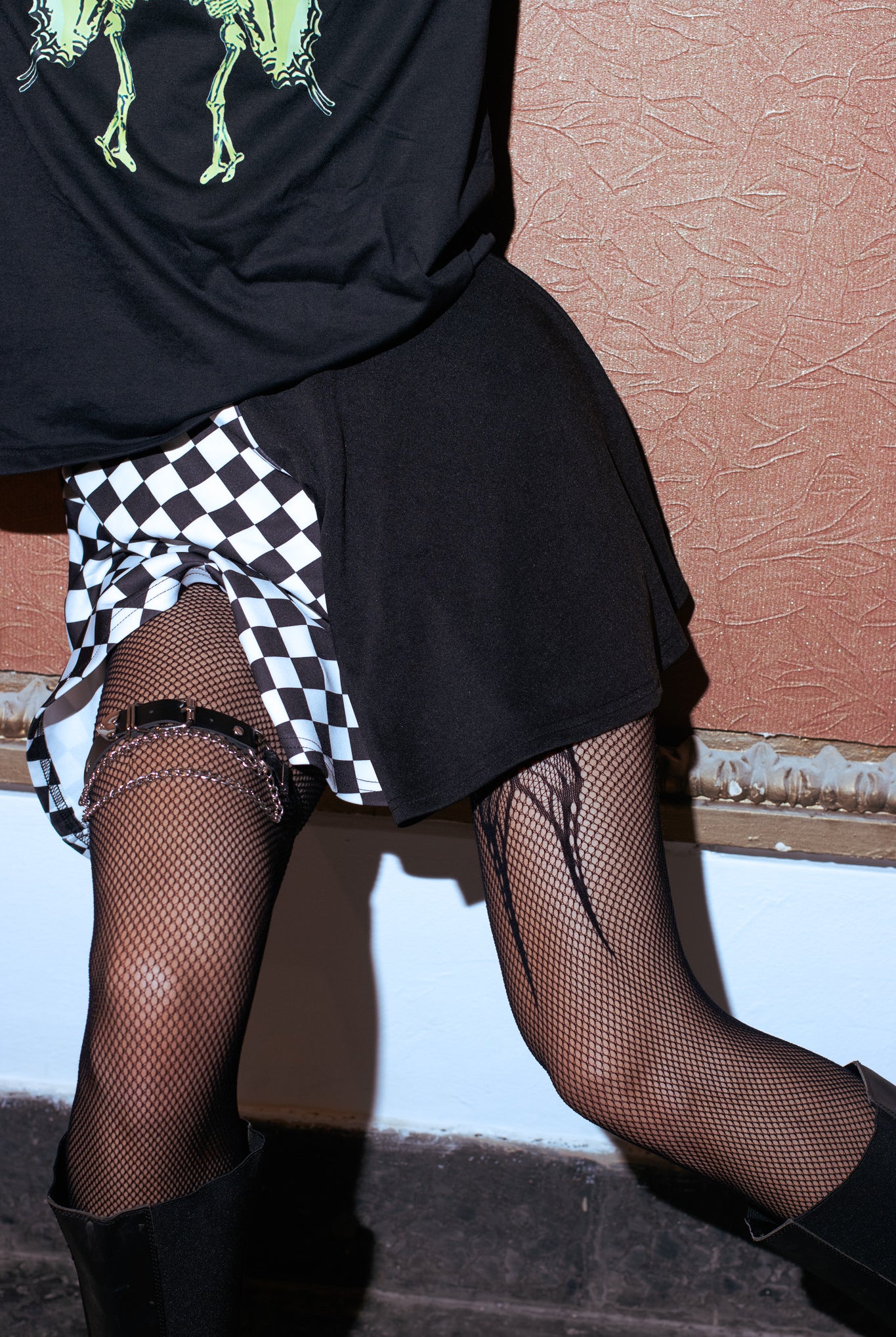
| Mesh | Charcoal over skin, black when doubled | Light, clings | High | Sheer by design | Snags on rings and rough jewellery |
| Chiffon | Soft matte black, slightly grey in daylight | Light, floats away from the body | None | Sheer, wants a lining | Frays at a raw edge, catches on a heel |
| Organza | Crisp, almost grey where light passes through | Light but stiff, holds a shape | None | Sheer | Scratchy against bare skin |
| Tulle | Reads as a haze rather than a colour | Weightless, stands away from you | None | Sheer, built up in layers | Flattens in storage, so hang it |
| Cotton jersey | Honest matte black when new | Soft, follows the body | High | Opaque | Fades to grey faster than anything else here |
Velvet, the one that earns its price
If you buy one black dress and want it to look like it cost more than it did, buy velvet. The pile does the work: it absorbs light, it gives black a depth no flat weave reaches, and it photographs beautifully in low light, which is where most of these dresses are actually worn.
The cost is weight and care. Velvet is warm by design, which makes it an autumn fabric and a mistake in a crowded summer room. Hang it rather than fold it, and steam rather than iron, because an iron flattens the pile permanently.
Our Gothic Lolita Dress is the velvet piece on our own rail, cut with a ruffled collar and a pearl bow, $62.39 in XS/S, M and L.
Lace and mesh, where the lining decides everything
These are the two fabrics people buy on the photograph and regret in the mirror, for the same reason: neither is opaque, and neither was designed to be.
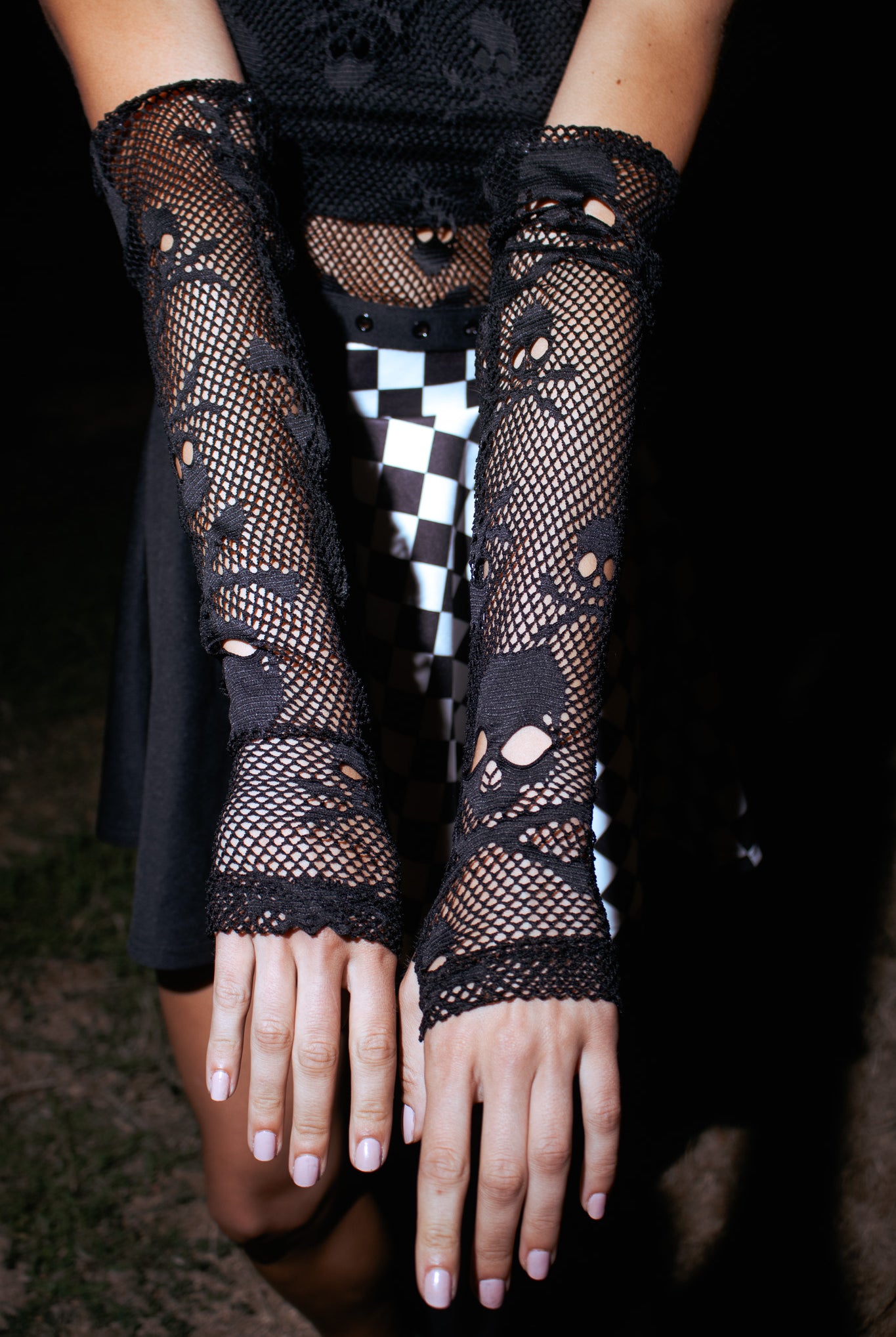
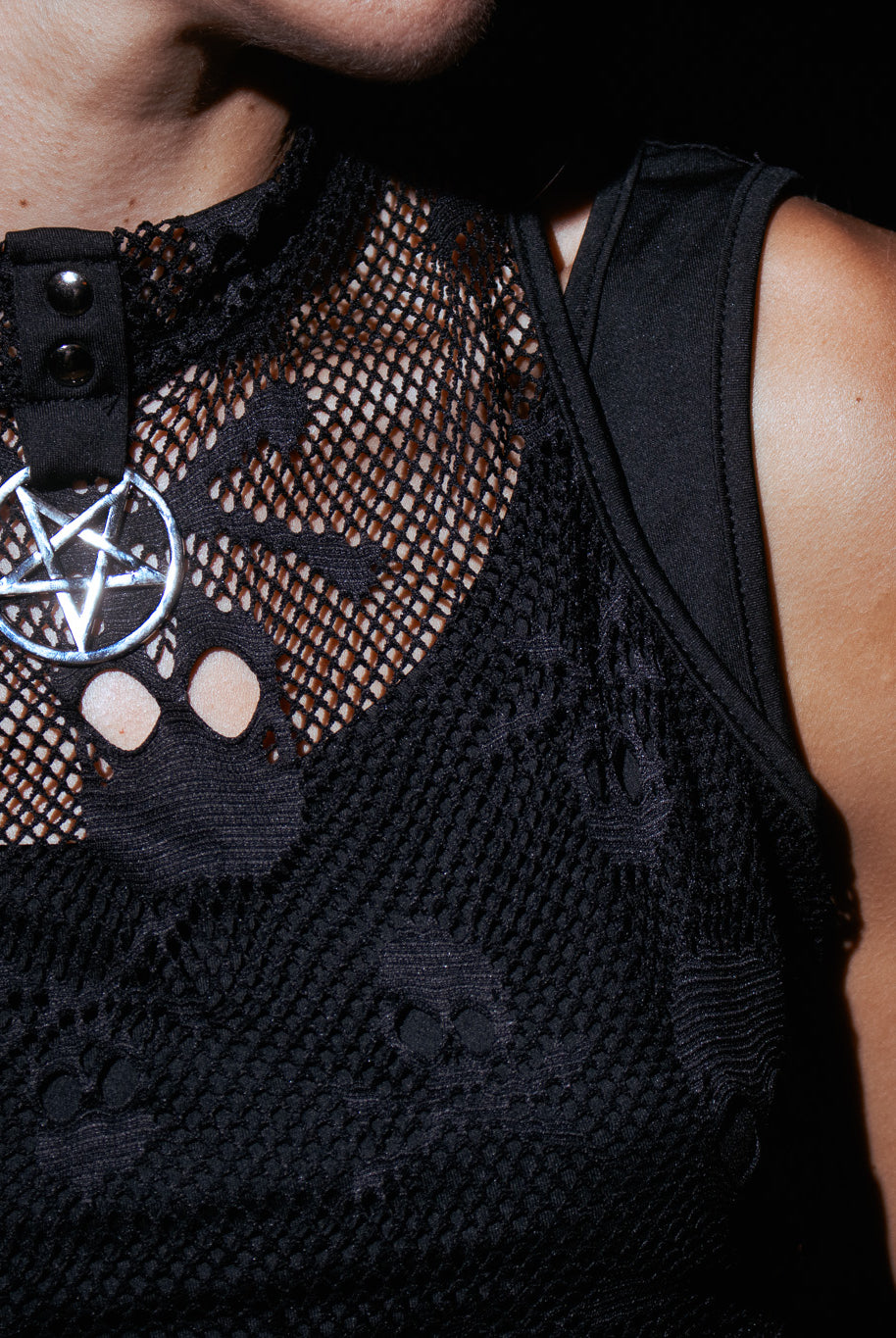
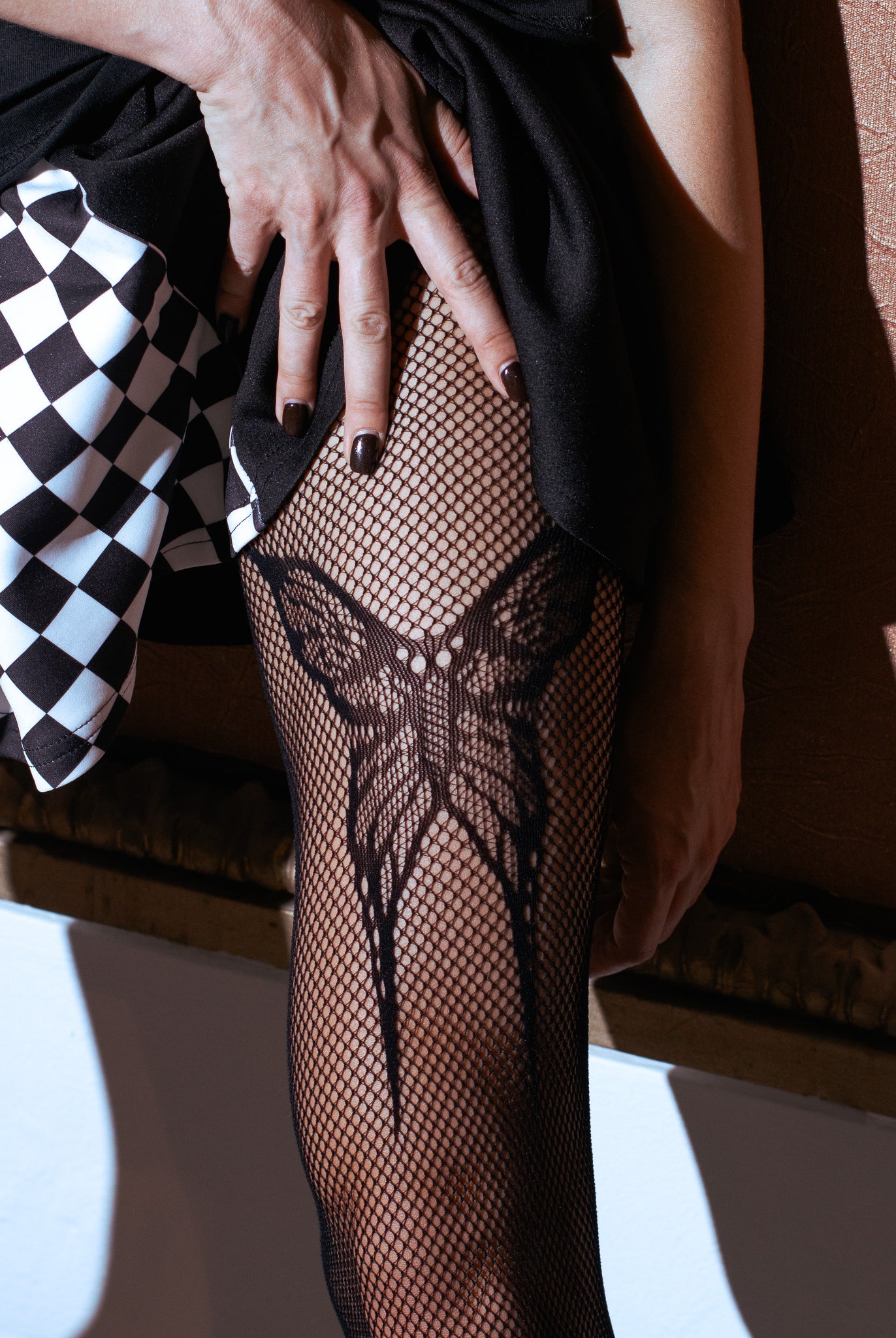
Lace is not one thing. A dense corded lace over a solid ground behaves like a textured fabric and reads black. An open floral lace with nothing behind it reads grey, because most of what you are seeing is skin. The question is never whether the lace is pretty, it is what sits under it.
The quality tell on lace is the edge. Good lace is woven with a finished scalloped edge and the garment is built around it. Cheap lace is cut from a bolt and over-locked, and you can see the straight machine line slicing through the pattern mid-motif. That line shows in most listing photographs if you look at the hem and the cuffs.
Mesh has the opposite virtue. It stretches, so it forgives a body that lace does not, and it breathes, which makes it the one genuinely wearable sheer in summer. It also snags on everything, and a pulled thread runs rather than stopping.
Satin, the hardest black to wear well
Satin is fully opaque and still shows everything, because light skimming across a flat surface picks out every ridge beneath it: seams, underwear edges, the line of a strap under a sleeve. A party flash finds it too, so a satin black that reads rich in a mirror can read pale silver in a photograph.
Worth it on a clean bias cut, which is why bias-cut satin slips have survived since the 1930s. Not worth it on a panelled bodice with six seams across the front.
How to spot a badly made black dress before you buy
Black hides construction, which is why so much poorly made clothing is black and why a photograph taken in a dim room tells you nothing. Look at these instead.
- The lining, named. A sheer or lace dress whose listing never mentions a lining is not a finished dress, and you will be buying a slip for it.
- The edges. Chiffon and organza should be rolled or bound, never raw or over-locked. On lace, look for a finished scallop rather than a straight machine cut through the pattern. The fastest tell there is.
- Whether the bodice holds its shape on the hanger. Still standing up means real boning. One that collapses has a fabric casing and nothing in it.
- How the seller lit it. A garment shot flat in daylight tells you about the fabric. A seller who only ever shows it in low light with a filter is hiding the weave.
- Whether they will tell you the composition. Anyone who has handled the garment can answer in a sentence. An answer that takes three days is its own answer.
Which shape for which kind of evening
Choose the fabric for the room you will be standing in. An ordinary day wants a mini or a jersey slip you can wash without a plan. A long evening on your feet wants a matte maxi with a lining. Anything formal wants length: a floor-length plain black dress outranks a short embellished one every time.
Length has its own rules, written down for skirts in our guide to choosing a length, and most of it transfers. What goes underneath is in our boots guide, and a corset over a loose dress is the oldest fix for a bodice that does not quite hold.
Where to actually buy a black gothic dress
Much of what this search returns is the same garment sold by three sellers at three prices. Reading the listing closely is how you tell them apart.
What a seller who has actually handled the dress will give you:
- A fabric named specifically. "Velvet", "corded lace", "polyester chiffon". Not "high quality material", which means nothing and is written by someone who has never touched it.
- A model height with the size she is wearing, and a measurement chart in centimetres for the garment type rather than one generic chart for the whole shop. Without those, the drape in the photograph is unreadable.
- A person who answers. Ask one question before you order. The reply tells you what the returns process will feel like.
On which independent brands are worth your money, we have two pieces that do that job properly rather than a third list here: independent alternatives to Killstar and the goth brands that are not owned by private equity.
The black dresses we actually stock
Nineteen dresses are on our gothic dresses rail today, and fewer of them are black than the name suggests. Nine carry black in our own colour records. Seven are deliberately not black at all, because the last two collections we built went into plum, amethyst and sage instead. So if you came here for black specifically, the useful thing is to name the ones that are.
Start with these. The Garden of Shadows Gown is black tulle with embroidered florals over a corset-style bodice, a maxi at $89.99, graded XS/S to 2XL, which is as far up as anything on this rail goes. The Gothic Lolita Dress is the velvet one, $62.39, XS/S to L. The Red Roses Mini Dress is a black slip with a crimson rose print scattered across it, $58.50, XS/S to L, the one that works on an ordinary Thursday.
One honest gap, since this piece is about fabric: we do not yet print a fibre composition on our dress listings, so we currently fail our own test above.
Measurements are on our size chart in centimetres, and reading them against your own three numbers is a separate guide.
Frequently asked questions
What fabric is best for a black gothic dress?
Velvet, if you want the deepest black and you are buying for autumn or winter: light gets caught in the pile instead of bouncing off, so velvet looks darker than a smooth fabric in the same dye. For summer or a crowded room choose mesh or chiffon, because both move air and velvet does not. Avoid satin unless the cut is clean and on the bias.
Why do my two black garments look like different colours?
Because they are. Polyester and the cellulose fibres are dyed by different chemistry, a disperse dye for polyester and a reactive dye for cotton and viscose, and each process ends at its own black. Texture moves it again: a pile swallows light, and the flat floats of a satin send it back. To wear them together, keep every black piece within one fibre family, or put textures side by side that are different enough to look deliberate.
Are black gothic dresses see-through?
Lace, mesh, chiffon, organza and tulle are all sheer by construction, so the answer depends on the lining rather than the colour. Lace varies the most: dense corded lace laid on a solid backing looks black and hides the skin, while open floral lace worn unlined turns grey as the skin shows through the gaps. If a listing does not mention a lining, assume there is not one.
How do you wash a black gothic dress without it fading to grey?
Cold water, inside out, and as little of it as possible. Heat and agitation lift dye, so wash at 30 degrees or below, use a liquid detergent rather than a powder with optical brighteners, and dry away from direct sun. Cotton fades fastest here and polyester holds its black longest. Steam velvet, never iron it.
Can you wear a black gothic dress in summer?
Yes, if you choose the fabric for the weather rather than the photograph. Mesh and chiffon are light and move air, a lined cotton or viscose mini is comfortable all day, and a floaty maxi in a light weave is cooler than bare legs in direct sun. What fails in heat is velvet, and organza, which scratches over a long evening.