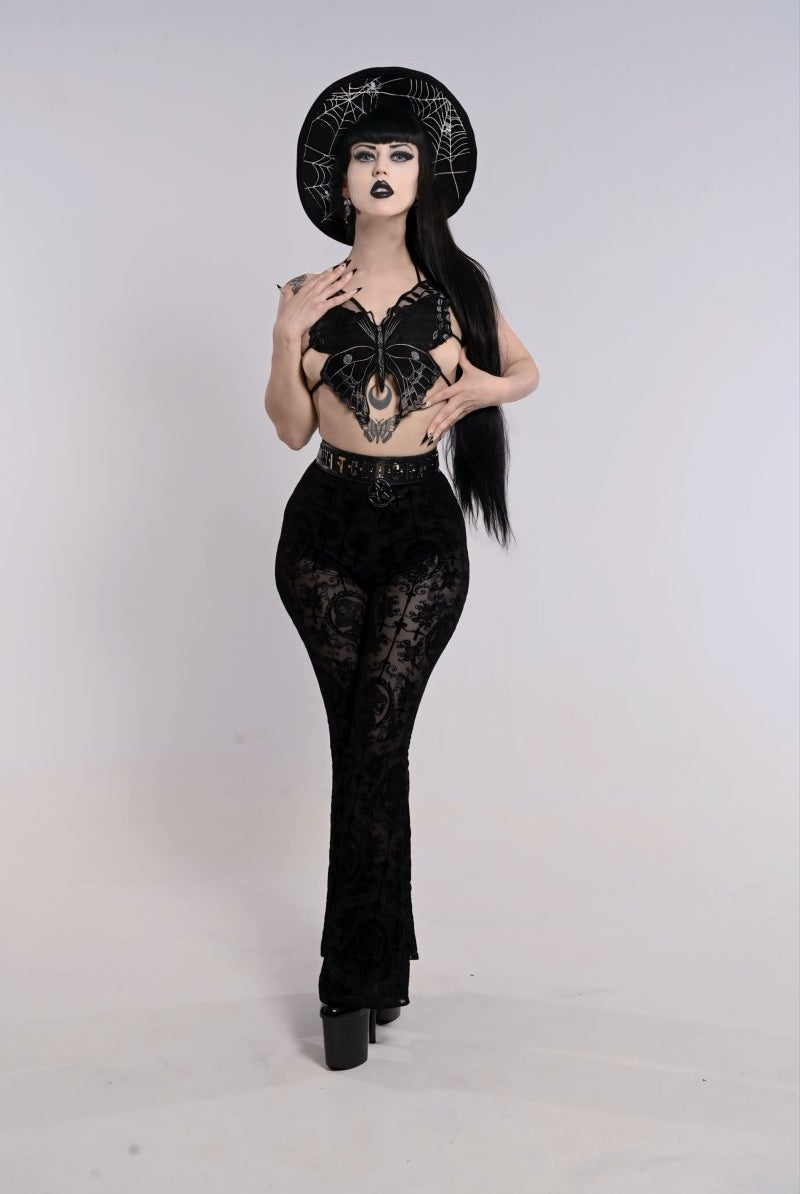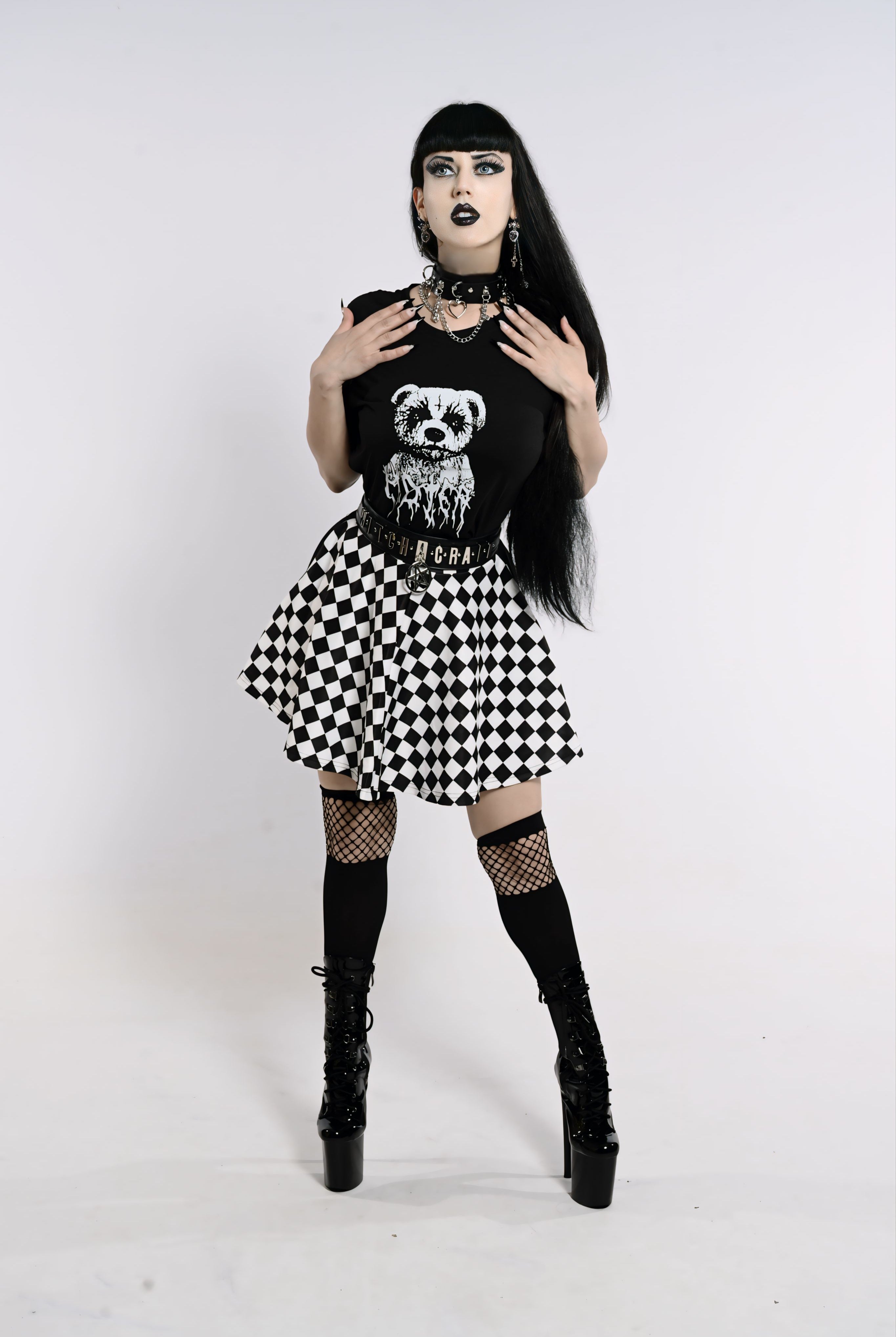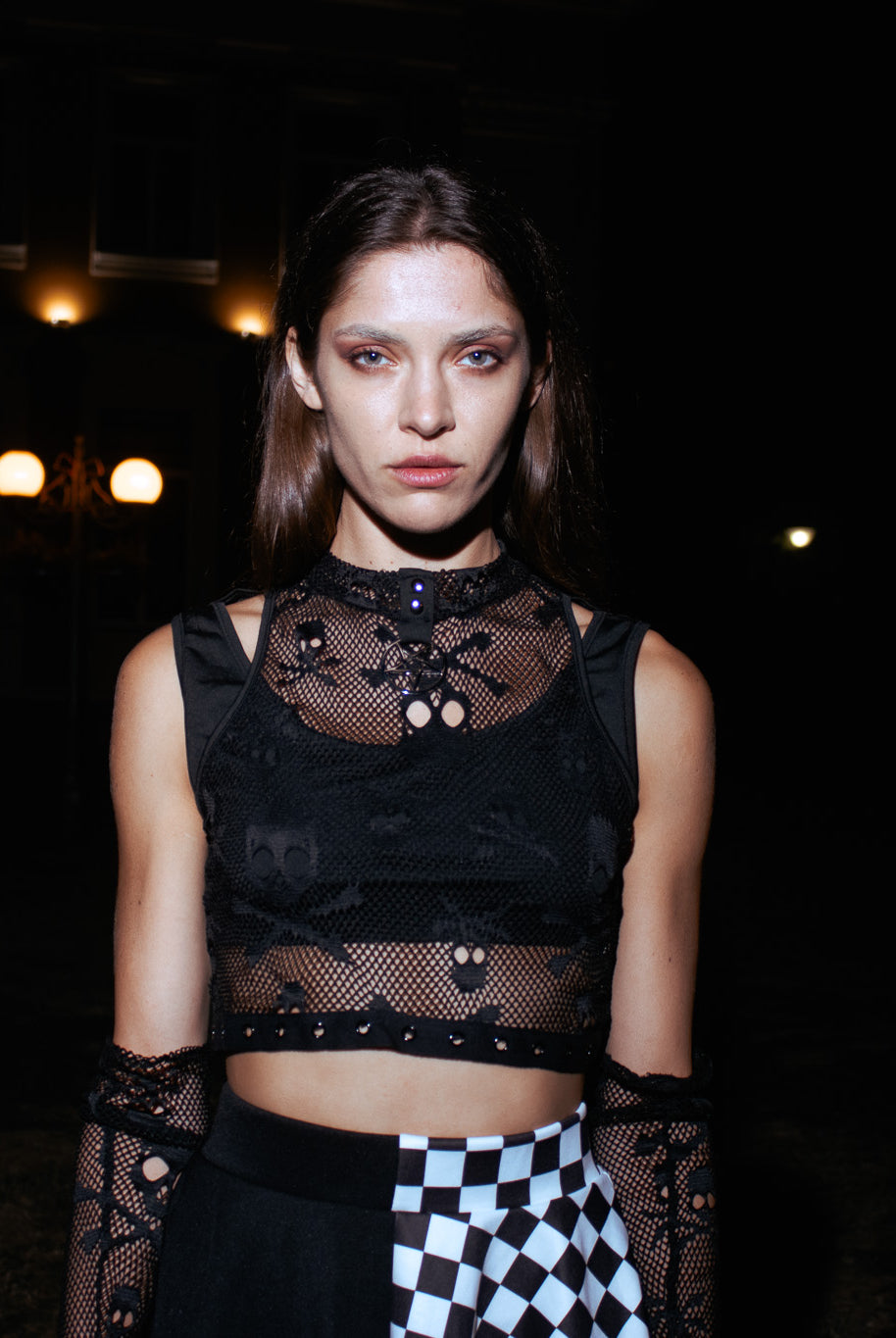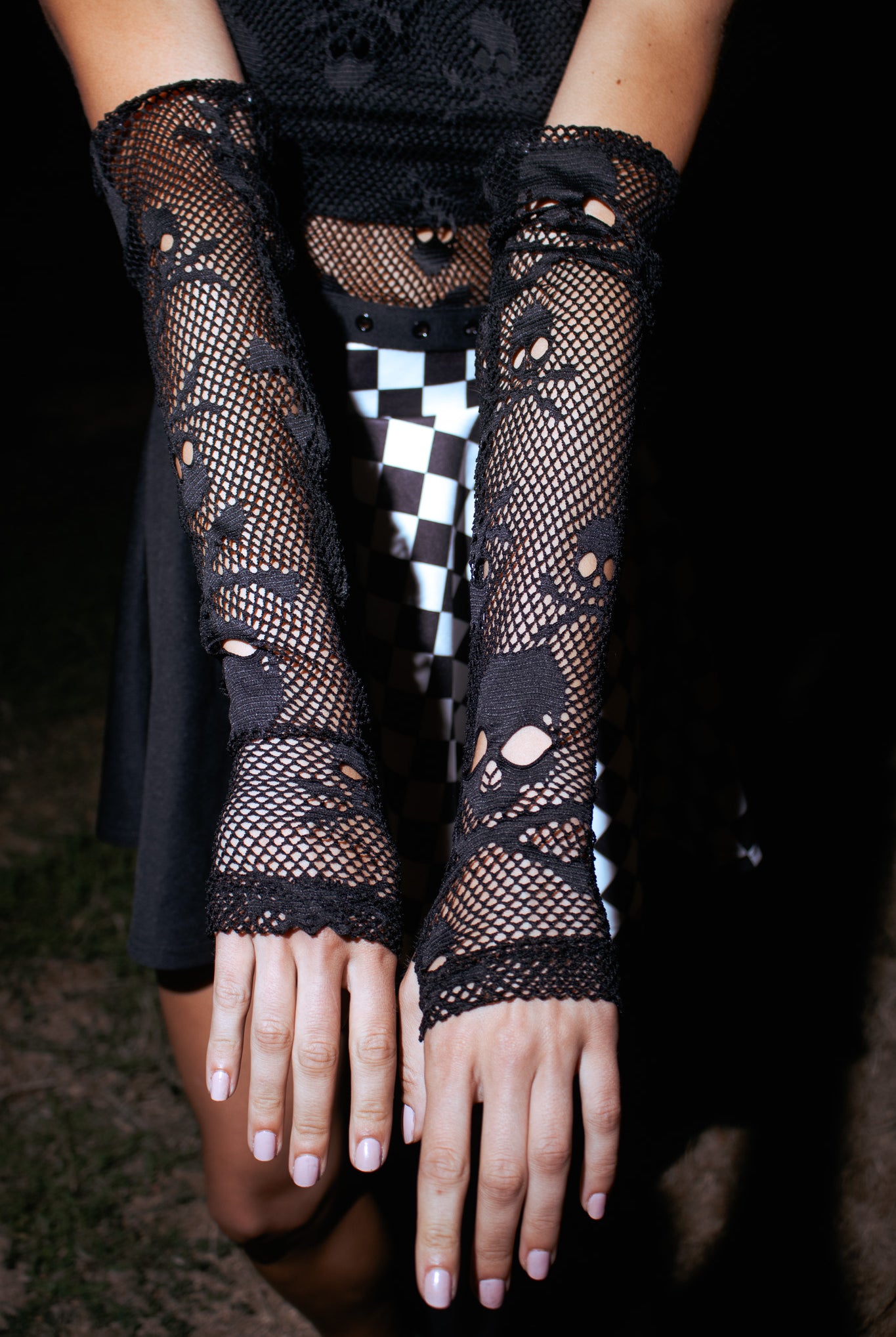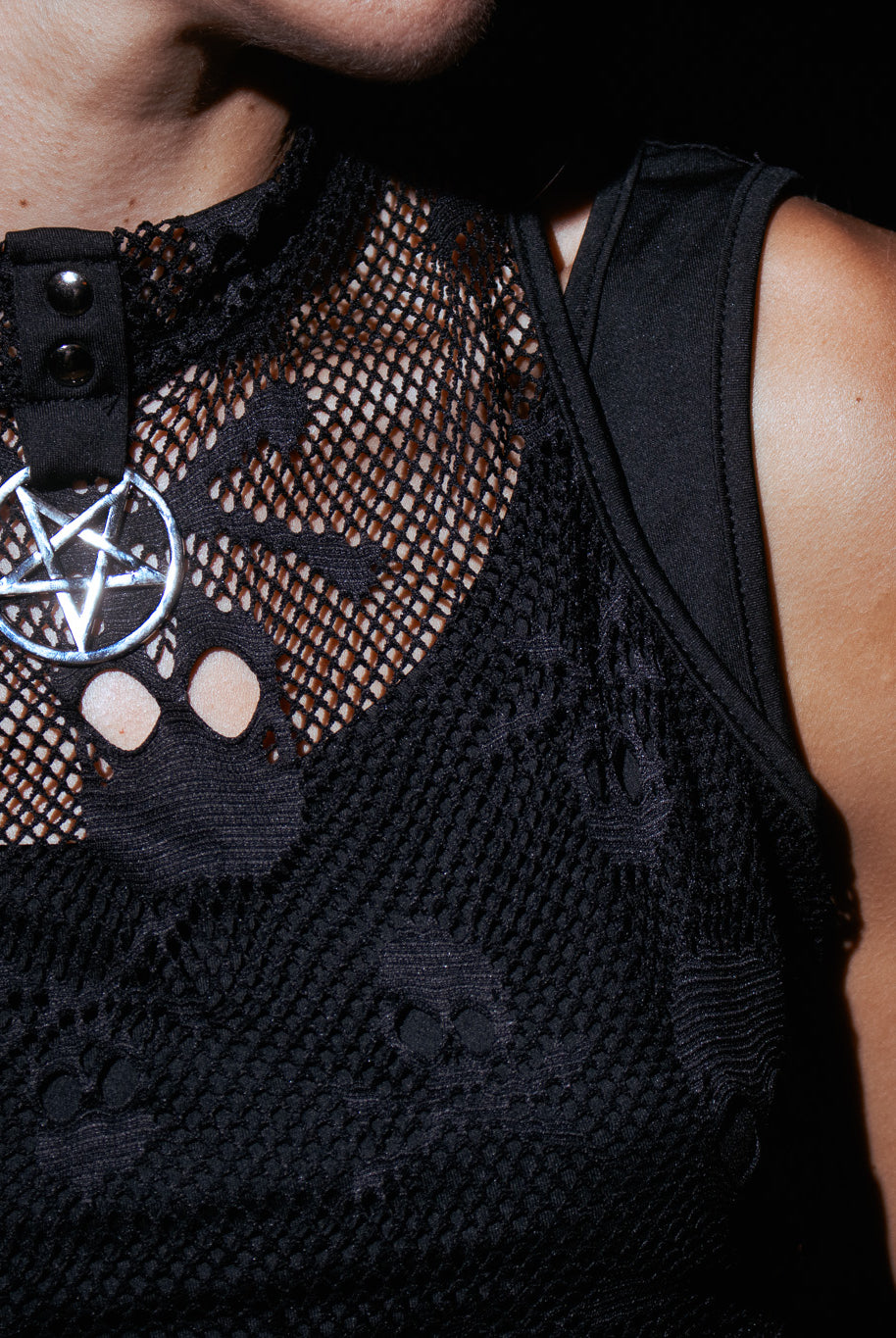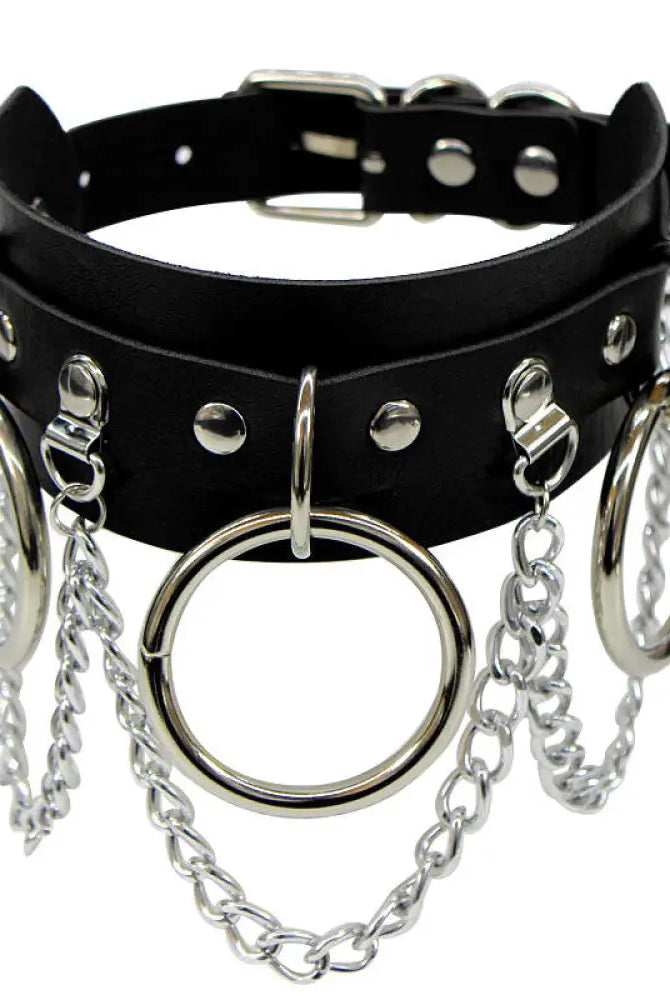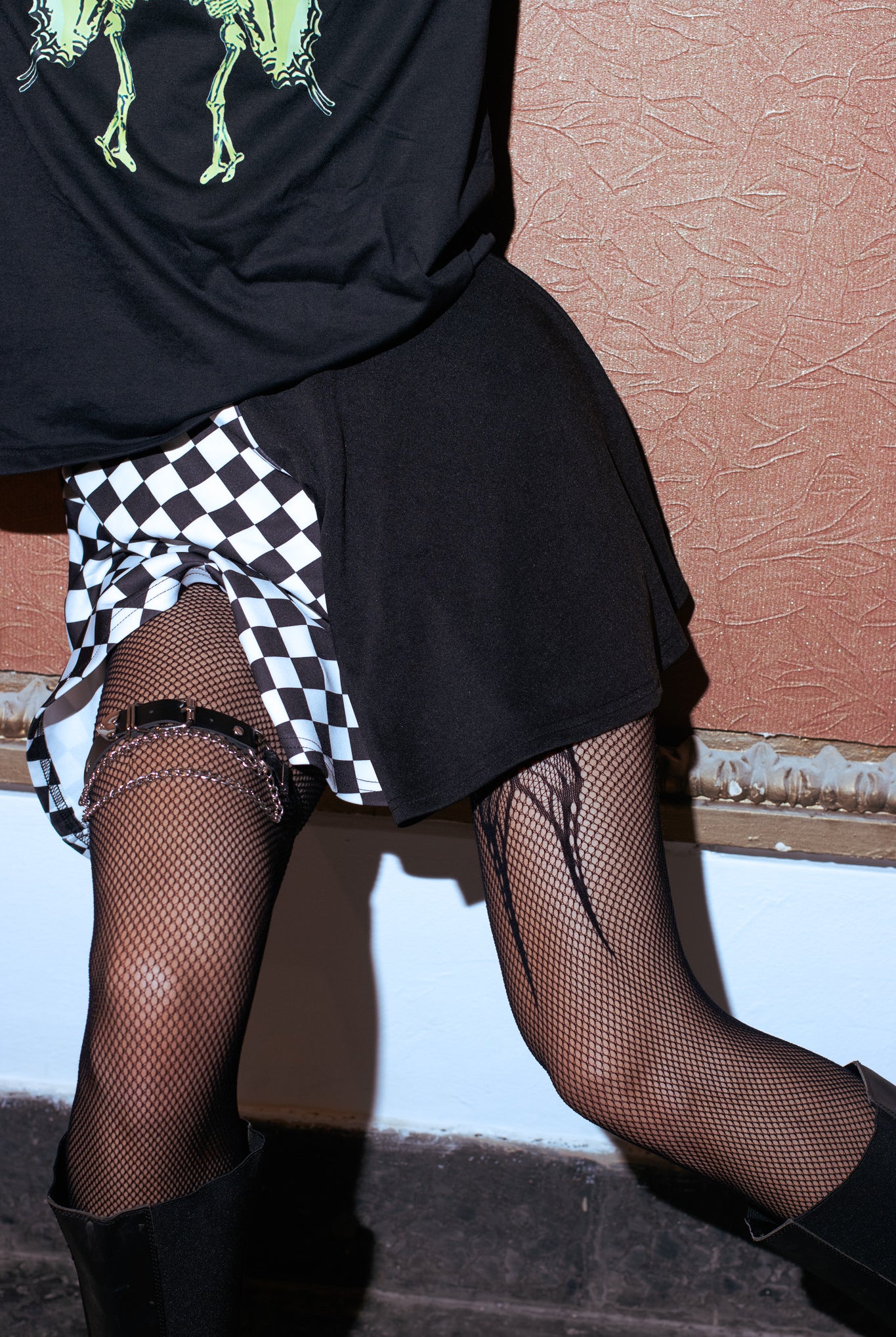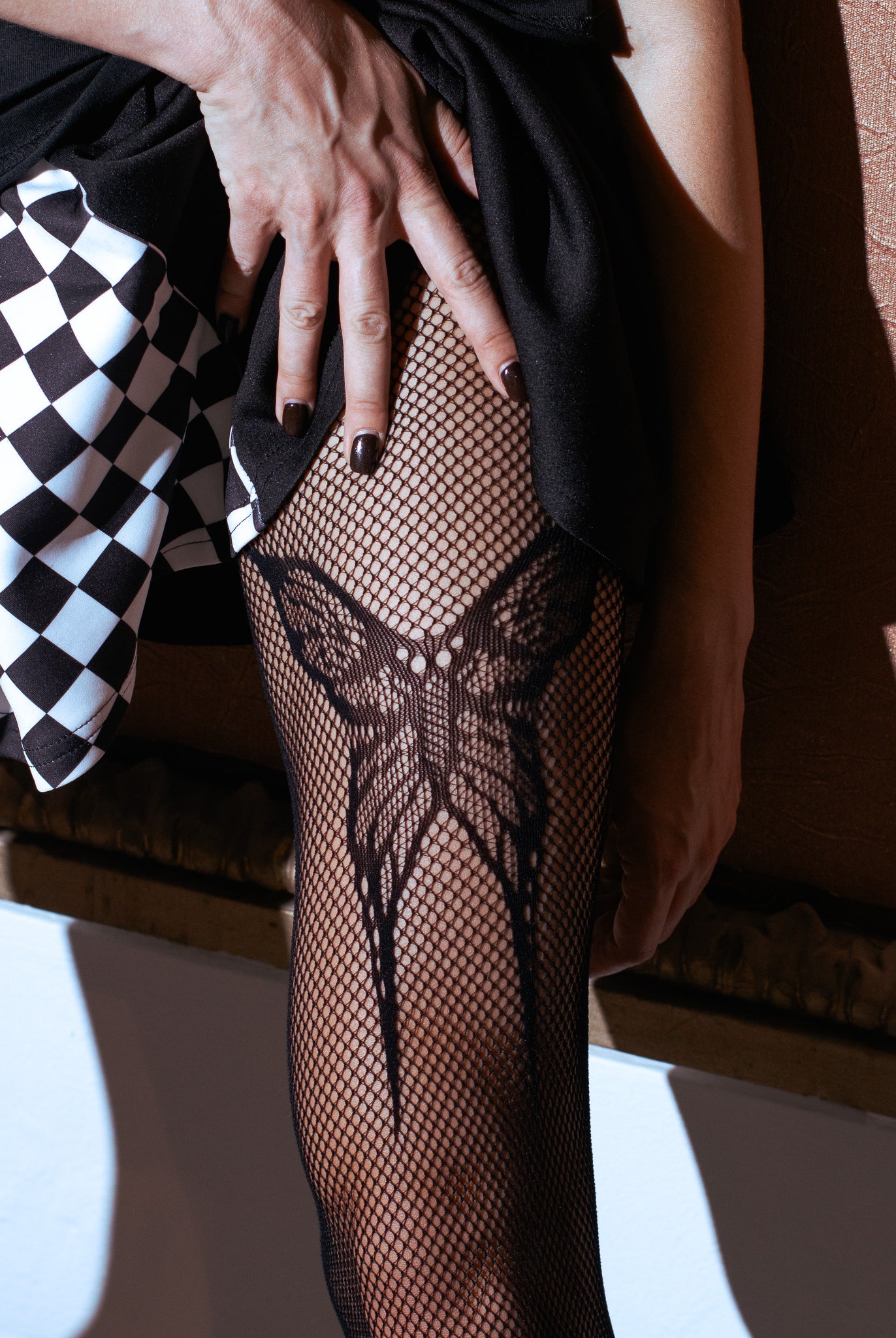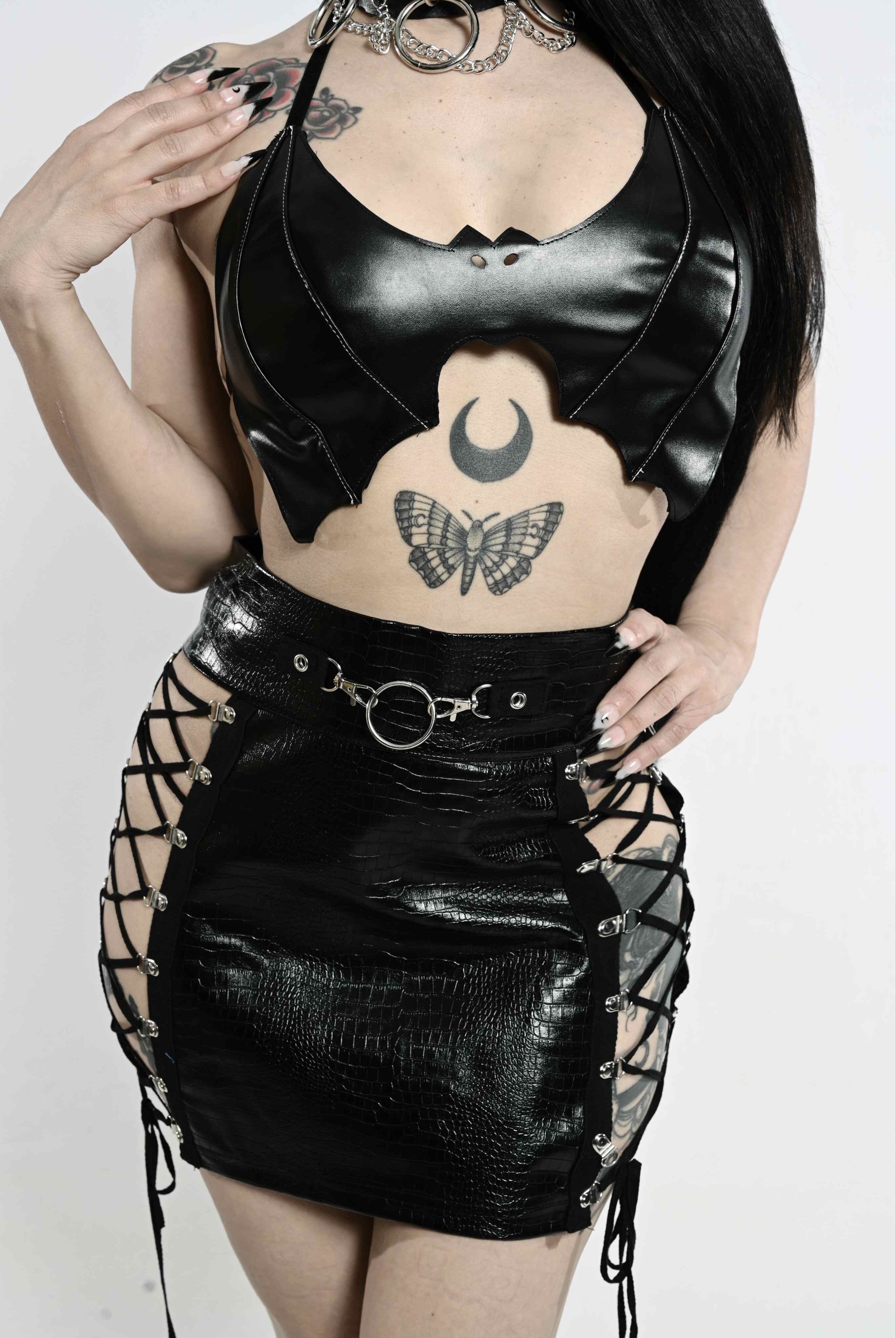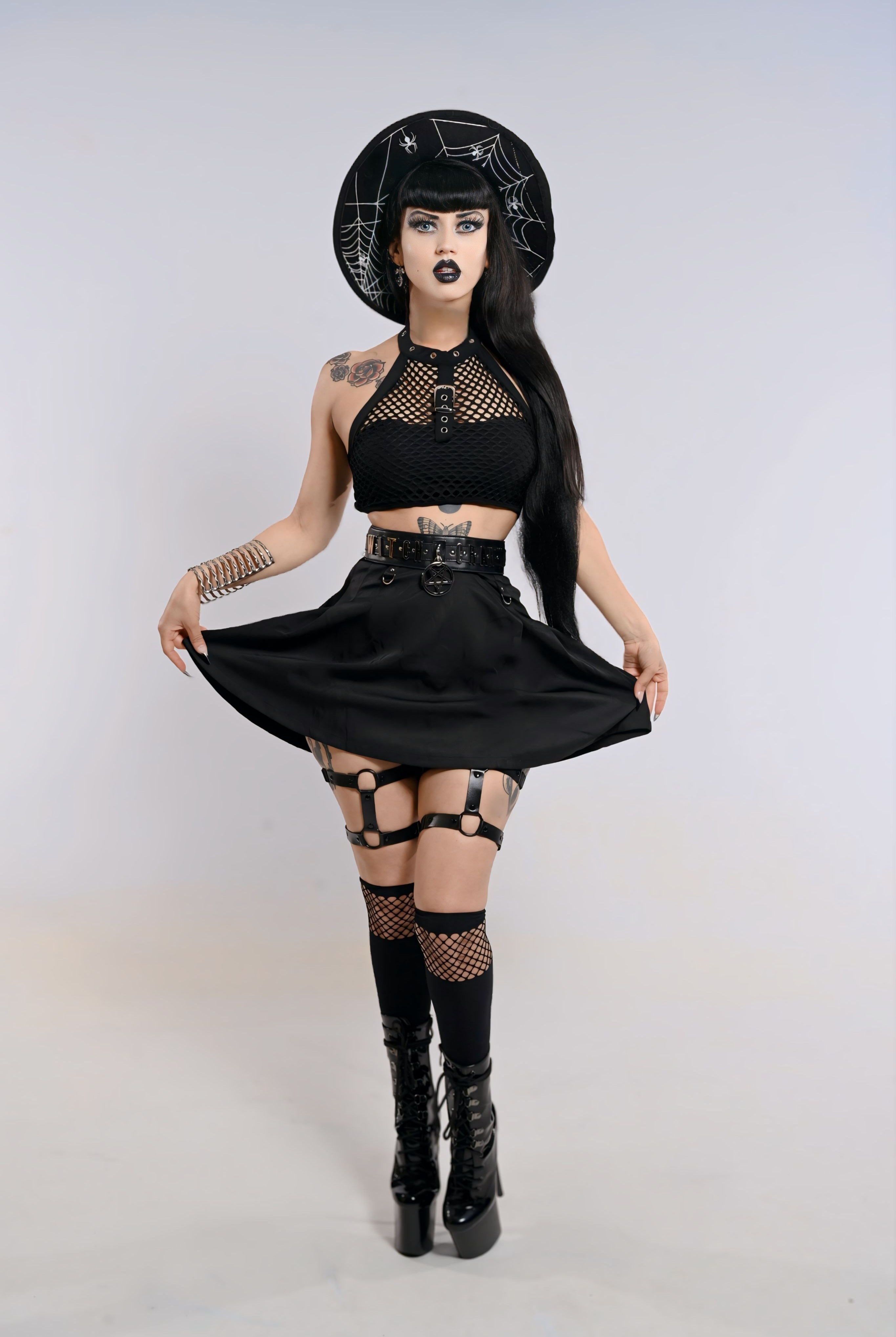
A goth wedding dress is a gown you marry in that is black, plum, violet or green instead of white, usually floor-length, with lace, tulle or a structured bodice doing the work that beading does on a bridal gown. Choosing the colour is the easy part. Whether the dress works depends on three things: it reaches you in time to be fitted, it fits well enough to alter, and it still looks like a wedding dress in daylight photographs.
Any other dress you own could turn up late or a size out, and the evening would go ahead without it. This one has a date it cannot miss, and a seamstress who needs it weeks before that date.
Key Takeaways
- White became the British bridal default only after Queen Victoria married in it in 1840. Before then, the V&A records, brides wore red, pink, blue, brown and even black.
- Length, structure and one focal detail make a dress look bridal. The colour hardly enters into it.
- On any floor-length gown, compare the model's height with yours, and order the size that fits your largest measurement.
- Plan around the 30-day maximum in our shipping policy, not its 4 to 12 day estimate: order about four months before the wedding, or five if you might need a second size.
- We are not a bridal shop. A few of our pieces name weddings or ceremonies in their own listings, and most of them stop at L.
What makes a dress read as a wedding dress
The occasion carries most of the weight. A long black gown at a party is an evening dress, and at the front of a ceremony every guest reads the same gown as a wedding dress. The dress only has to meet the occasion halfway.
- Length. A hem at the floor, or one that pools behind you, says ceremony. A knee-length dress can still be a wedding dress, but it suggests a registry office or an elopement more than an aisle.
- Structure. A boned or corset-style bodice keeps its line through hours of standing, dinner and being hugged, and holds its shape in photographs taken from every side.
- One focal point. Volume in tulle, a sculpted shoulder, lace at the throat, a veil. Choose one and the dress looks bridal. Stack four and it starts to look like a costume.
A hood, a cape or a horror print turns a gown into a theme, which suits a Halloween wedding and ages badly in a photograph you mean to keep. Put the reference in the jewellery, the flowers or the cake, and let the dress work through cut and fabric.
Colours that are not white, and why none of them is new
White is a younger rule than it looks. The V&A's wedding dress collection records that before Queen Victoria wore white in 1840, brides commonly married in red, pink, blue or brown, and some in black. Women with less money went on choosing coloured fabric through the middle of the century because it was cheaper and more practical, and only by the late 1800s was white what most brides were expected to wear.
Black has its own chapter in that story. Jean Armour married Robert Burns in black silk in 1788, and the V&A notes that until the twentieth century a bride expected her wedding dress to be worn again, so a black one was likely either chosen to last or an older dress dyed. Queen Victoria, the bride credited with making white popular, wore only black for the forty years after Prince Albert died in 1861. What she wore through those years is in our Victorian mourning dress guide.
Black
Black is the classic answer, and choosing it moves the decision to fabric, because velvet, satin, lace and tulle each hold black differently under a photographer's flash. Our black gothic dresses guide takes them one at a time.
Plum, violet and green
Plum is where the romantic goth palette goes after black, keeping the mood while softening the picture, and violet sits a shade lighter. Sage and emerald belong to the forest-witch end of the aesthetic. They suit an outdoor ceremony, where a head-to-toe black gown can look heavy in full sun.
Burgundy and deep red
Red is on the V&A's list of colours brides wore before white took over, and burgundy is its darker cousin. We have no red or burgundy gown on our rail today, so if red is your colour, take the fit and timing checks below to a shop that does.
What on our rail a bride could honestly wear
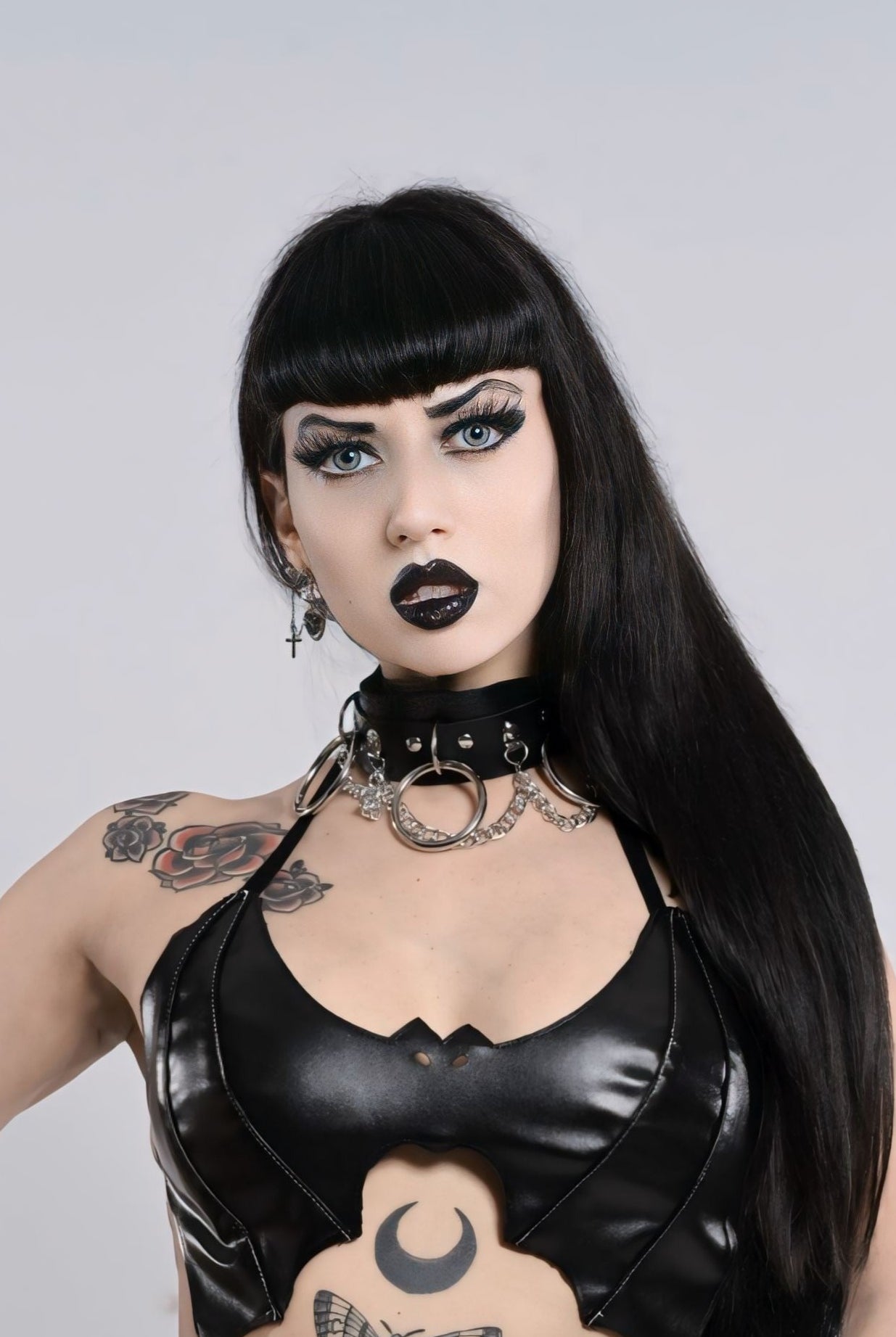
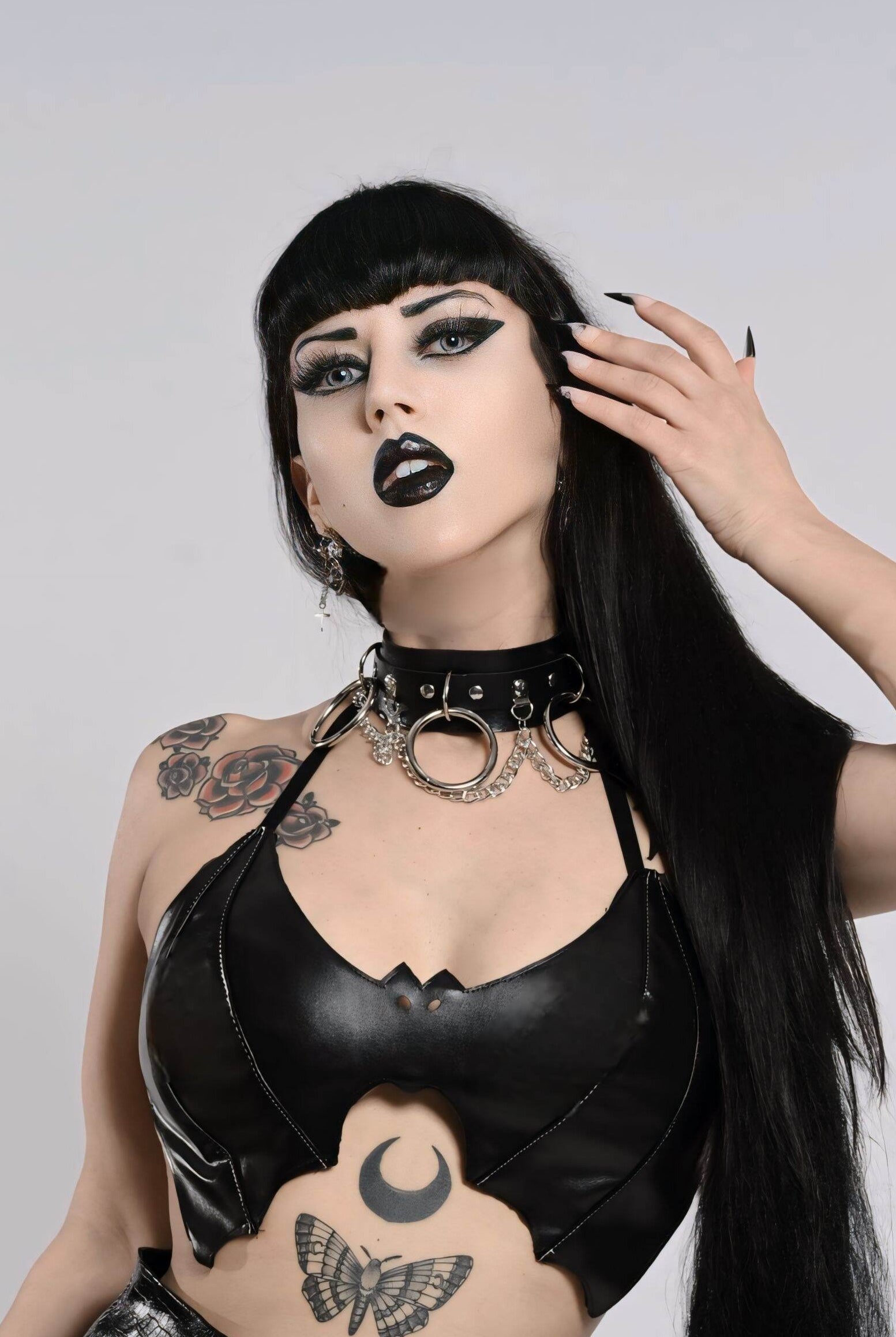
We are an alternative fashion label, not a bridal salon. Nothing we sell is made to measure, none of it is a white bridal gown, and no fittings come with an order. What we do have is a small set of ready-made pieces whose own listings name a wedding, a ceremony or a bridal look. The first four hang in our gothic dresses collection.
| Piece | Colour | Shape | Sizes | Price | Its listing names |
|---|---|---|---|---|---|
| Fallen Muse Evening Dress | Deep plum | One-shoulder draped mesh gown with a high-low hem | S to L | $95 | Gothic weddings |
| Garden of Shadows Gown | Black | Tulle maxi with embroidered florals and a corset-style bodice | XS/S to 2XL | $89.99 | Twilight ceremonies |
| The Enchantress Gown | Sage green and emerald | Sweetheart bustier, lace torso, maxi skirt | S to L | $79.99 | Rituals and ceremonies |
| Nightshade Bloom Dress | Violet | Bias-cut maxi with a ruffled neckline | S to L | $69.99 | Dusk ceremonies |
| Bride's Black Plaid A-Line Dress | Black plaid | A-line, 84 to 88 cm long | S to XXL | $29.71 in S, $32.76 in M to XXL | A dark bride |
| Lace Dirge Corset | Cream brocade | Off-the-shoulder corset top with tiered lace | S to L | $59.99 | Dark bridal |
The Fallen Muse is the only gown here whose listing names gothic weddings outright, and in deep plum, with its draping pooling at the feet, it is the most bridal dress on our rail. Its high-low hem sits shorter at the front, so decide whether you want your shoes on show. For a gown above L, start with the Garden of Shadows Gown, whose corset-style bodice gives it the structure a ceremony asks for.
The Enchantress Gown has see-through lace between the bustier and the skirt. If you would rather not show skin, ask a seamstress about lining it. The Bride's Black Plaid A-Line Dress is the one dress on our rail whose listing speaks to a bride directly, and at 84 to 88 cm long it suits a civil ceremony or an elopement.
For a two-piece, wear the cream brocade Lace Dirge Corset over the Dahlia Long Skirt, a layered black skirt with a sheer lace overlay. Separates let you buy each half in its own size, which no one-piece gown can: the corset runs S to L and the skirt XS/S to XL. In place of a veil, the Widow's Kiss Scarf is lilac rose-patterned lace with a teardrop fringe, and its listing suggests wearing it veiled across the face.
If you need a white or ivory gown, a red one, or anything cut to your measurements, we do not have it, and the checks below hold wherever you buy.
What to check on fit before you order
A bridal salon measures you and orders the gown. Buying online, you do that job yourself from a listing.
- The model's height against yours. A floor-length hem is cut for a height. The Garden of Shadows Gown is modelled at 5'4" (165 cm) in S, the Fallen Muse and the Nightshade Bloom at 5'8" (172 cm) in S, and the Enchantress Gown's listing gives no height at all. Shorter than the model means more fabric at your feet. Wedding dresses usually come long and get hemmed, so a little too long is fixable and too short is much harder.
- Your largest measurement. Bridal shops order to the largest of bust, waist and hips, because removing fabric is easier for a seamstress than adding it. If your hips sit a size above your waist, order for the hips and have the waist taken in.
- Centimetres over letters. Letter sizes follow no standard. Some of our gowns start at a combined XS/S and some at S, and the Bride's Black Plaid A-Line Dress lists a bust range of 84 to 100 cm across S to XXL. Read the numbers against your own, and where a listing gives none, treat the letter size with care before you commit.
- Sheer panels. Lace and mesh can show more skin in daylight than in a product photo. Lining sheer panels is a common bridal alteration, so raise it at your first fitting.
Try the dress on the day it arrives. Our return policy accepts returns within 30 days of delivery for an item that is unused, in its original packaging and in the condition it arrived in, so settle the size before anyone takes it in or hems it. Return shipping is the customer's to pay unless the return comes from an error on our part or a defect, and an exchange is a return followed by a new order.
How far ahead to order when the dress ships from Asia
Our pieces ship from Asia, so plan around the longest delivery time our policy states, and count back from your first fitting, which falls well before the wedding.
| Stage | Time to allow | Where the figure comes from |
|---|---|---|
| Order processed and shipped | 1 to 2 business days | Our shipping policy |
| Delivery | 4 to 12 days estimated, 30 days stated maximum | Our shipping policy |
| First fitting | 8 to 12 weeks before the wedding | David's Bridal alterations timeline |
| Later fittings | 4 to 6 weeks apart, the last 1 to 2 weeks before the wedding | David's Bridal alterations timeline |
Add the 30-day maximum and two business days to a first fitting twelve weeks out and you reach about seventeen weeks, so order roughly four months before the wedding. Starting fittings at eight weeks, the late end of that range, brings it to about thirteen weeks with nothing spare. If the first size might be wrong, one more delivery window takes you to about five months.
Those are sums on the policy's own figures, and the policy calls its times approximate, so treat them as a plan and never as a delivery date. Customs duties, where your country charges them, are the customer's to pay.
For comparison, David's Bridal says a made-to-order salon gown can take 4 to 6 months to produce, and tells brides to order 6 to 9 months ahead. A ready-made dress skips that wait, while the fitting calendar stays just as long.
What to avoid
- Ordering against the fitting date. An order placed a week before your first fitting is a bet on the estimate.
- Sizing down to slim into it. Too small on arrival is the fit problem a seamstress can do least about.
- Fitting without your shoes. Hem length is set by shoe height, so wear the exact pair to every fitting. A platform boot and a flat put the hem in very different places.
- A party dress promoted to bridal. A mini or a slip cut for a night out looks like a guest's outfit at a formal ceremony, and no alteration changes that.
FAQ
Can you wear a black wedding dress?
Yes, and brides did long before goth existed. White only became the expected bridal colour in the second half of the nineteenth century, and before that black was one of several colours a bride might marry in.
What does a black wedding dress mean?
Historically, often thrift. Until the twentieth century a wedding dress went on being worn as the bride's best dress, so a colour that would survive years of use made sense, and some black wedding dresses were probably older dresses dyed. For a goth bride today it tends to mean marrying in the colour she already lives in.
What colours count as a goth wedding dress?
Black first, then plum, violet, oxblood or burgundy, and greens from sage to emerald. Whichever you pick, a long hem and a shaped bodice are what take it from evening wear to a ceremony.
How far in advance should I order a goth wedding dress online?
From us, about four months ahead, which covers our shipping policy's 30-day maximum and a first alteration fitting 8 to 12 weeks out. Five months leaves room to reorder in another size. Other shops publish their own delivery times, so run the same sum with theirs.
Does The Cursed Closet sell wedding dresses?
Not bridal gowns in the salon sense, and nothing is made to measure. We sell ready-made gothic gowns, and a handful of their listings name weddings or ceremonies, in plum, black, green and violet, alongside a short black plaid dress written for a bride and a cream corset top for a two-piece.
Can a gothic wedding dress be altered?
Usually, yes. A seamstress can take in the bust, waist and hips, shorten a long hem and line sheer lace. Making a dress larger or longer is the hard direction, so buy for your largest measurement and a length that errs long.