To wash velvet or lace without ruining it, follow the care label sewn into the piece first, then the fibre that label names. If the label allows a machine wash, use the gentlest cycle it allows, at no more than the temperature it shows; silk velvet, and some rayon, belongs with a dry cleaner; and lace is washed for its own fibre and for whatever fabric it is sewn to.
Of the 115 velvet and lace listings in our store, 79 name the fibre and not one prints a washing instruction, so the label in your hand is the only instruction you have. This guide reads that label, then what each fibre tolerates, for a piece from us or anywhere else.
Key Takeaways
- The sewn-in label decides first, then the fibre. In the US the label has to cover the lace trim as well as the dress.
- "Dry clean" names one safe method. "Dry clean only" is the label that rules washing out.
- Machine wash velvet only if the label allows it, on the gentlest cycle it allows. Silk velvet, and some rayon, is better with a dry cleaner.
- No tumble dryer without the dryer symbol, and no iron on the pile: steam it and brush it with the nap.
- Lace sewn onto velvet is washed for the more delicate fabric, and alone the first time in case the dye runs.
Start with the care label sewn into your piece
In the US the label is not optional. The Federal Trade Commission's Care Labeling Rule says clothing labels "must have a washing or drycleaning instruction", attached permanently and legible for the useful life of the garment. Two parts of that rule change how you read it.
First, the label covers the whole piece: care instructions "must include all components of the product, including non-detachable linings, trim and other details". On a velvet dress with lace sleeves, the instruction already accounts for the lace.
Second, "dry clean" and "dry clean only" are different labels. If an item can be washed and dry cleaned, "the label needs only one of these instructions", and a garment may be labelled "Dryclean Only" "only if you have evidence that washing will damage the garment". So "dry clean" without "only" names one safe method and does not forbid washing. Nor does it promise washing is safe, so if you wash it, the risk is yours.
Most labels speak in symbols. Here is what each one means according to GINETEX, the international association for textile care labelling.
| Symbol | What it means |
|---|---|
| Wash tub with a number | Wash at no more than that temperature, in °C |
| One bar under the tub | A milder cycle with less mechanical action |
| Two bars under the tub | A very mild cycle, the kind used for wool |
| Hand in the tub | Hand wash, at about 20 to 30 °C |
| Crossed-out tub | Do not wash |
| Circle inside a square, with dots | Tumble drying; the dots give the heat |
| Square with lines | Natural drying: hung on a line, or laid flat |
| Iron with dots | Ironing; the dots give the temperature |
| Circle with a letter | Professional dry cleaning or wet cleaning |
| Triangle | Whether the piece may be bleached |
What is your velvet made of?
Velvet is a woven fabric with a dense, even pile, made today, says Wikipedia's entry on velvet, from silk, linen, cotton, wool, synthetics such as polyester, nylon, viscose and acetate, and blends. The pile makes velvet hard to clean; the fibre under it decides how much water and heat it will take.
Most of ours is polyester: of our 14 velvet garments, nine name a fibre, and eight of those name polyester, alone or blended.
Polyester velvet
Polyester is the forgiving one. The University of Georgia's extension service, in its guide to fibres, notes that water-borne stains wash out of polyester easily and that it melts if it gets too hot.
The Hollow Heart Velvet LBD is listed as polyester and velvet, in S, M, L and XL, and the Velvet Pleated Mini Skirt as polyester, in S to XXL.
Stretch velvet
Stretch velvet is velvet with a little spandex in it; Wikipedia notes that polyester and spandex velvet is "often called stretch velvet". Spandex is the fibre to protect: the University of Georgia lists it as damaged by chlorine bleach and by heat, and says to wash it in warm water, never hot.
The Black Alt Velvet Dress is a strapless sheath listed as polyester and spandex, in S, M and L.
Crushed velvet
Crushed velvet gets its patterned shine from pressing the fabric down in different directions, or twisting it while wet, according to Wikipedia; panne is crushed one way under heavy pressure. Crushing describes the finish, not the fibre, so wash it by the fibre on its label.
Cotton velvet
A University of Idaho extension bulletin, If It's a Pile Fabric, notes that velveteen is made of cotton, and the Wikipedia entry on fabric shrinkage) puts it plainly: "Natural fibres shrink more than synthetic fibres."
The Black Velvet Split Skirt is listed as cotton and polyester, with velvet as the fabric, in S, M and L.
Silk, rayon and nylon velvet
These are the velvets to hand over. The University of Georgia says silk loses strength when wet and prefers dry cleaning for it; rayon is also weaker when wet, and dry cleaning is recommended for some rayon. Much "silk velvet" is blended with rayon or cotton, Wikipedia notes, so read the percentages.
Never press nylon velvet. The Idaho bulletin says to steam it instead, and the University of Georgia notes that nylon melts and fuses with heat.
Velvet whose listing names no fibre
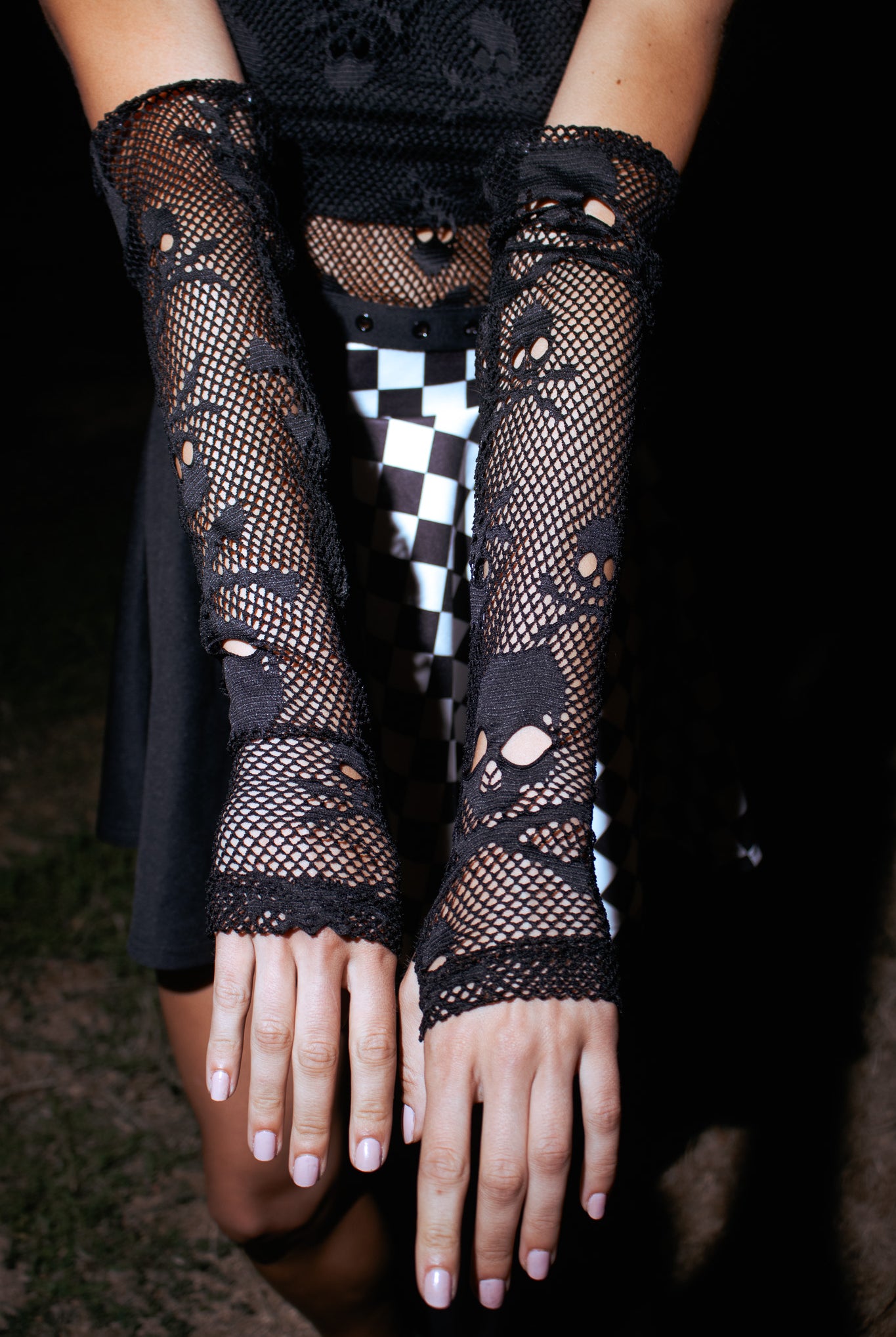
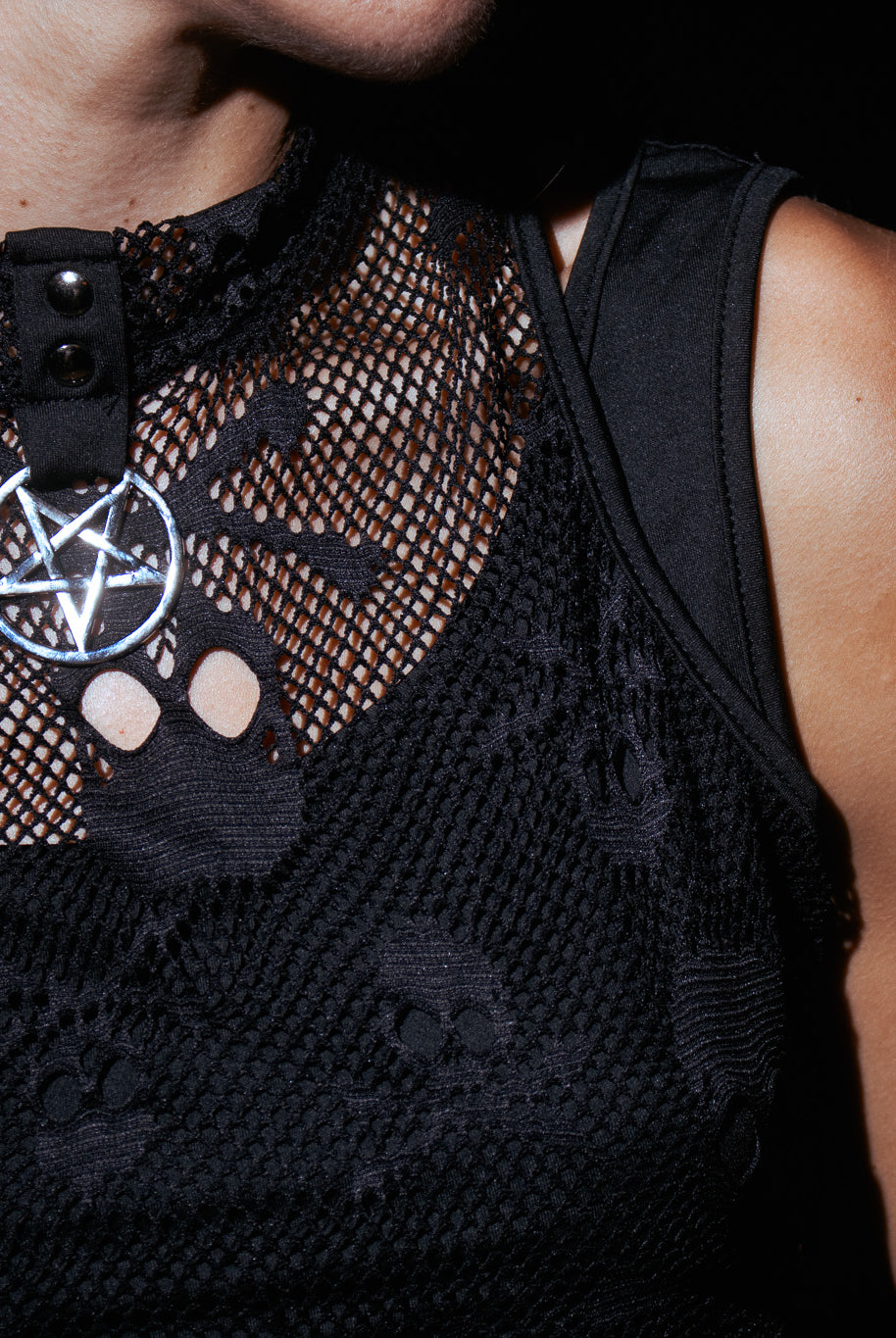
The Velvet Widow Dress from Whispers of the Ruin is velvet with bell sleeves and lace around the neckline, in XS/S, M and L, and its listing names no fibre, so the label is everything. If the label is missing or worn away, take the Idaho bulletin's route for precious velvet: send it to a dry cleaner.
How to wash velvet, step by step
For velvet whose label allows washing, from GINETEX, the Idaho bulletin and the University of Georgia.
- Find the nap: Stroke the velvet. Smooth means you are going with the pile, rough means against it. You will brush it that way later.
- Read the tub: Wash at no more than the temperature in the tub. One bar under it means a milder cycle with less mechanical action, two bars a very mild one; choose the gentlest cycle the label allows. A hand in the tub means a hand wash at about 20 to 30 °C.
- Leave out chlorine bleach: The University of Georgia warns against it on spandex and silk, and says to take care with it on treated cotton. A crossed-out triangle on the label rules out bleach altogether.
- Handle it gently when wet: Press the water out; do not rub, pull or wring. That is GINETEX's handling for a hand wash, and the University of Georgia blots acetate rather than wringing it.
- Wash a velvet and lace piece on its own: A University of Brighton account of conserving a velvet dress with a cotton lace under-ruffle found that wet methods risked dye running from the velvet. A first wash alone tells you whether yours bleeds.
If black velvet has gone grey, our black gothic dresses guide covers how to keep black from fading.
How to dry velvet and bring the pile back
Keep velvet out of the tumble dryer unless the label shows the dryer symbol. Without one, GINETEX says, the gentler the wash and iron symbols, the more caution drying needs.
- Dry it away from heat: Hang it or lay it flat on a clean towel. Polyester and nylon melt if they get too hot, and spandex is damaged by heat, the University of Georgia notes.
- Use a padded hanger: The Idaho bulletin advises padded hangers for velvet and no clamps or metal skirt clips, which mark the pile.
- Steam, do not press: The Idaho bulletin steams velvet rather than pressing it. With no steamer, it hangs velvet over a bath of steaming water.
- Brush with the nap: The bulletin lifts the pile with a soft natural-bristle brush while it steams, brushing with the nap you found in step 1, and lets the piece dry fully before it is handled.
Between washes, a soft brush with the nap does most of the work, and the Brighton conservators cleaned their museum velvet by low-suction vacuuming through mesh, following the pile. Fewer washes is the kindest care velvet gets; our goth winter layering guide covers how to layer around it.
How to wash lace, by fibre
Lace names a structure, so what a piece tolerates comes from its fibre. Of our 98 lace listings, 69 name a fibre, and 58 of those name polyester. The University of Georgia's fibre guide sets out each one.
| Fibre on the label | What it tolerates |
|---|---|
| Polyester | Easy to care for. Melts if too hot, so iron low with steam |
| Nylon or polyamide | Melts and fuses with heat |
| Spandex, elastane or Lycra | Warm water, not hot. No chlorine bleach. Damaged by heat |
| Cotton | May scorch under a hot iron. Take care with chlorine bleach on treated cotton |
| Acetate | Dry cleaning preferred. If washed, squeeze gently in lukewarm mild suds, do not wring, blot. Melts at low heat, so iron at the lowest setting on the wrong side |
| Rayon or silk | Weaker when wet. Dry cleaning preferred for silk, and for some rayon |
The Black Lace Blouse - Elegant shows why the fibre line matters: it is listed as acetate and polyester, in one size, and acetate puts it in the gentlest row of the table.
Lace by how it is attached
How the lace sits on the piece changes the job as much as its fibre does.
A piece made of lace
When the lace is the whole garment, the fibre table is the answer. The black gothic lace bolero is listed as polyester, in S, M and L, so it takes the polyester row. More lace blouses and tops are in our goth tops guide.
Lace sewn onto velvet or cotton
This is the goth dress: lace sleeves, neckline or hem on a velvet or cotton body. The label already covers both fabrics. Wash for the more delicate of the two, and wash it alone the first time, since dye can run between them.
The Goth Velvet Lace Dress is listed as polyester and lanon, with lace decoration and lantern sleeves, in S, M, L and XL. The Dark Lace Goth Dress is listed as 80% cotton and 20% Tencel with black lace detailing, in M, L, XL and XXL. The Spectral Lace Tunic is sheer floral lace with bell sleeves, in S, M and L, and names no fibre, so its label decides.
Lace with stretch
Lace with spandex in it is cared for as spandex: warm water at most, no chlorine bleach, and no heat. The black lace off-shoulder corset top is listed as 90% polyester and 10% spandex, in S to 6XL. For lace that fastens, our bodysuits guide adds one habit: close the hooks or snaps before washing so they do not catch the lace.
Vintage and antique lace
The Lace Museum's sheet How Should I Clean My Lace? says cotton or linen lace may be carefully hand washed, silk may be dry cleaned or washed, and rayon and metallic lace should be left alone. Test every colour first, send a valuable piece to a textile conservator, and take antique lace off a garment before washing it. That last step is for heirloom lace; on a modern dress, follow the dress's label.
Faux leather trims, harness straps and PU corsets are a different job and are not covered here.
Velvet and lace care at a glance
This is the short version, built from the sources above. The label on your piece still comes first.
| Fibre | Water | Machine | Dryer | Heat |
|---|---|---|---|---|
| Polyester velvet | No hotter than the tub on the label | Gentlest cycle the label allows | Only with the dryer symbol | Steam; do not press the pile |
| Stretch velvet (with spandex) | Warm, never hot | Gentlest cycle the label allows; no chlorine bleach | Only with the dryer symbol | Steam only |
| Cotton velvet | No hotter than the label; shrinks more than synthetics | Gentlest cycle the label allows | Only with the dryer symbol | Steam only |
| Silk velvet | Dry cleaner preferred | Only if the label allows | No dry heat | Dry cleaner |
| Rayon velvet | As the label; weaker when wet | Short cycle, if the label allows | Hang to dry | Dry cleaner when in doubt |
| Nylon velvet | As the label | As the label | As the label | Never press; steam only |
| Polyester or nylon lace | As the label | As the label, hooks closed | Air dry | Low iron with steam |
| Lace with spandex | Warm at most | As the label, no chlorine bleach | Air dry | No heat |
| Acetate lace | Dry cleaner preferred; otherwise lukewarm, by hand | No | Air dry, blotted | Lowest setting, wrong side |
| Vintage lace | Room temperature, by hand, after testing colours | No | Flat on towels | None: smooth it flat while wet |
For the mourning look, our Victorian mourning dress guide covers what was worn at each stage, and the Velvet Widow Dress sits in our gothic dresses collection.
Frequently asked questions
Can I wash velvet in a washing machine?
Only if the label shows a wash tub, and then on the gentlest cycle it allows, no hotter than the number in the tub. Silk velvet is better with a dry cleaner.
Is velvet ruined if it gets wet?
Not if its label allows washing, though silk and rayon are weaker when wet and dyed velvet can bleed. If the pile looks flat, steam it, brush it with the nap and let it dry fully before you handle it.
Does velvet shrink when you wash it?
Cotton velvet can, because natural fibres shrink more than synthetic ones; polyester velvet is more stable. Keep to the label's temperature and out of the dryer unless the label allows it. The same holds for lace.
Can lace be washed in a washing machine?
Yes, if the label shows a wash tub. Keep to its temperature and cycle, and close any hooks first. Acetate lace is the exception: wash it by hand in lukewarm water or have it dry cleaned.
Can I put lace in the dryer?
It is safer not to. Heat damages spandex, nylon and polyester melt when too hot, and acetate melts at low heat. Lay lace flat on a towel or hang it to dry.
How do I clean my lace without removing it?
On a modern garment you do not need to: the label covers the trim, so wash the whole piece as it says. For one small mark, the Lace Museum isolates the spot over an upturned glass, dabs it with a cotton swab and a solvent suited to the stain, and rinses at once. A solvent can take the fibre with the stain and leave a hole, so try plain water first.