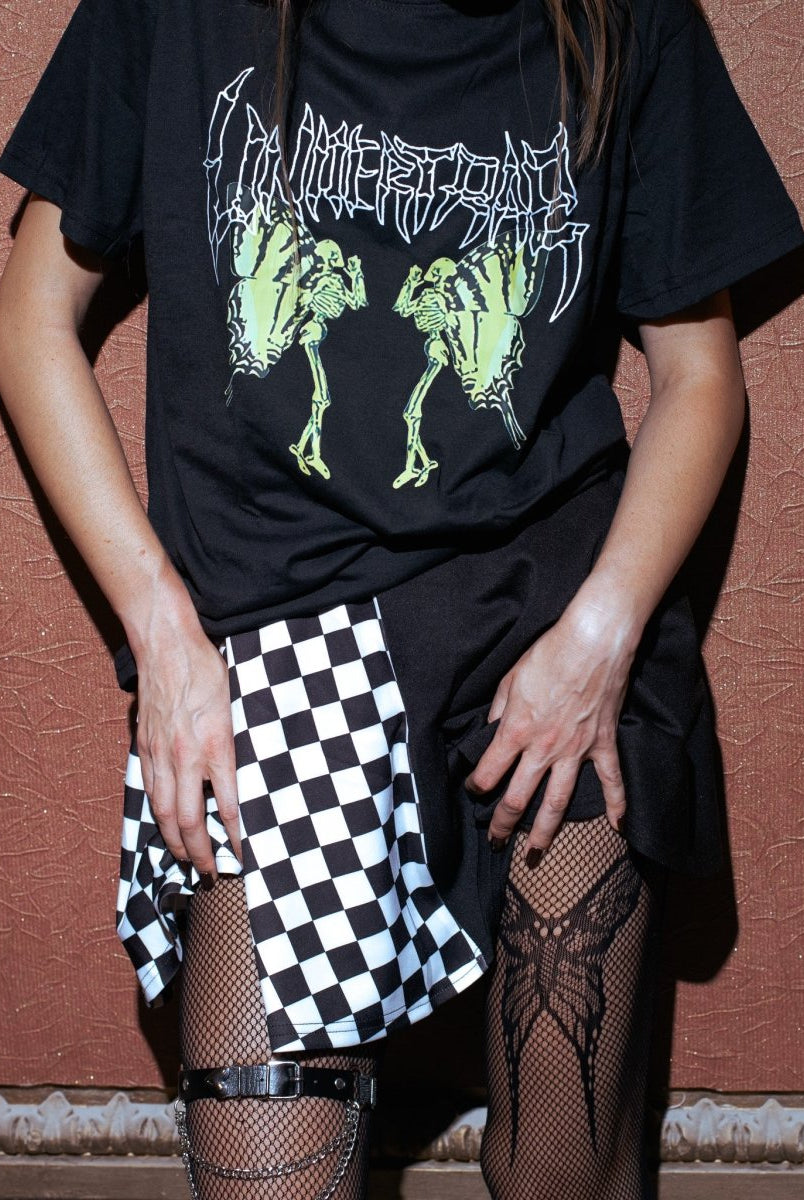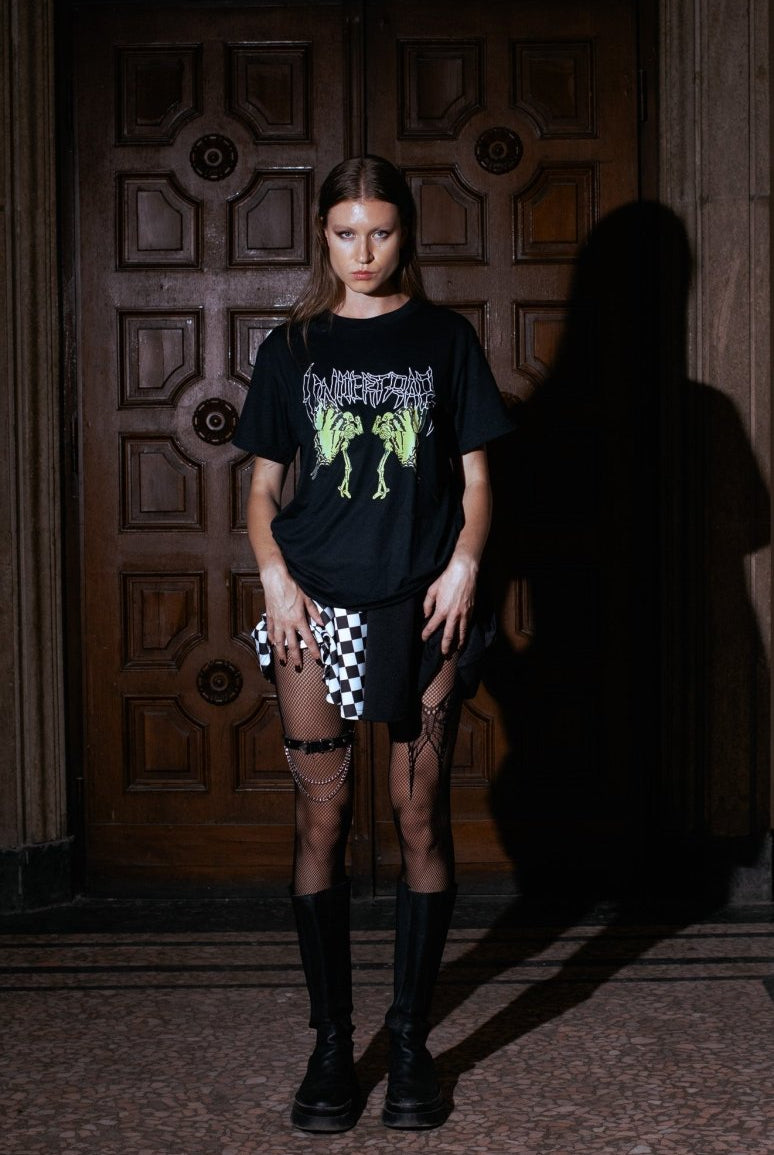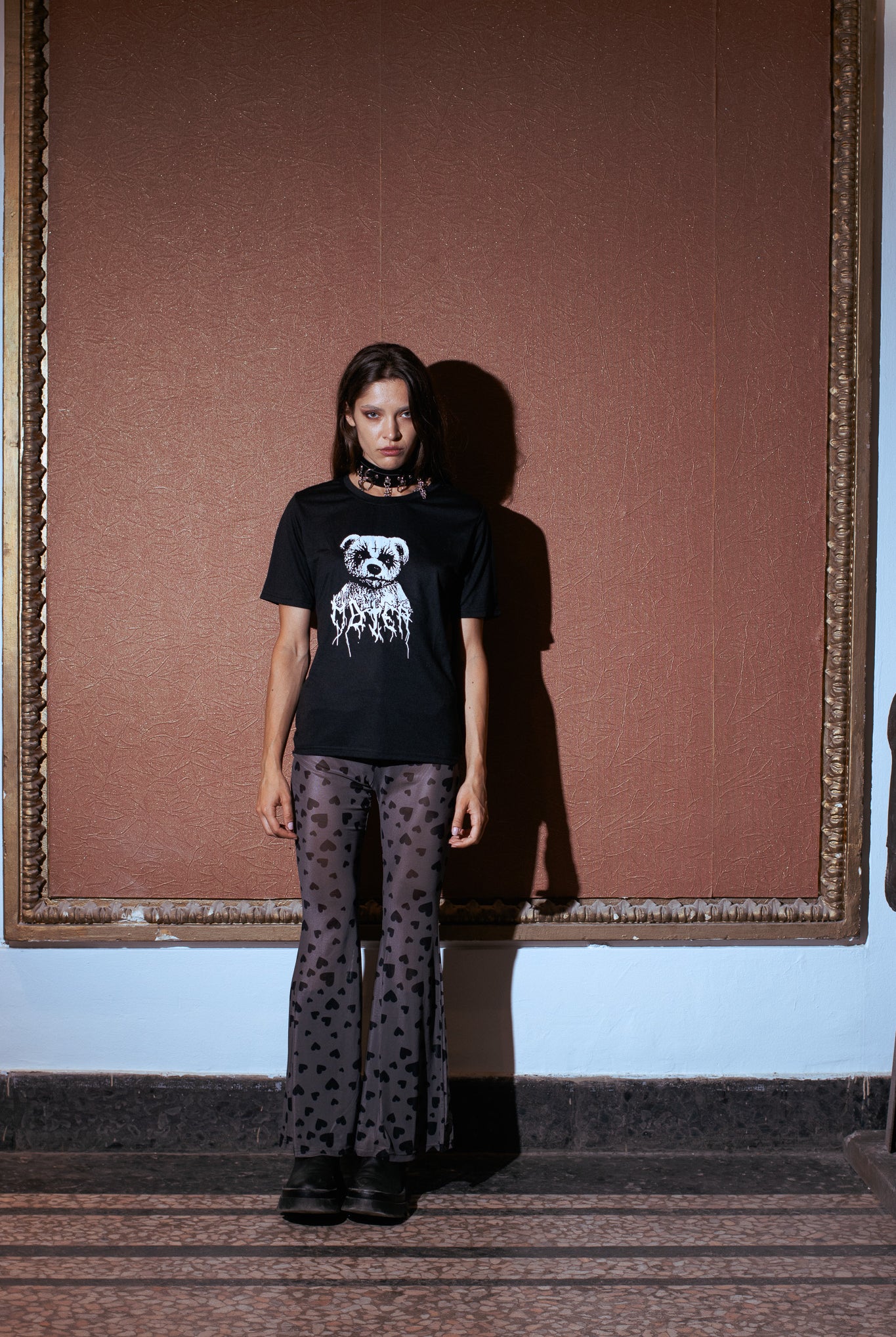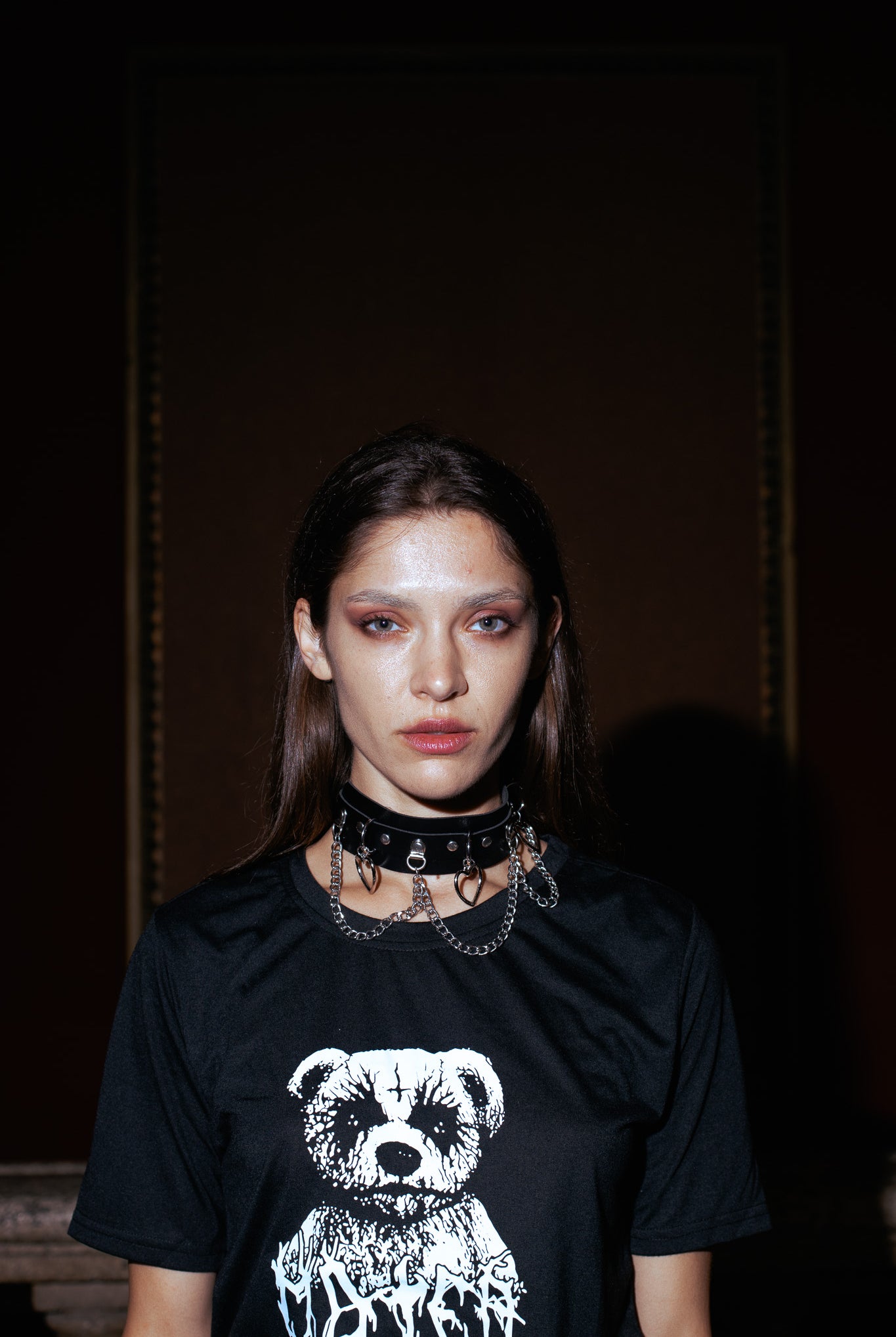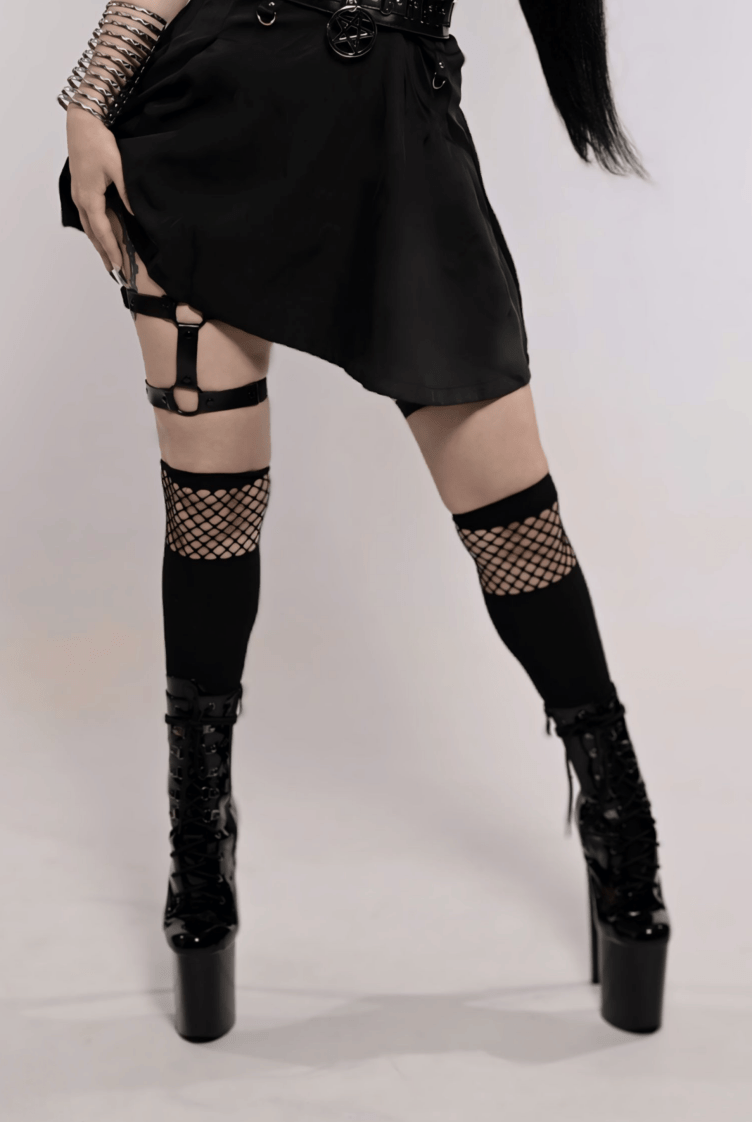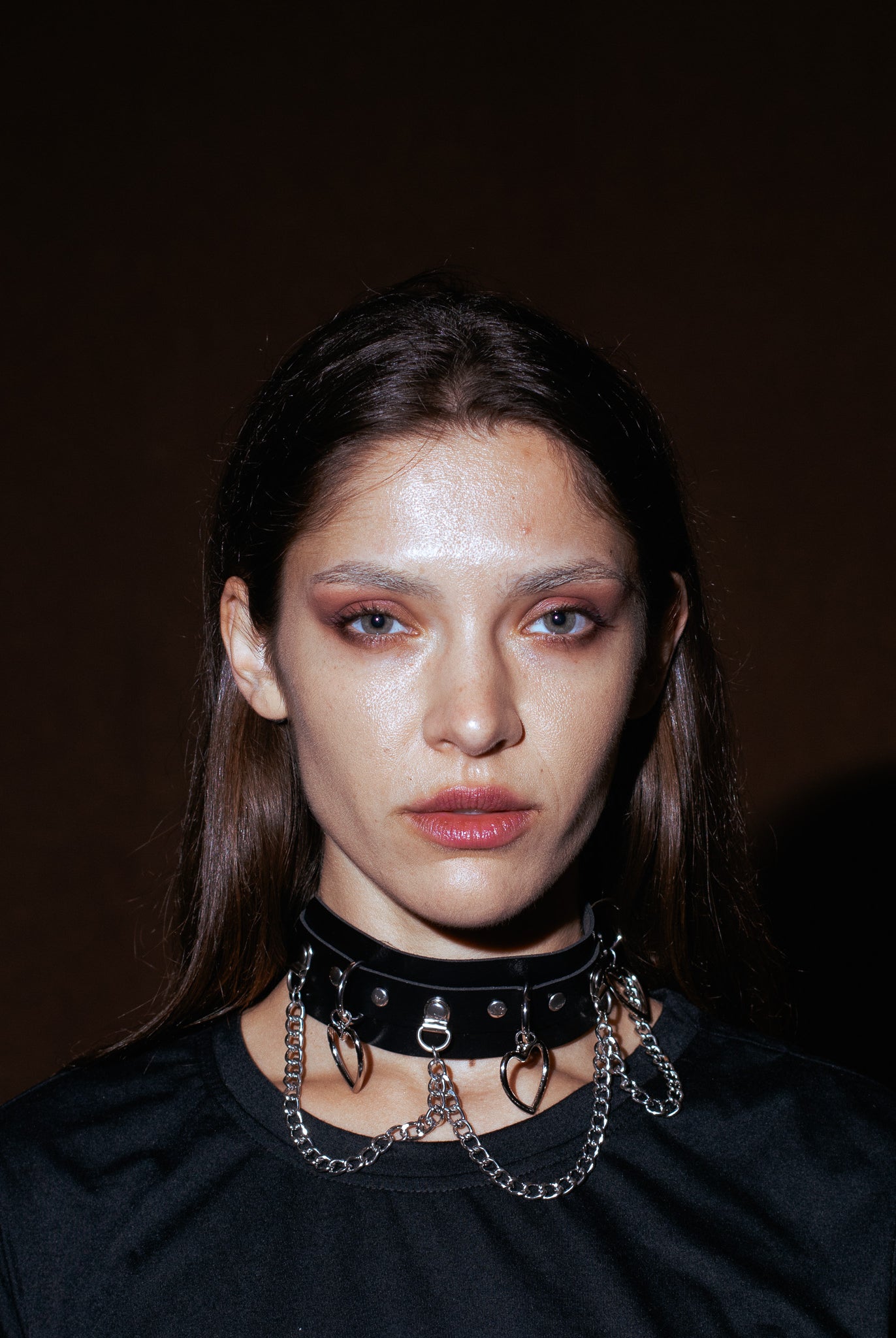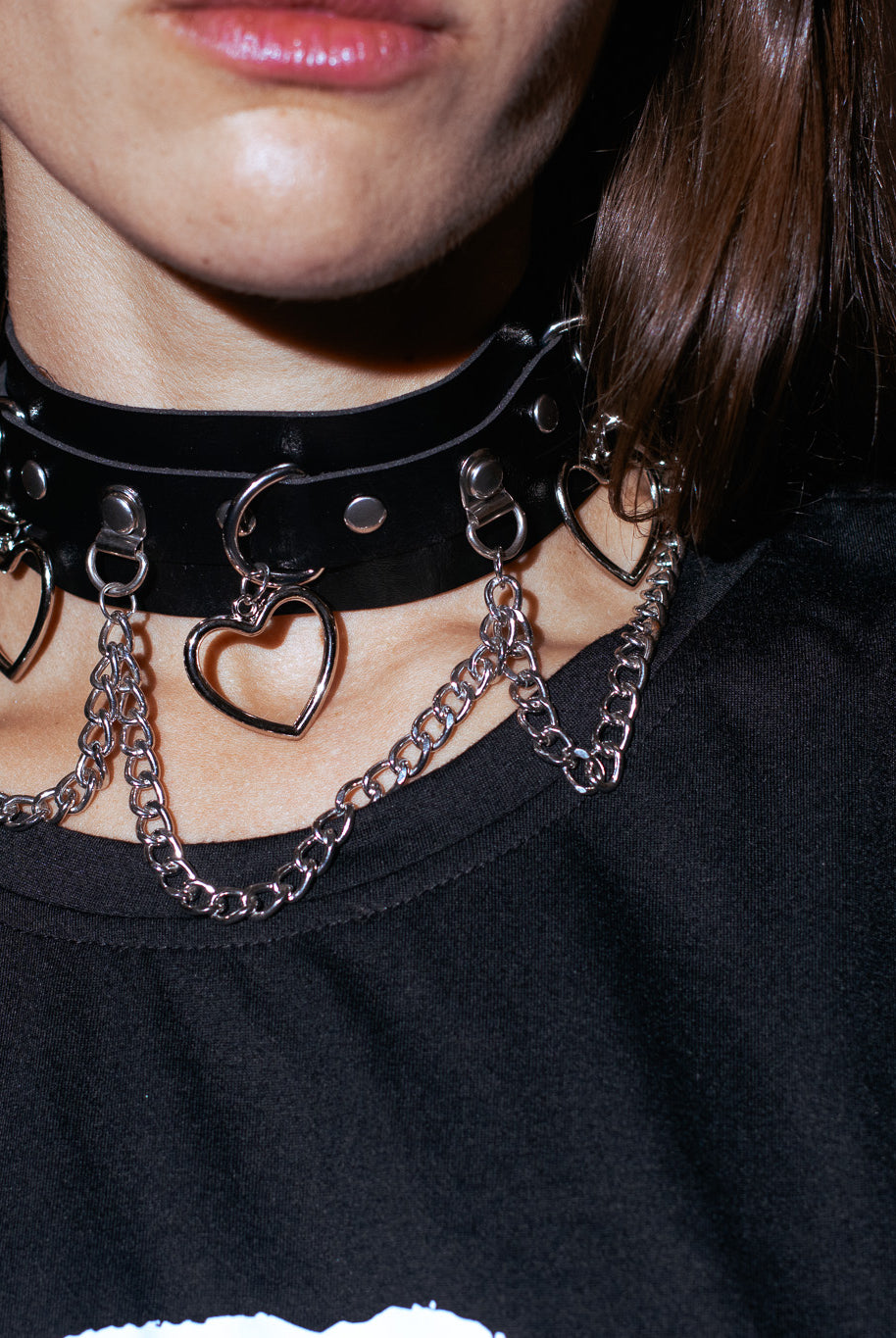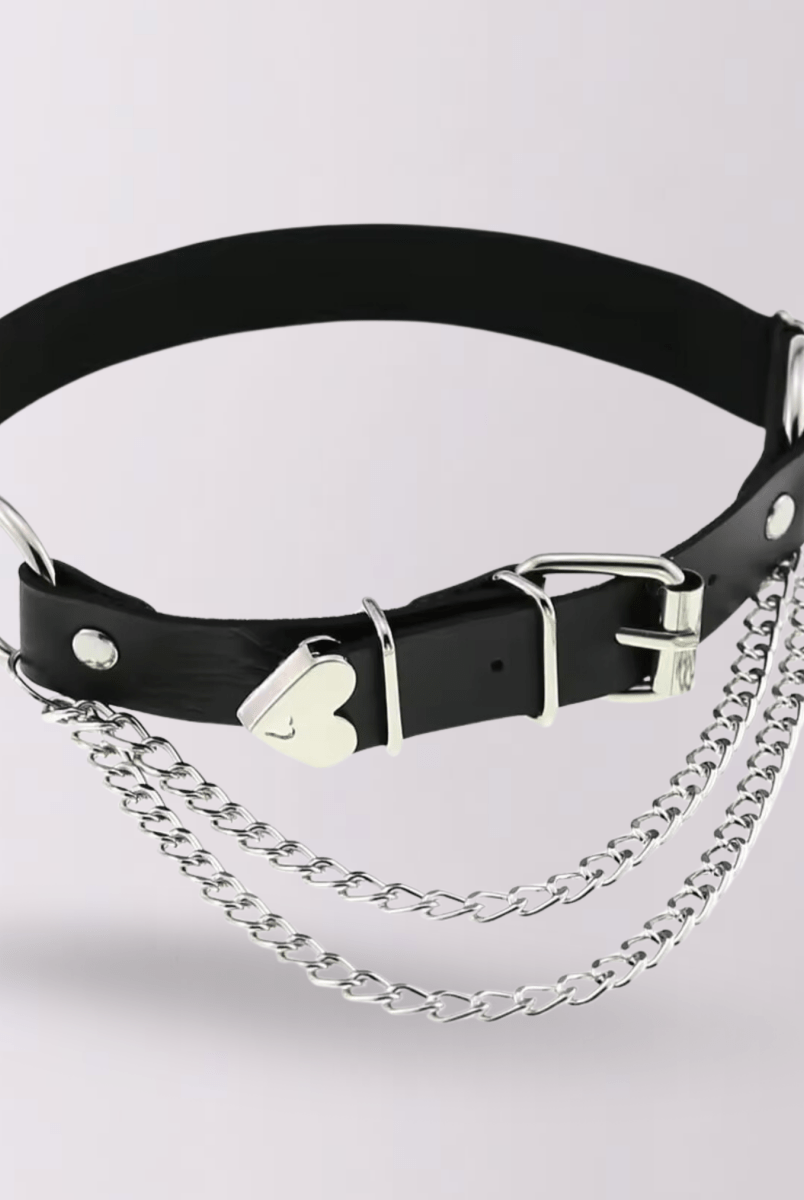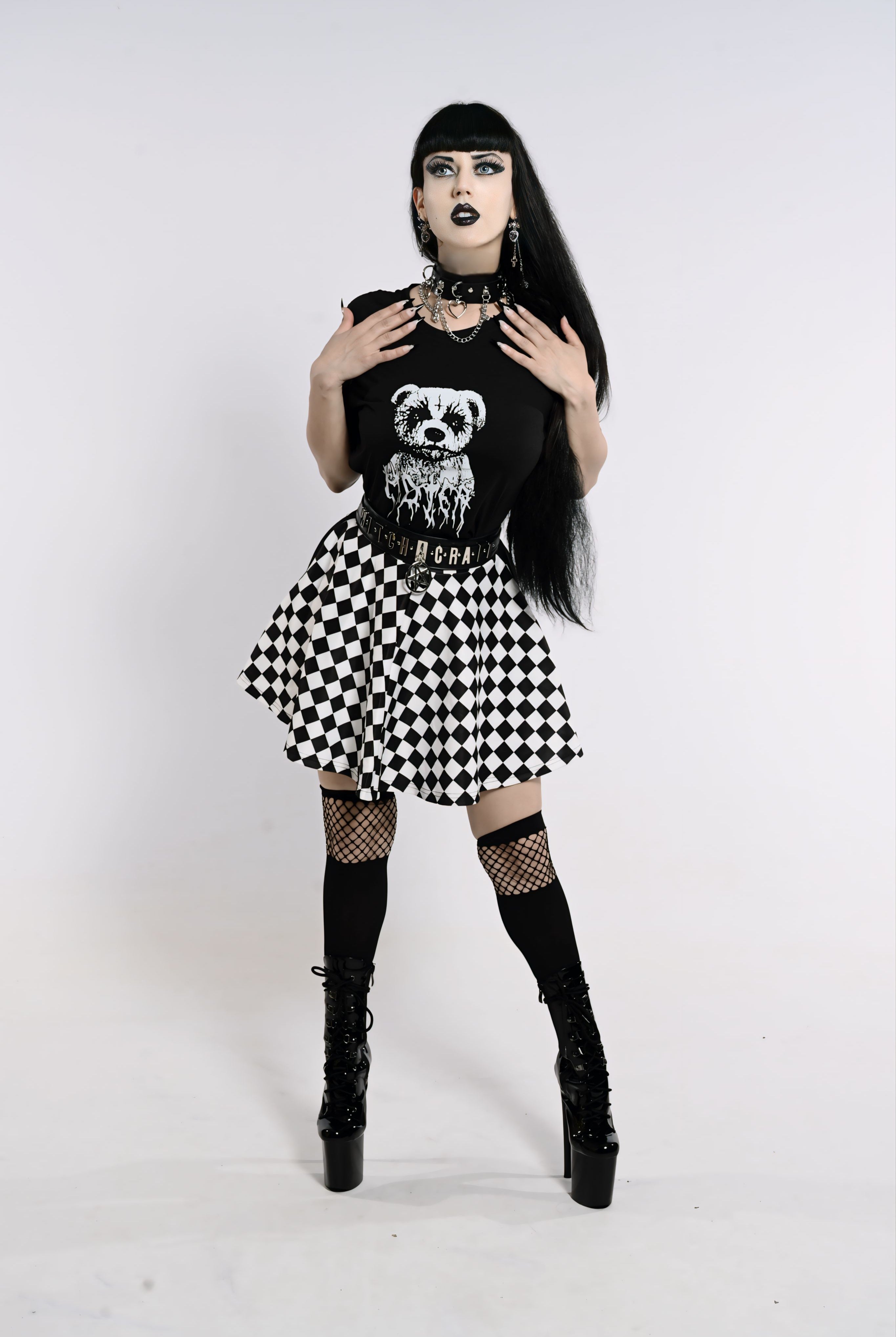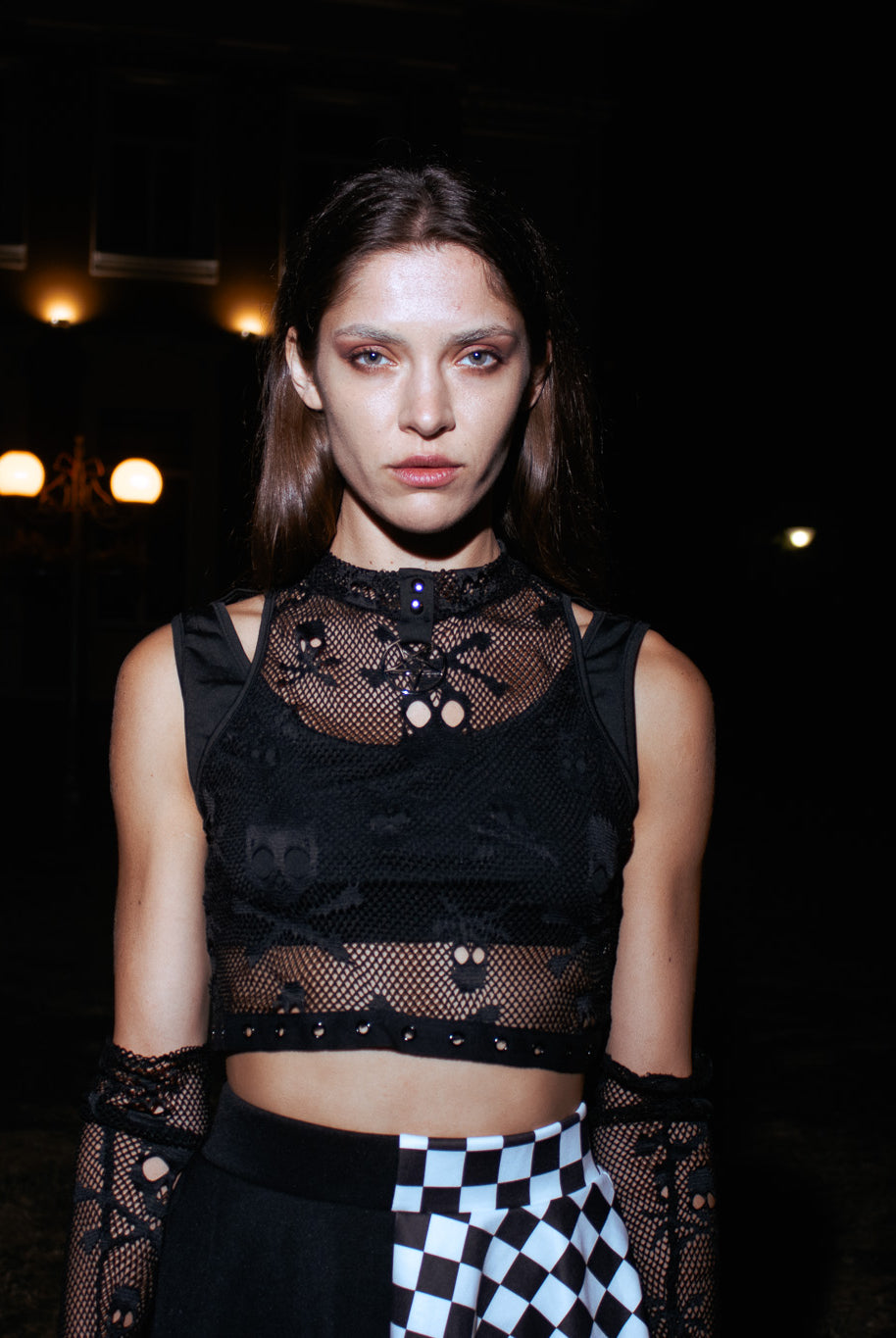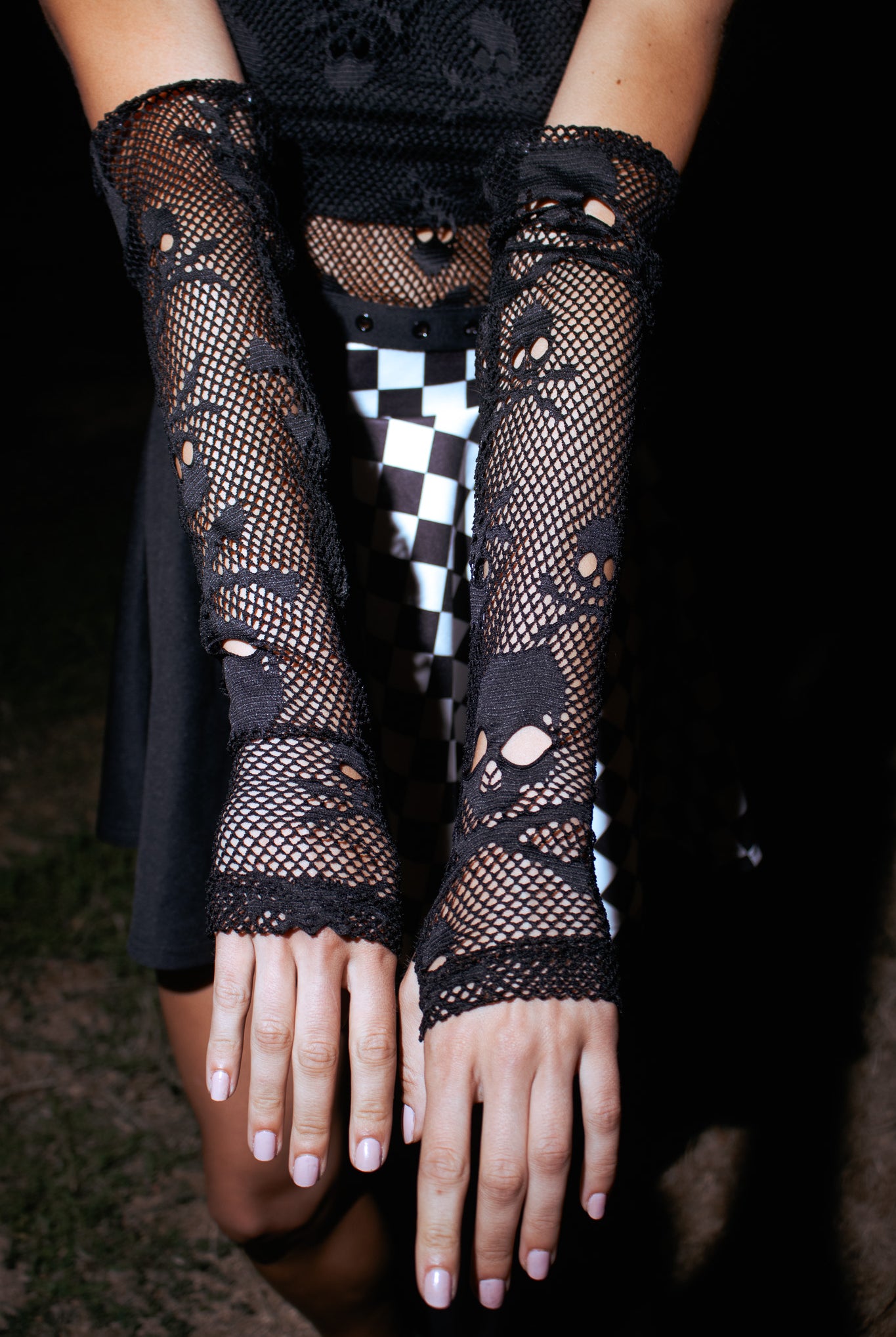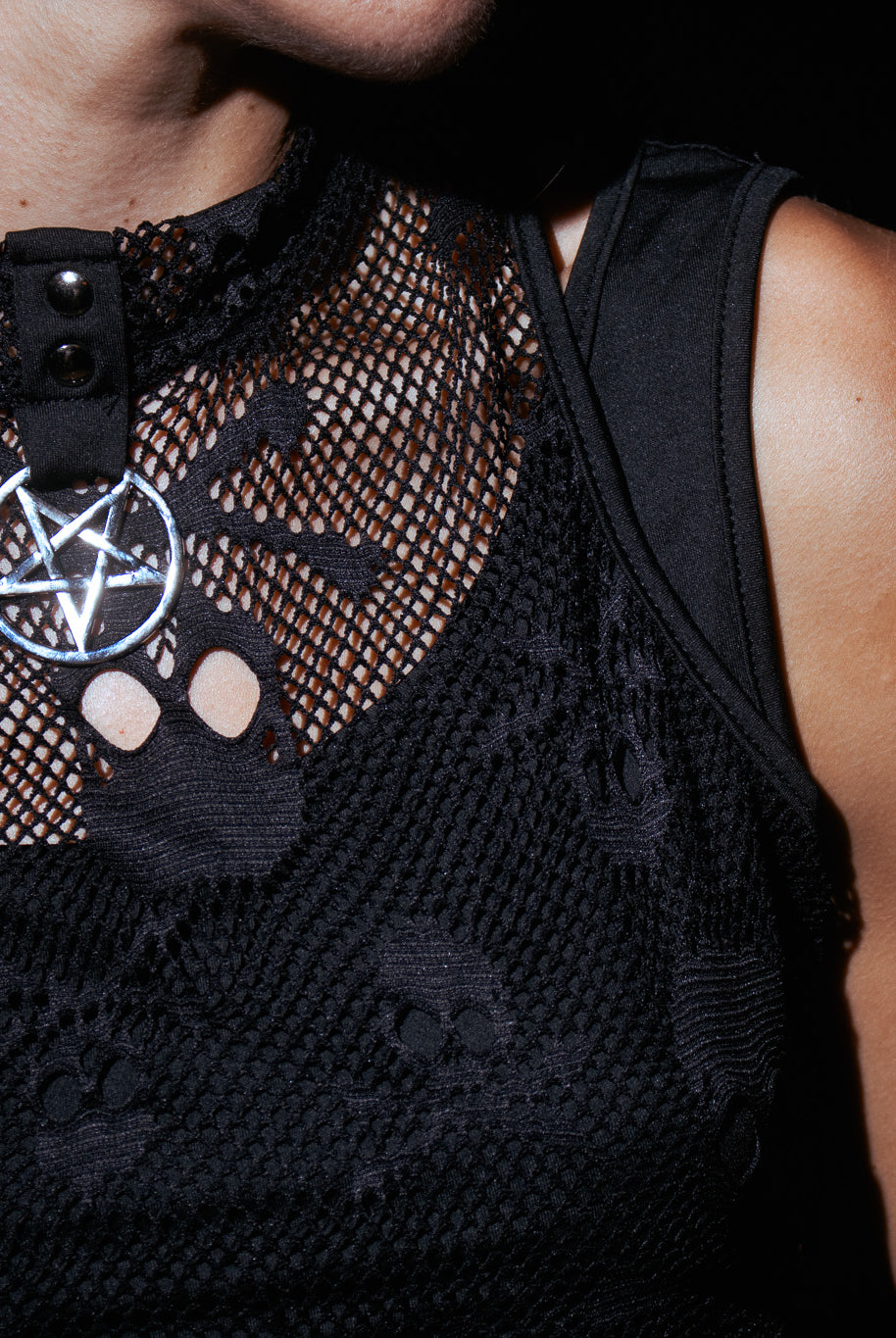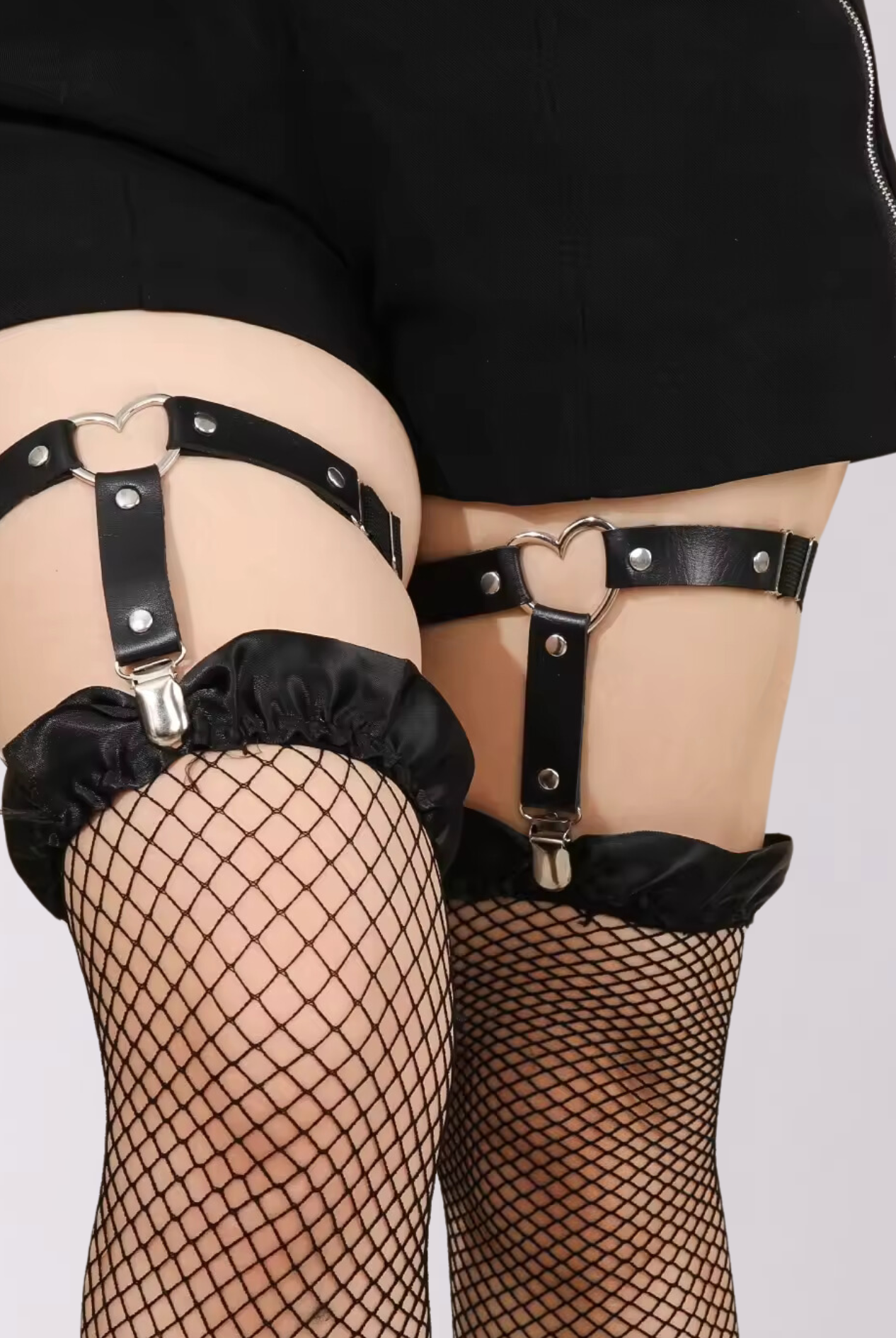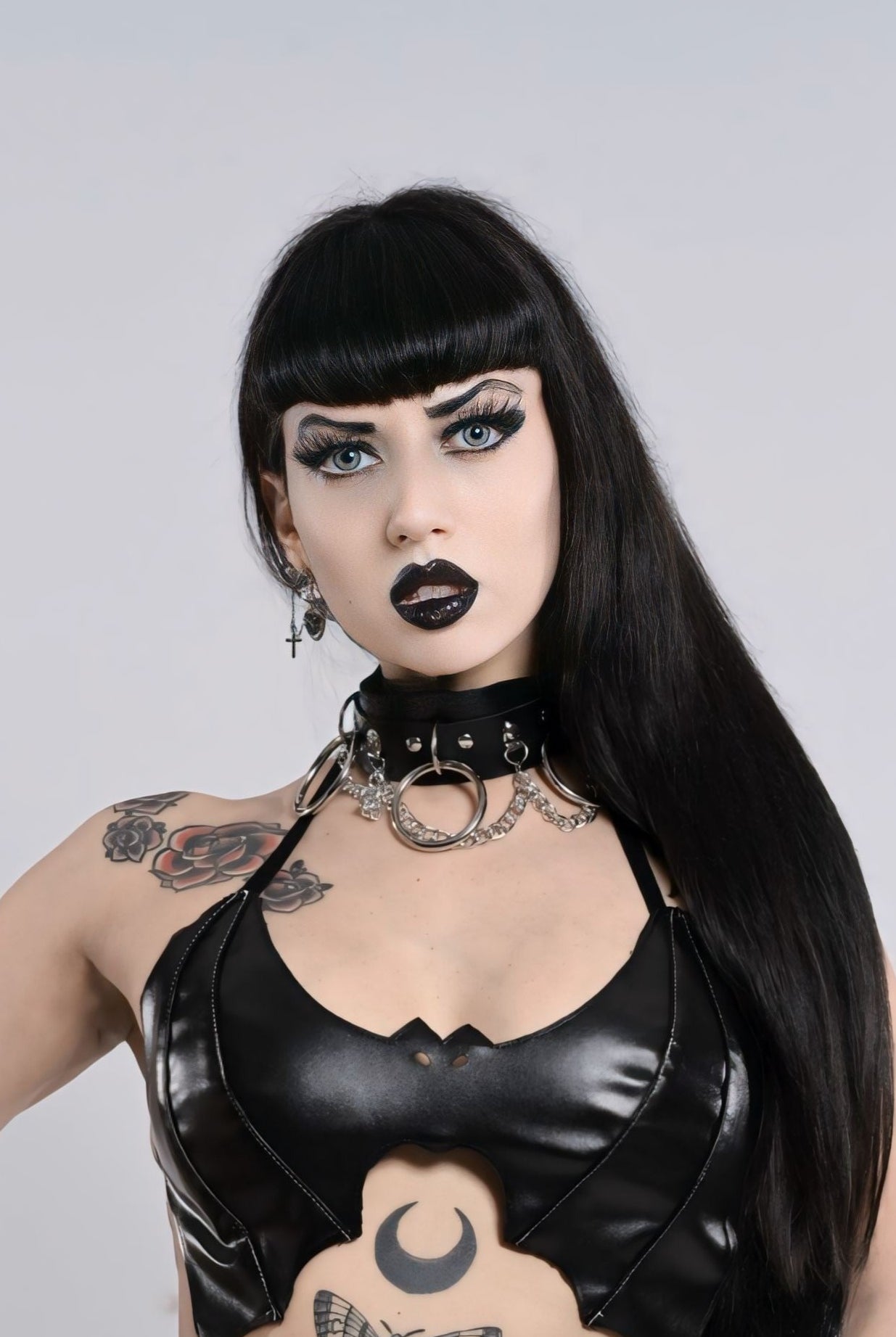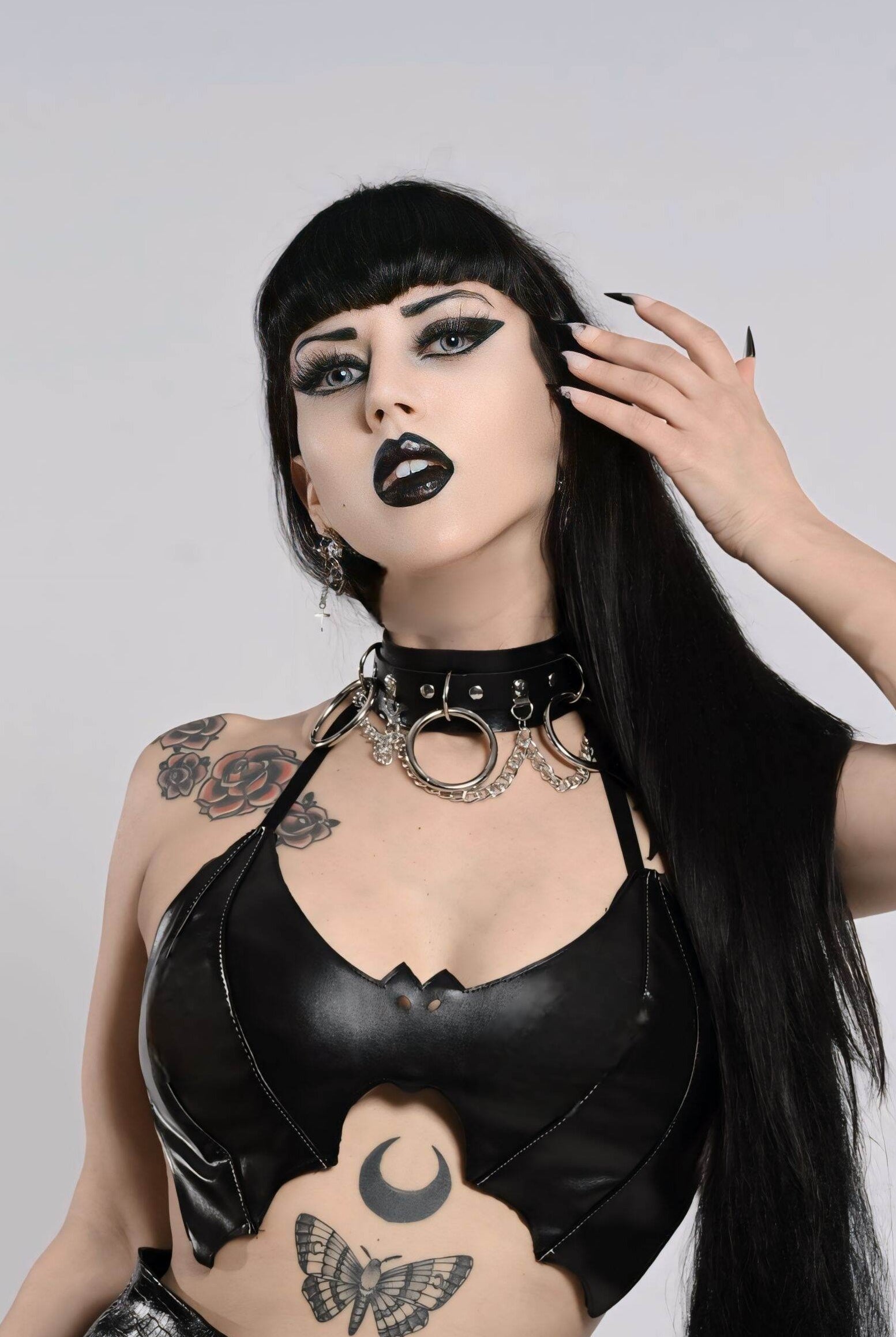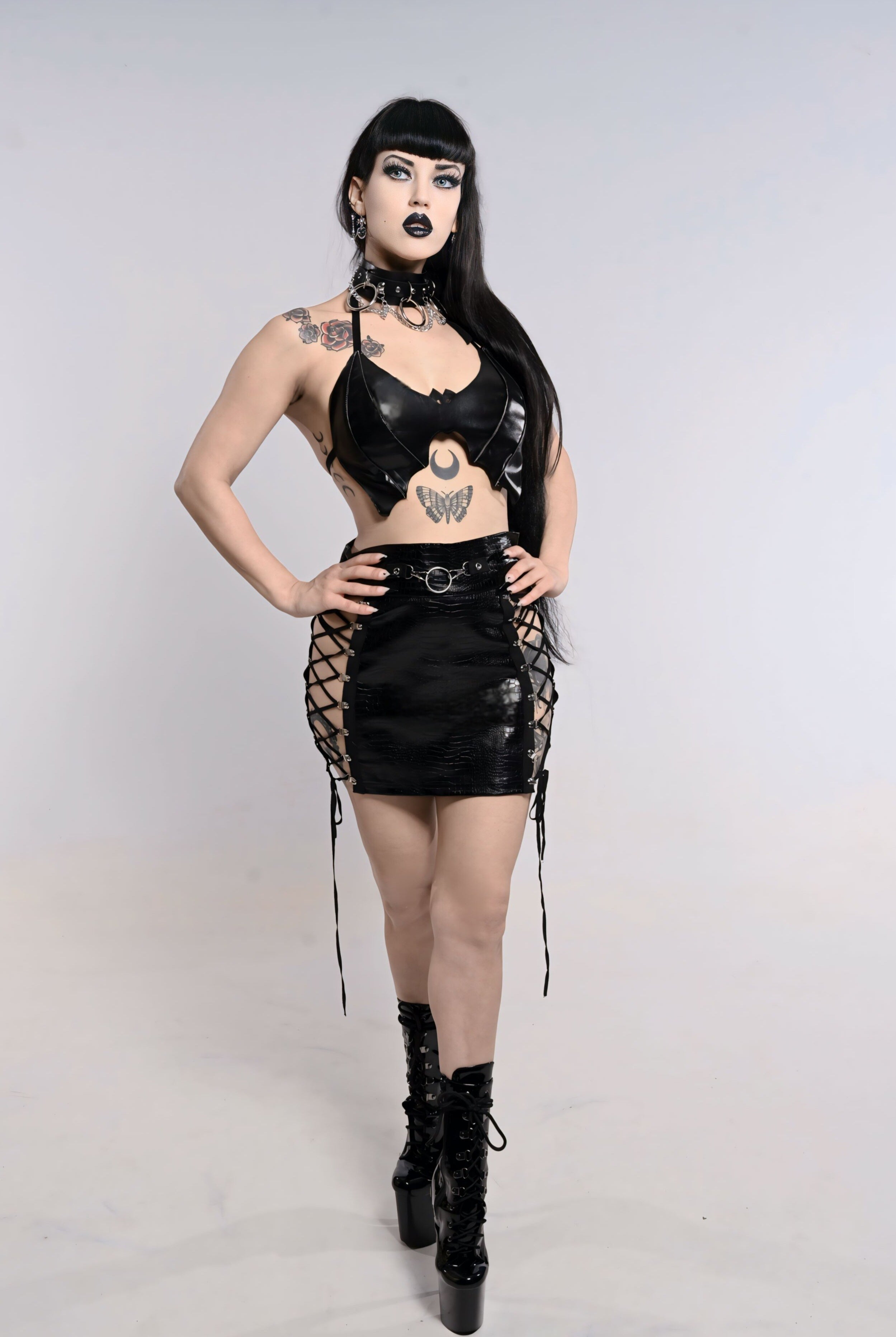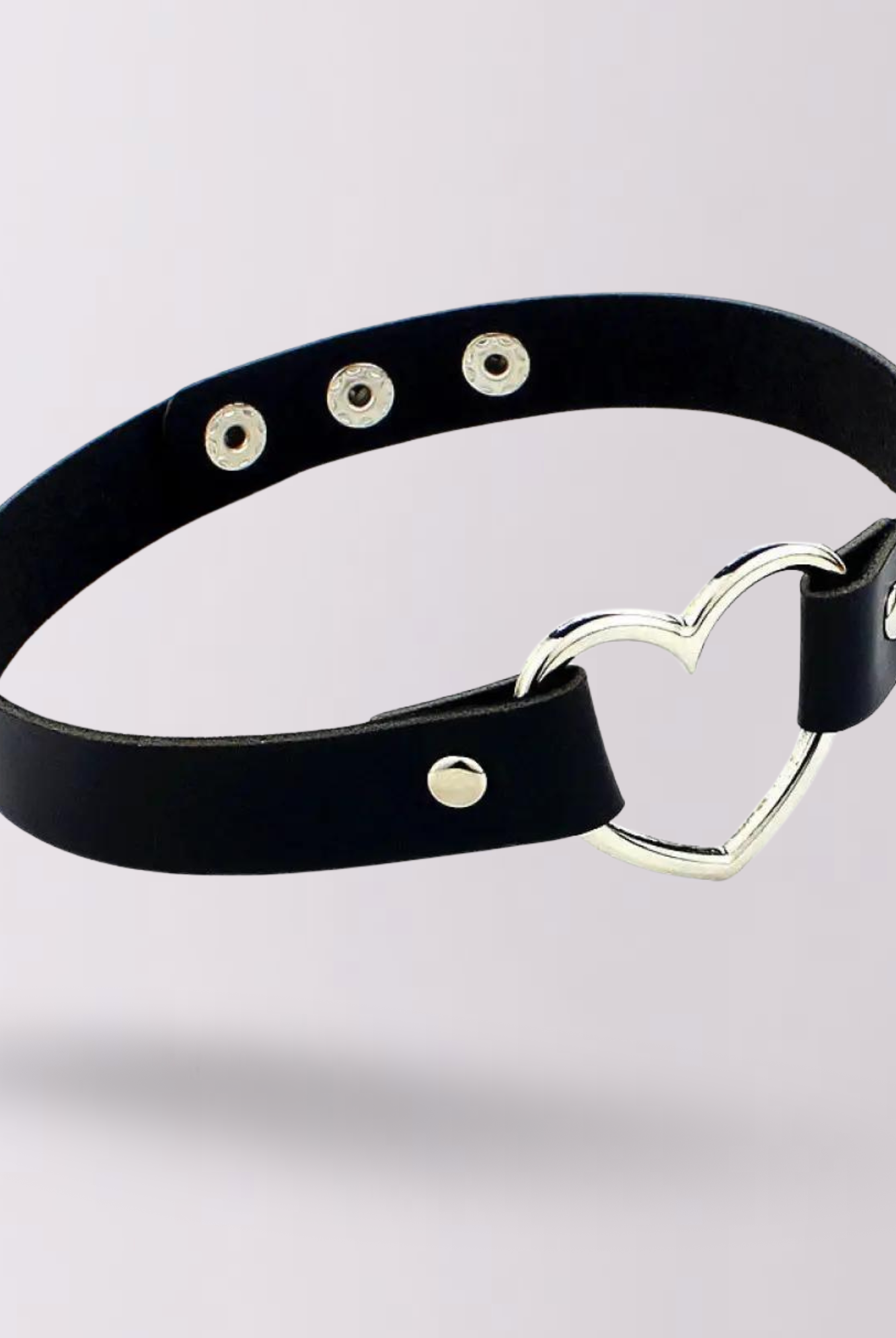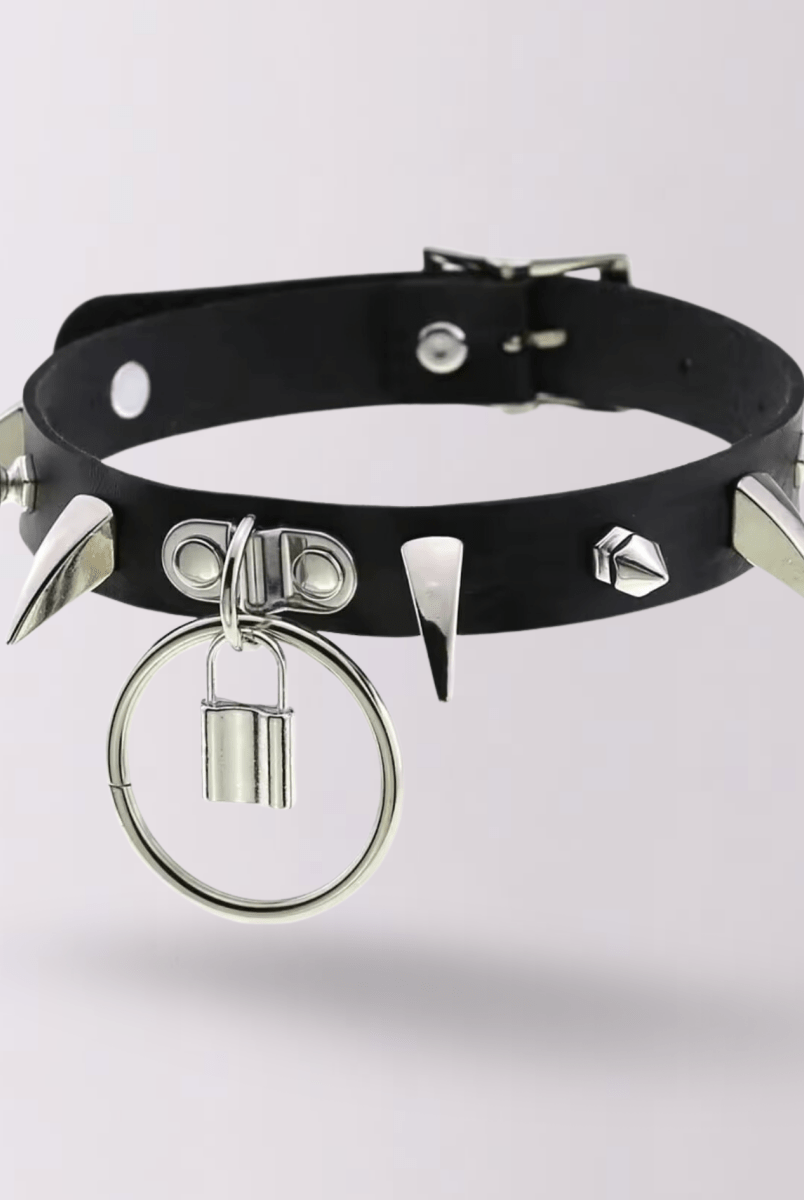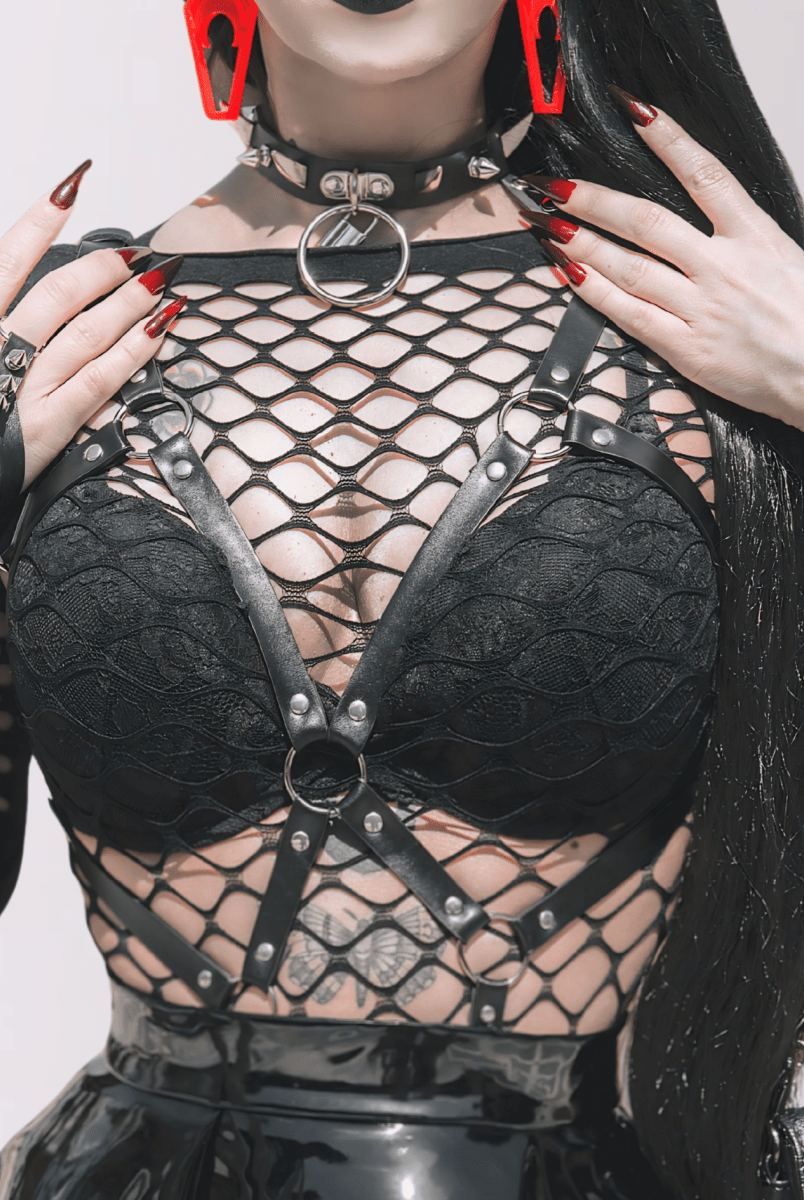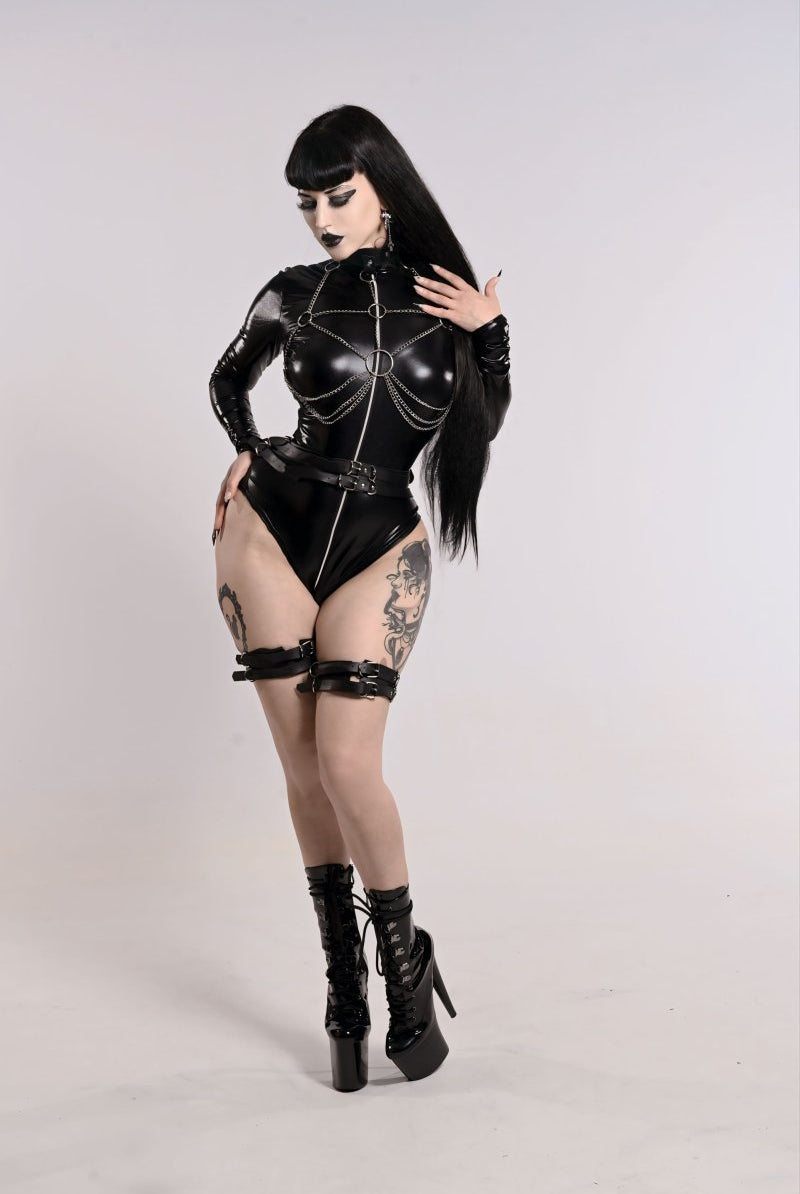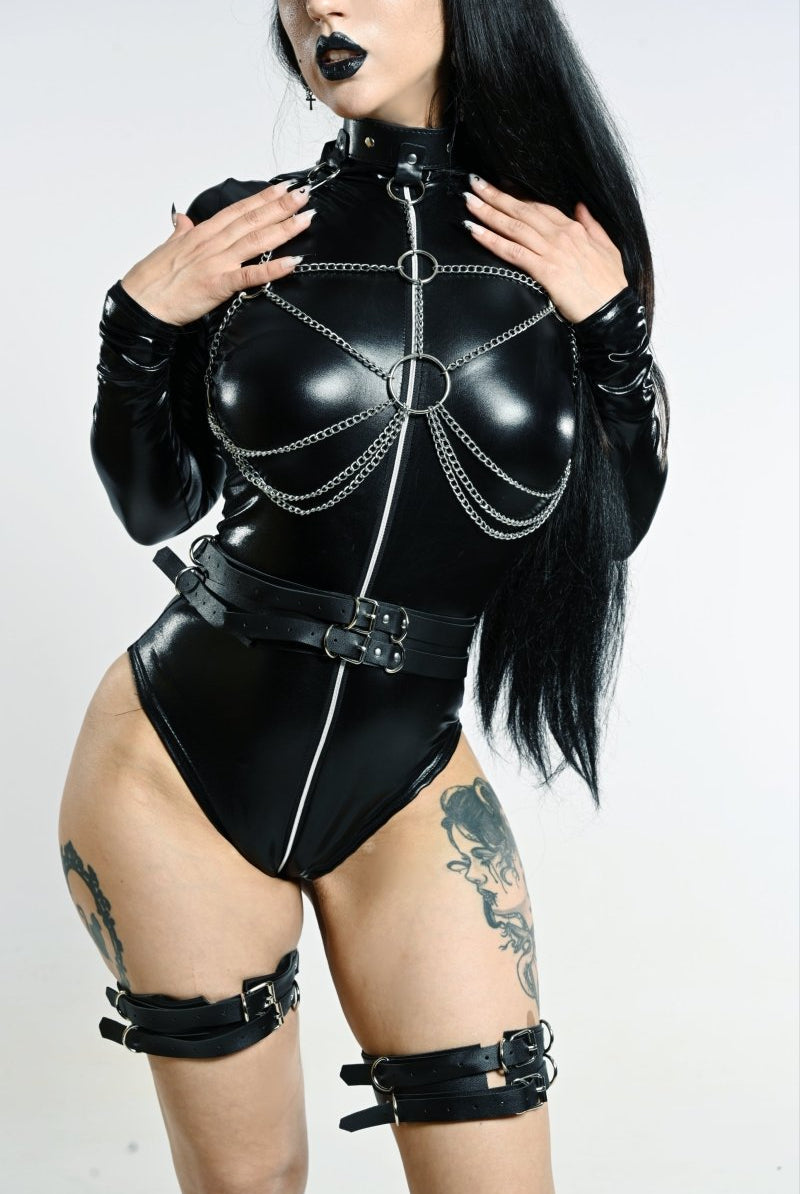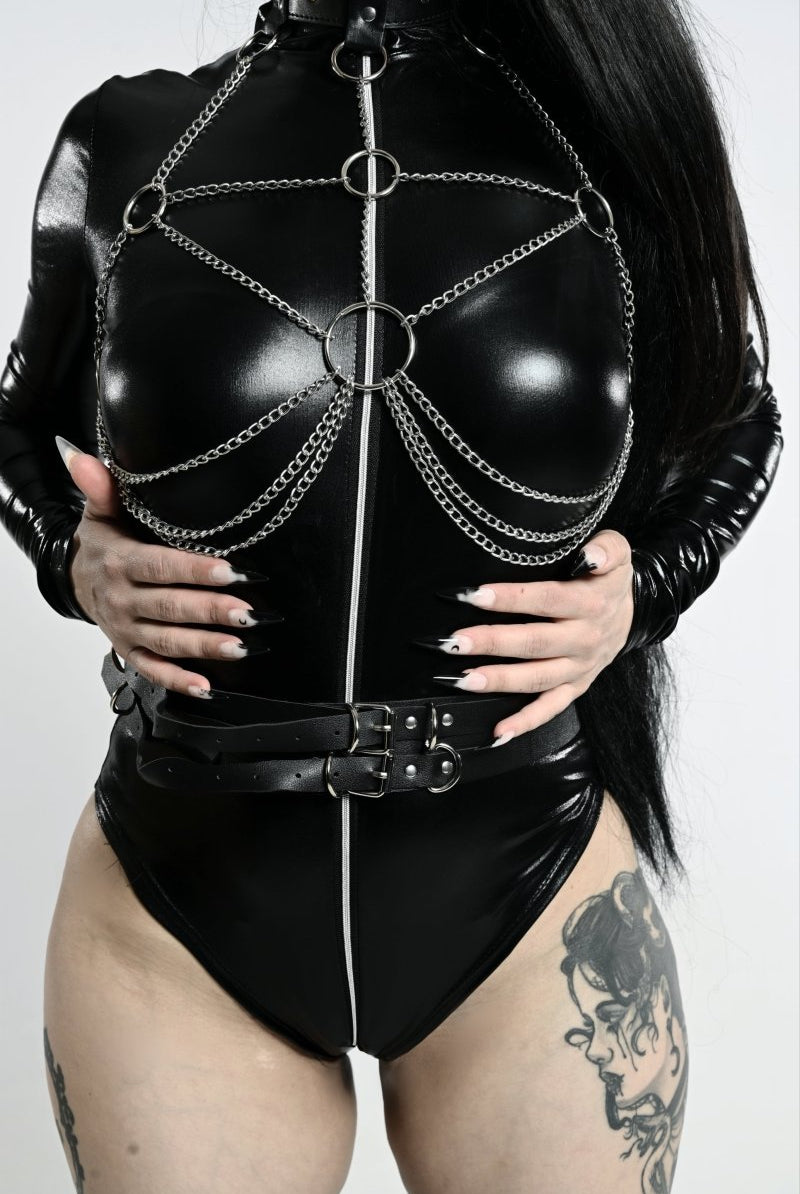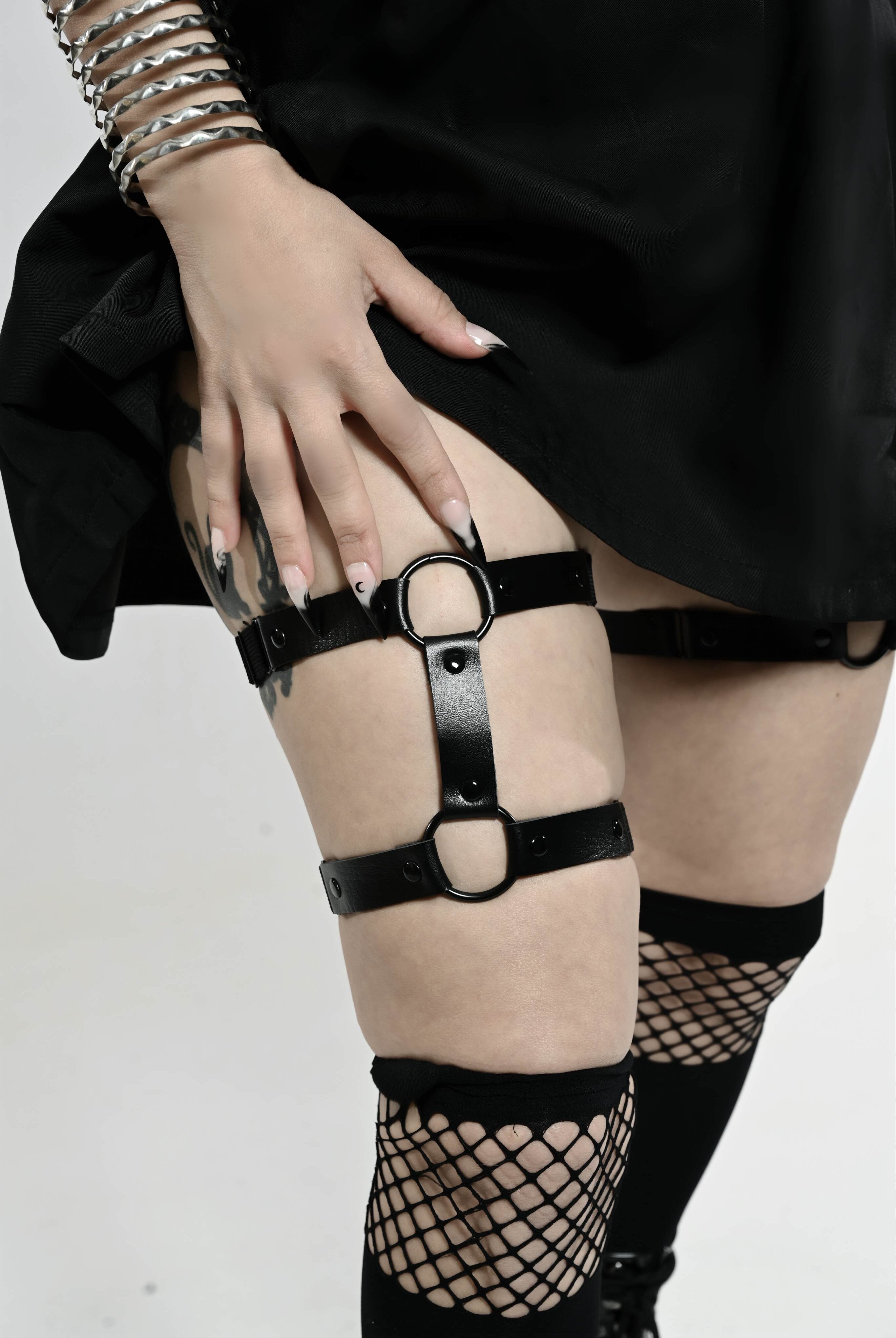
Mall goth is the style that grew up in American shopping malls in the late 1990s and reached its widest audience in the early 2000s: wide black trousers, often with straps and chains, a band T-shirt, a choker, platform boots and dyed hair, most of it bought at chains such as Hot Topic. Its music was nu metal and industrial metal rather than goth's own records, which is why the name began as an insult.
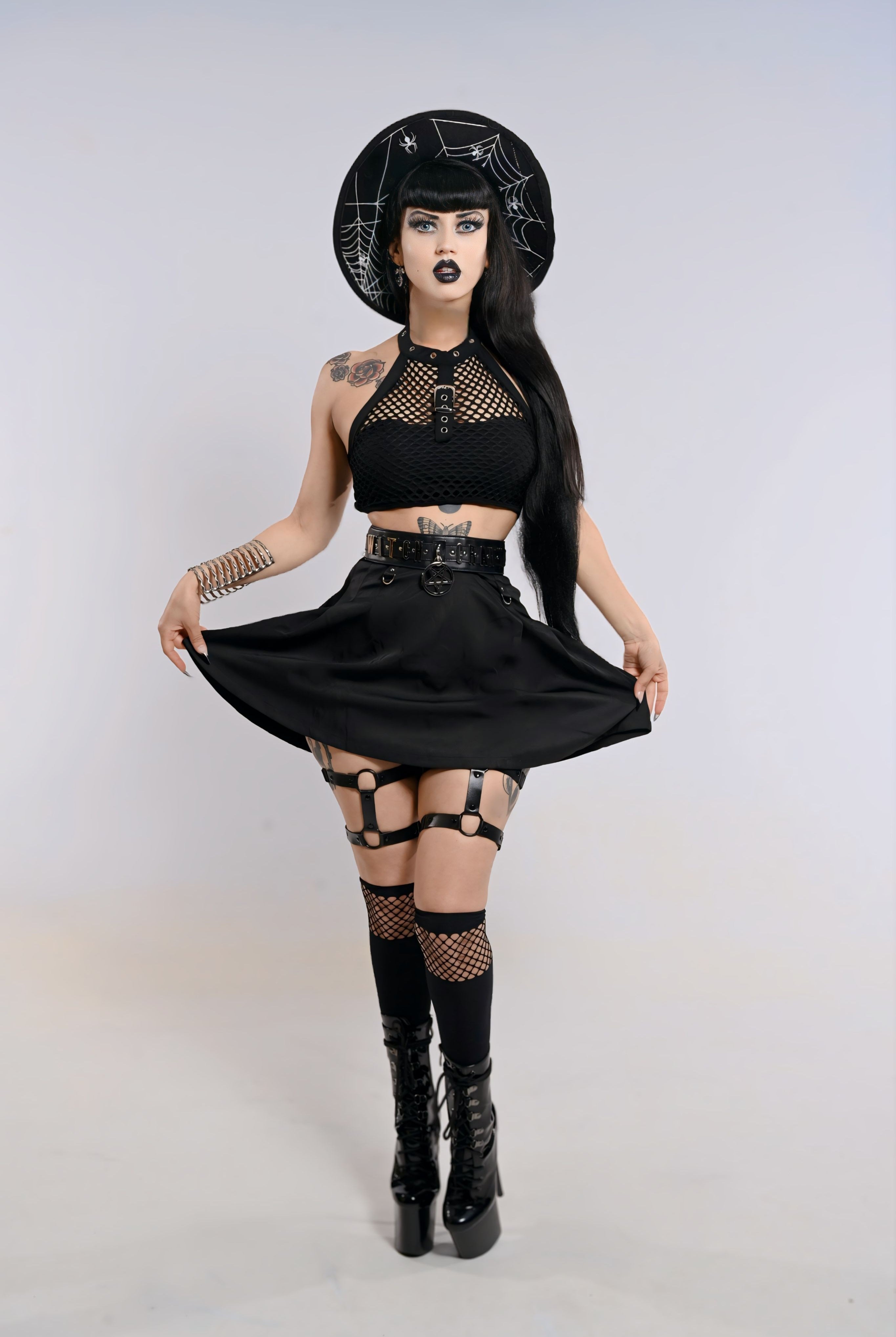
The revival kept mall goth's proportions and dropped most of its uniform: wide trousers, a small top and metal at the neck, without the band merch. That is the version on this page. We sell the proportion and the hardware, and leave the bondage straps, fishnet and neon to punk and the club, so below you will find what mall goths wore, which parts we do and do not carry, and three outfits built from what we stock, each with its sizes and prices.
Key Takeaways
- Mall goth started in the US in the late 1990s and reached its widest audience in the early 2000s, when it drew close to emo and moved onto MySpace.
- The name started as an insult for people who bought the clothes without caring for the music. Mall goth's own music was nu metal and industrial metal: Korn, Slipknot, Rammstein, Marilyn Manson.
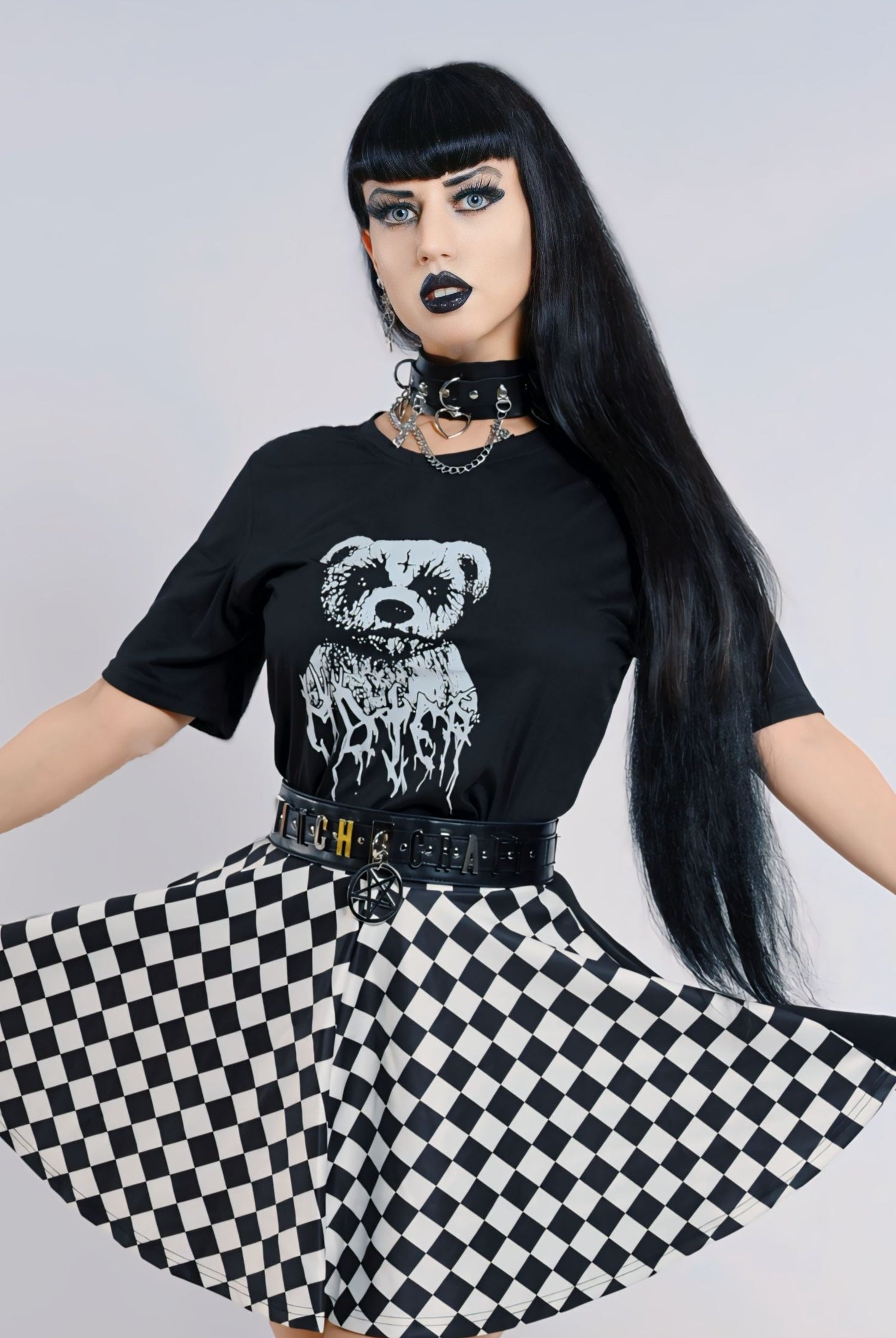
- The 2000s uniform was oversized black trousers, a band tee, chokers, striped tights, platforms and dyed hair.
- Worn now, it is a proportion: wide trousers, a short or close top and one strong piece of metal.
- Our wide trousers here run to XXL; for larger sizes, flare jeans to 4XL and a graphic tee to 5XL carry the same shape.
What is mall goth?
Mall goth is a subculture that began in the United States in the late 1990s, named for the shopping malls where its members spent their time and bought their clothes, Hot Topic in particular. Wikipedia's entry on mall goth gives it a second name, "spooky kids", and records that it built its own culture around nu metal, industrial metal, emo and that one store chain. Our guide to the types of goth counts it among the five types that grew out of a music scene, and the scene is what sets it apart.
The music behind it
Mall goth listened to metal, not post-punk. Wikipedia names Korn, Slipknot, Kittie and Mudvayne on the nu metal side and Rammstein, White Zombie and Marilyn Manson on the industrial side, and names Manson and Evanescence's Amy Lee as influences on the culture. That is the clearest line between mall goth and the trad goth of the early 1980s, which took its look from Bauhaus and Siouxsie and the Banshees and wore it to club nights.
Where the name came from
The name was meant to sting. To older goths, a mall goth was someone who had bought the look off a rail and skipped the records, and Wikipedia compares the word to "poseur". The founder of @1990smallgoth, an Instagram account that archives the look, told Dazed in 2019 that being called a mallgoth was the equivalent of being called a poser, a label for the kids who loved Marilyn Manson and bought Tripp trousers at Hot Topic. It stuck anyway, and it is now the name the style goes by.
Mall goth in the 2000s
Our guides follow goth decade by decade: trad goth for the 1980s, then the 90s goth guide, where mall goth first appears as one of five looks and where the story of the first Hot Topic is told. This page picks it up as it grew. Mall goth started in the late 1990s, but its widest reach came after: in the early 2000s, Wikipedia records, it "gained further notoriety in the mainstream", drew closer to emo and to bands such as My Chemical Romance, and moved online, to MySpace and PureVolume.
That overlap is why mall goth and emo are so often confused, and our guide to emo and goth separates the two. The friction with older goths ran through the same years. Many saw mall goth as fashion without the music, and some as goth turned into a product. Goth DJ and scholar Andi Harriman put the purist view plainly to Refinery29 in 2016: "Most Goths don't wear a lot of neon, face masks, or those over-the-knee stripy socks, basically anything Mall Goths wear."
What did mall goths wear?
Big black trousers, a shirt with a band on it, metal wherever it would fit and a pair of platforms. Wikipedia's account of the fashion lists:
- Trousers: oversized, from labels such as Tripp and JNCO, and in the revival, bondage trousers.
- Tops: oversized sweatshirts, with striped and checked prints.
- Metal and leather: chokers, pleather, lip rings and, in the revival, several wallet chains at once.
- Shoes: platform boots, chunky platform trainers such as Buffalo, creepers and Demonia.
- Hair and face: dyed hair, often with Manic Panic and sometimes in two colours, and heavy black eyeliner.
Here is how that wardrobe maps onto what we stock, and what we leave out.
| The 2000s piece | What we use instead | Where it is on this page |
|---|---|---|
| A band T-shirt | An oversized film or slogan tee, or another graphic tee | Outfits 1 and 3 |
| Wide trousers with straps and chains | Baggy trousers with buckles, no straps between the legs | Outfits 1 and 2 |
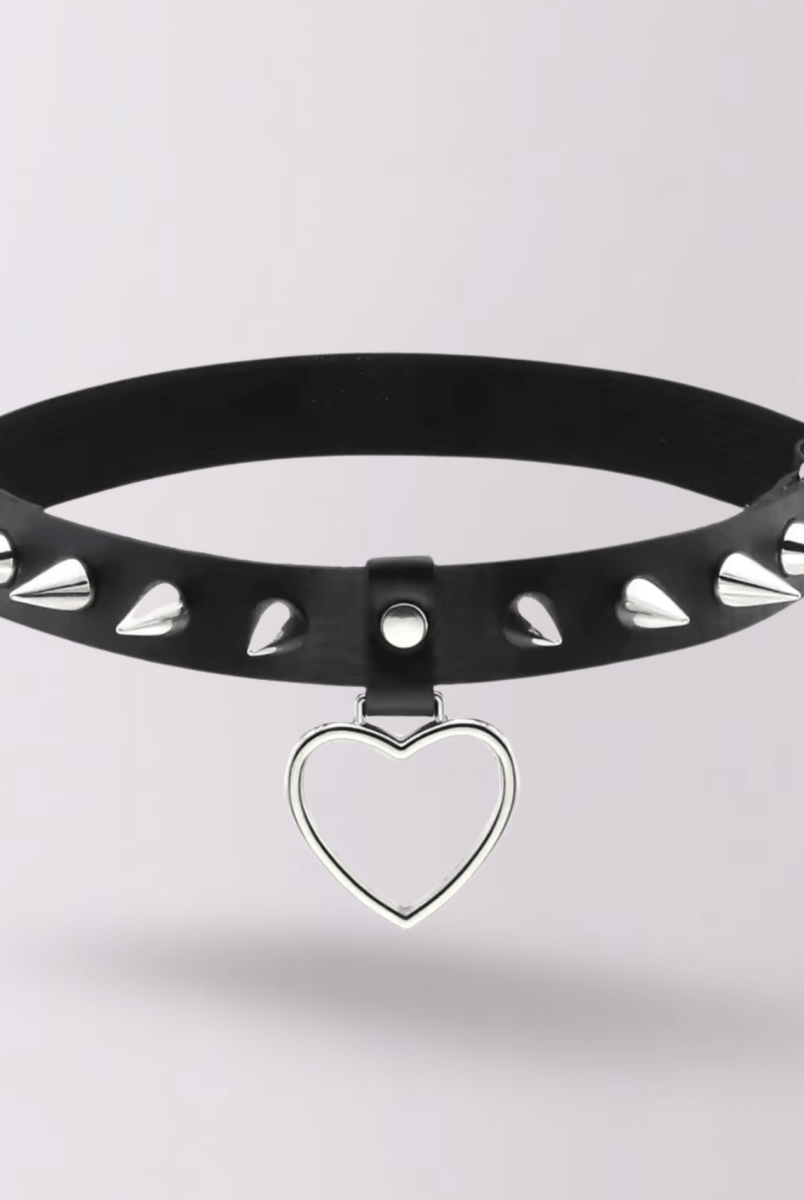
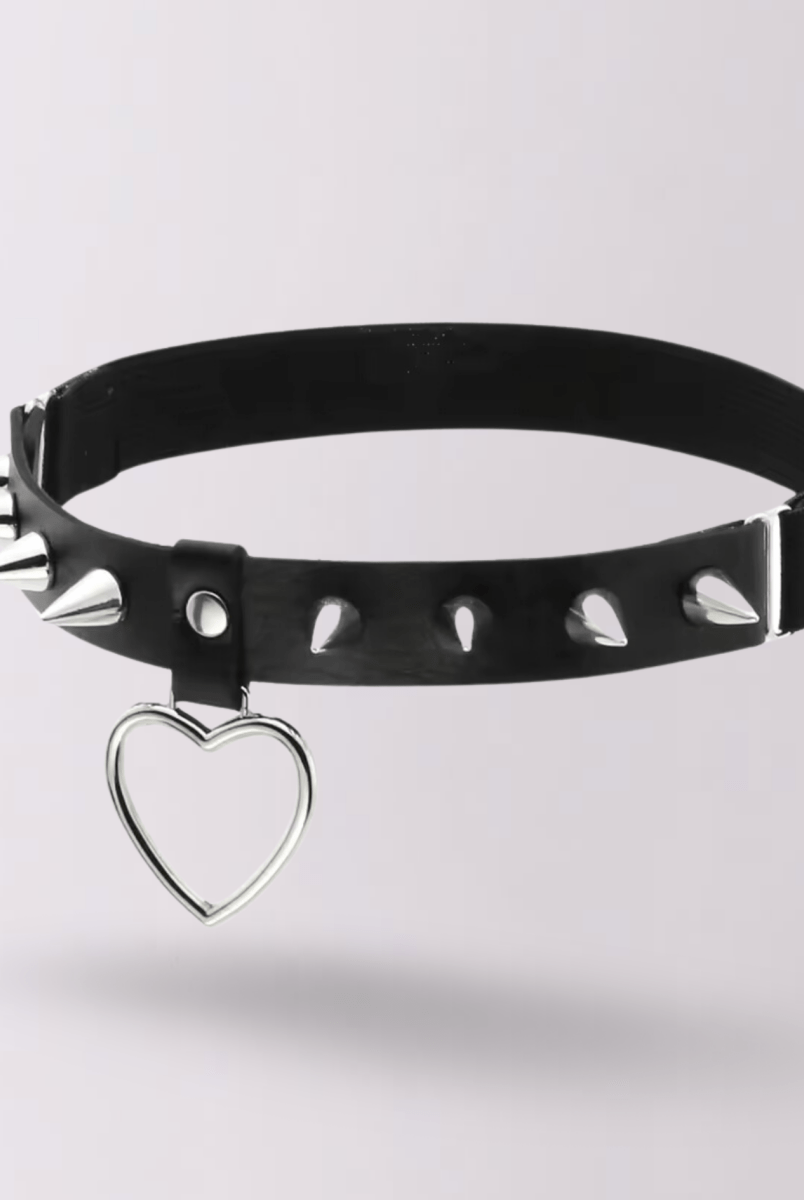
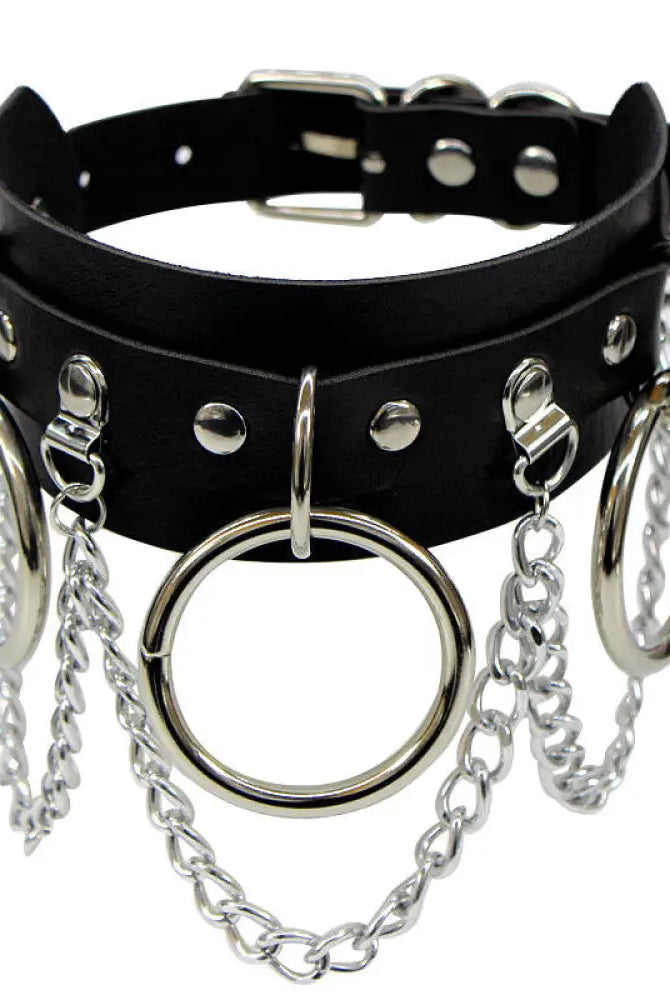
| Chokers and studs | A studded chain choker | Outfits 1, 2 and 3 |
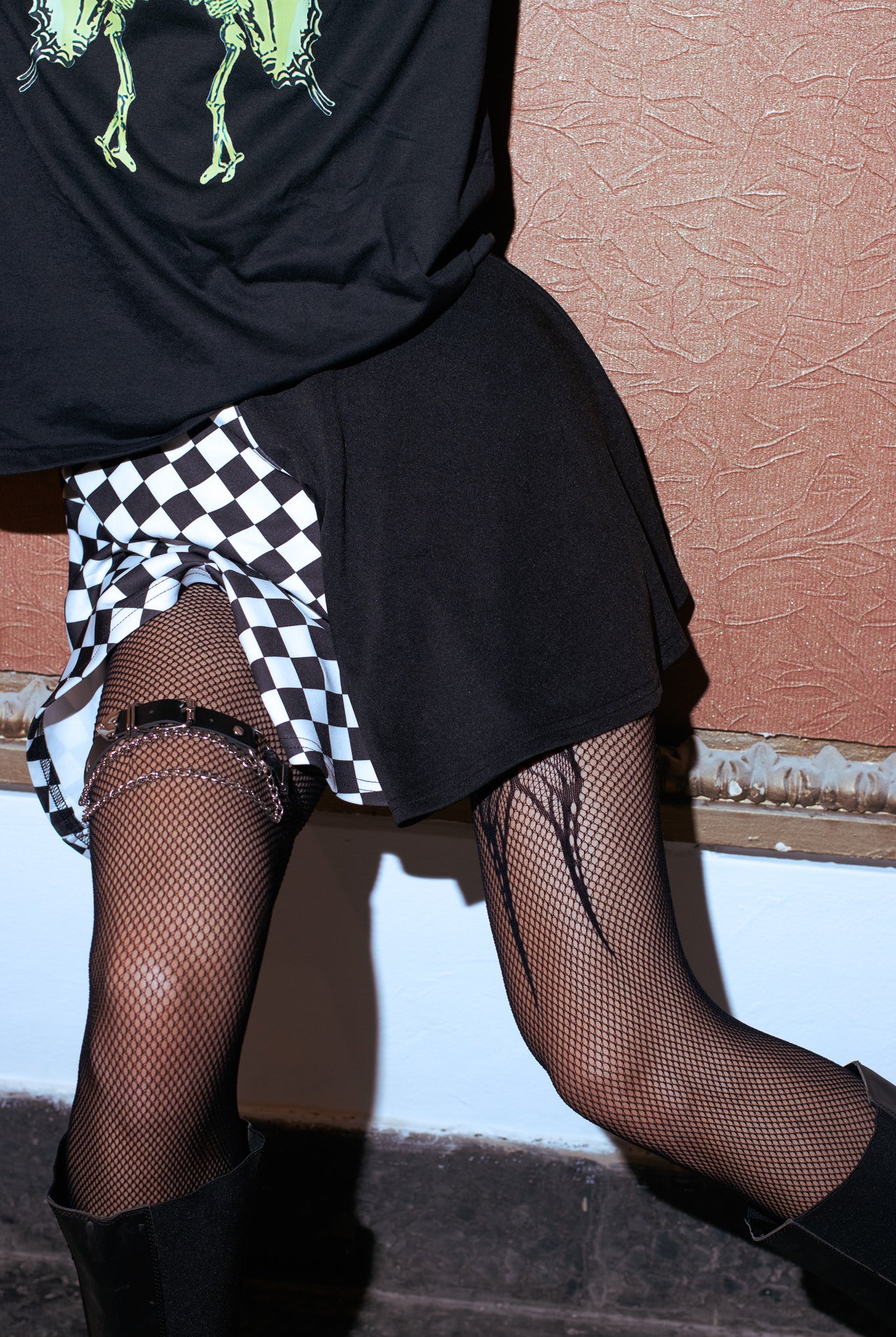
| Striped tights | Over-the-knee striped socks | Outfit 3 |
| Platform boots and trainers | Our shoe and boot guides | How is mall goth worn now? |
| Manic Panic hair, heavy liner | We sell no hair dye or make-up | |
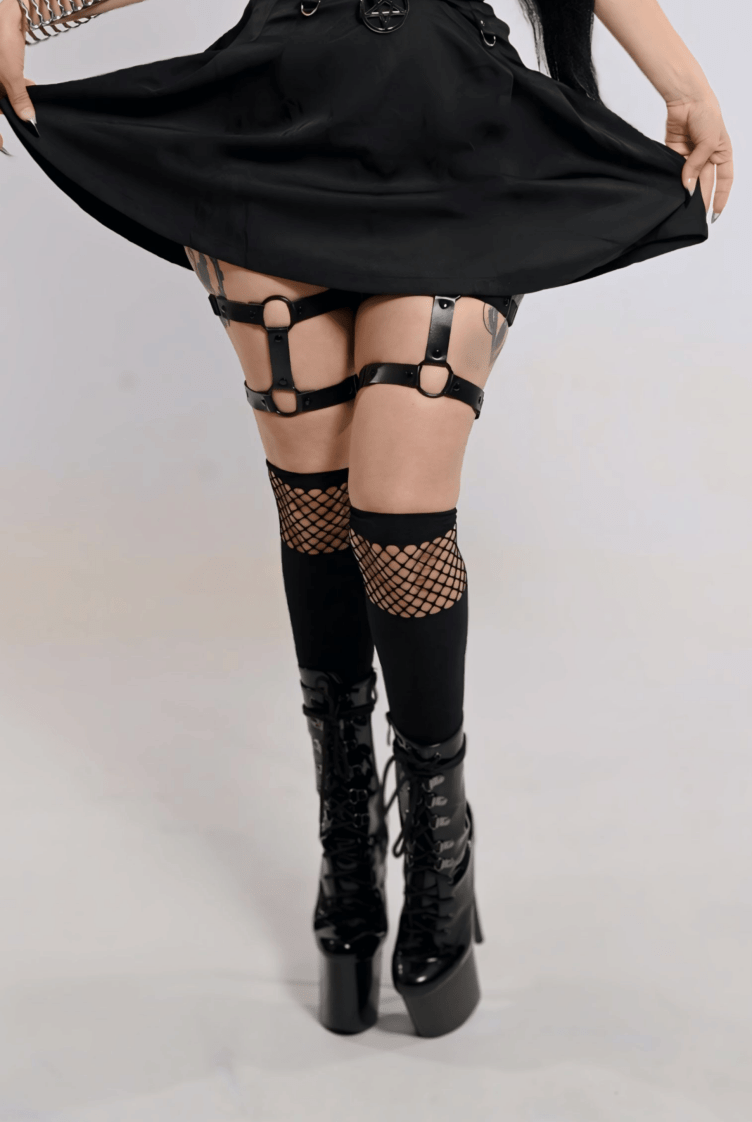
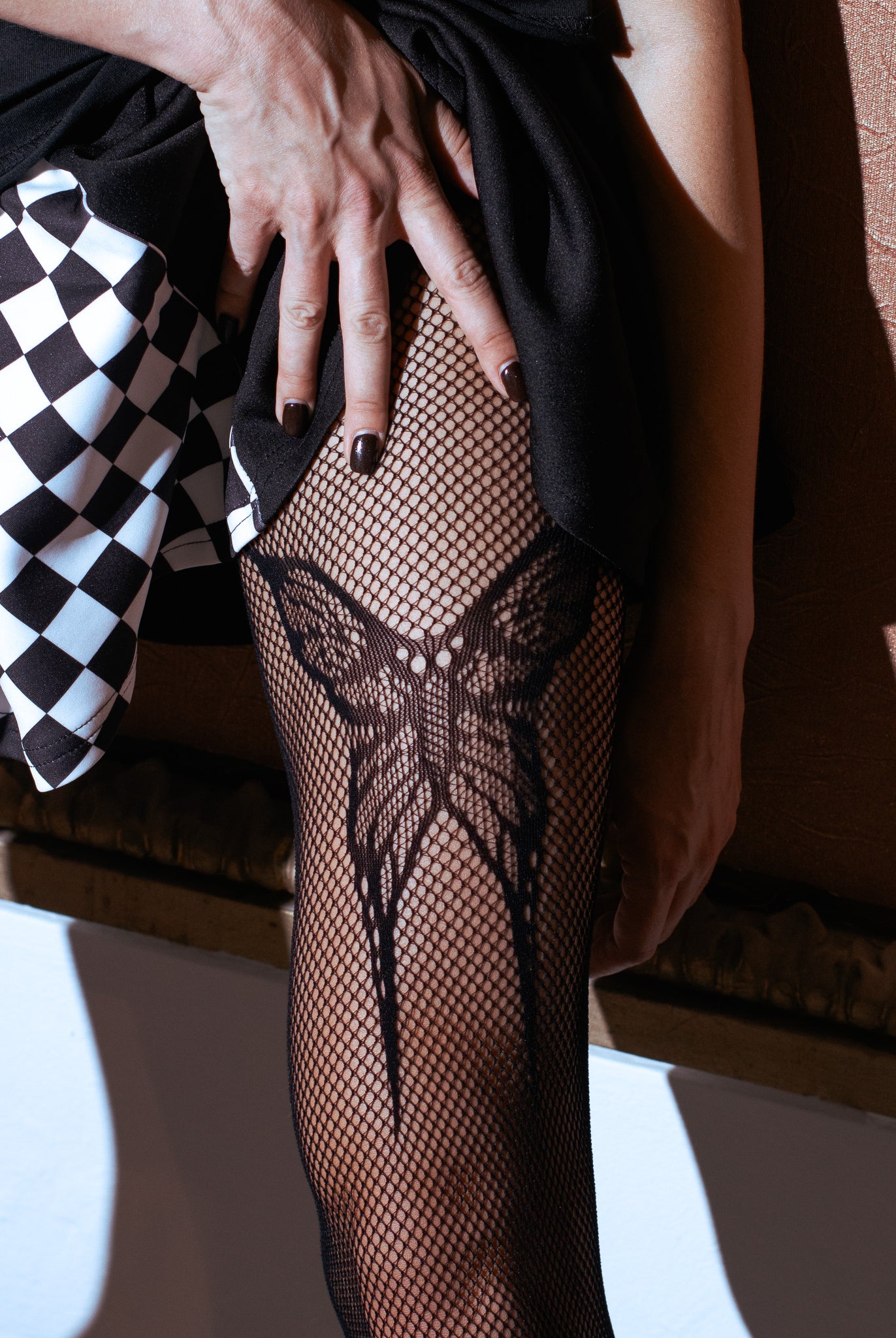
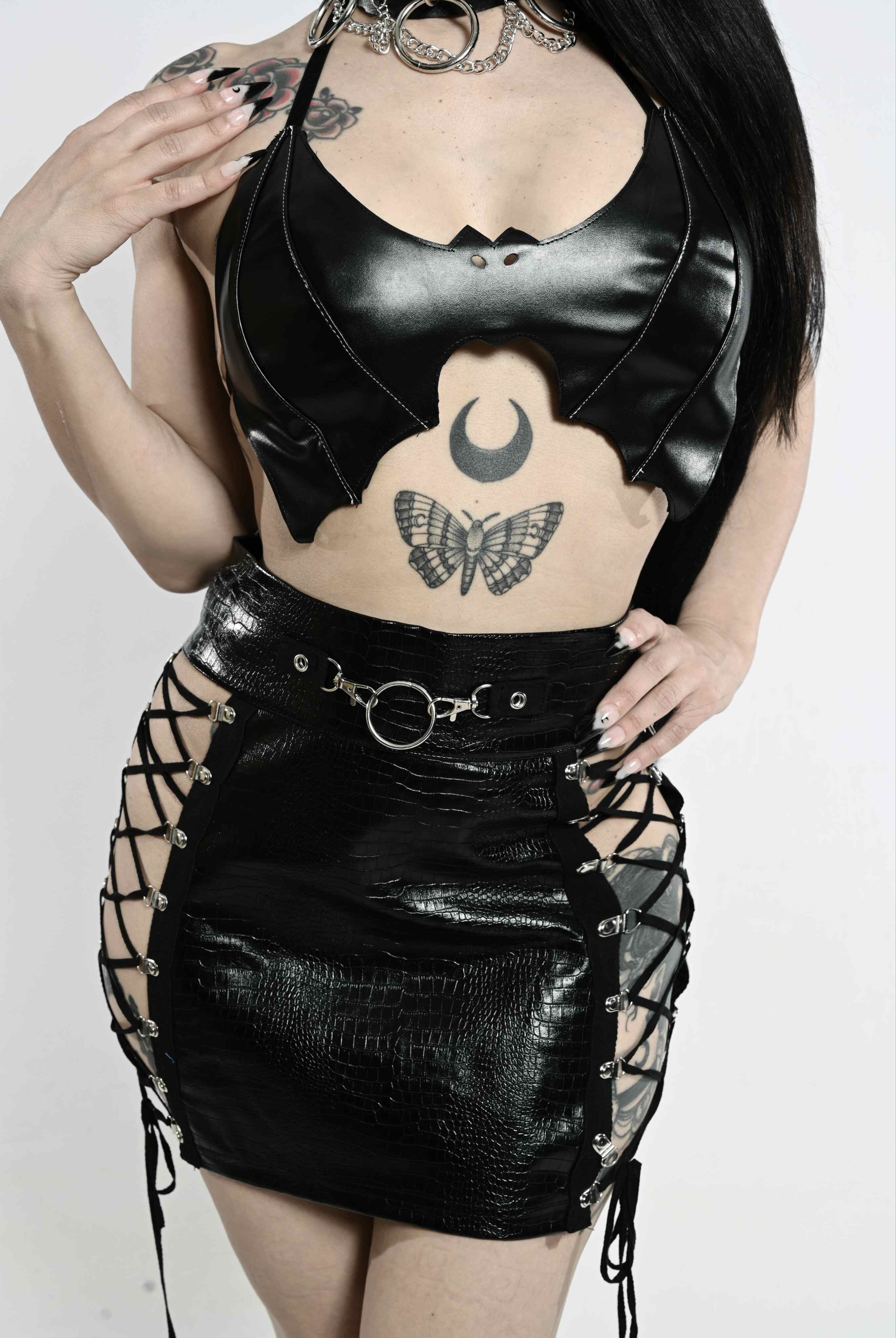
| Bondage straps, fishnet, neon | Left to punk and the club |
The band shirt itself is best bought from the band. Every other piece in the middle column is on our shelves.
How is mall goth worn now?
The revival began in the late 2010s. Wikipedia notes that Instagram accounts such as @1990smallgoth were credited with keeping it visible, quotes the fashion writer Isabel Slone calling Lil Uzi Vert's appearance at the 2018 Grammy Awards, in bondage trousers and several wallet chains, "perhaps the most visible moment of the mall goth revival", and records a further rise on TikTok in 2020. What changed was the balance of the outfit: it became common to wear baggy trousers with a small top, in step with the "big pants, little shirt" trend of the late 2010s and early 2020s.
That is what makes it wearable on an ordinary day rather than as fancy dress. Treat it as one proportion, not a checklist: wide trousers, a short or close top and one strong piece of metal. Add the platforms when you want the height, and our guide to goth platform shoes and creepers reads the heel and the sole for you.
Outfit 1: the band-tee uniform, without the band
This is the 2000s version, big on top and big below. The Nosferatu Tee is an oversized, drop-shoulder tee in a faded vintage wash, printed with the title of Bram Stoker's Dracula over a collage of film stills, $39.99 in S, M, L and XL. It does the band shirt's job: it tells people what you watch the way a Korn shirt told them what you listened to. If you would rather wear a joke than a film, the Hiss Warning T-Shirt prints "I hiss when approached" in blackletter on oversized 100% cotton, $54.99 in the same four sizes.
Below it go the Devilish Baggy Buckle Bottoms: baggy cotton and polyester trousers with buckle detailing, 98 to 102 cm long and 70 to 85 cm at the waist across the sizes. They come in S to XXL, at $32.49 in S and $56.33 from M up. Put the metal at the neck with the Studded Chain Leather Choker, studded faux leather and zinc alloy with a link chain, 42 cm long, $19.99 in black.
Outfit 2: big trousers, little top
This is the revival's shape. The Crypt Striped Cropped Goth Sweater is long-sleeved polyester cut 41 cm long in S to 43 cm in L, at $31.02 in S and $34.51 in M and L. It keeps the top short and brings in mall goth's stripes.
Put it over the Devilish Baggy Buckle Bottoms from outfit 1, where the buckles carry the hardware, and keep the metal at the neck to one piece: the studded chain choker. Above XXL, the grey flares in the larger-sizes section below take the trousers' place.
Outfit 3: the stripes Harriman meant
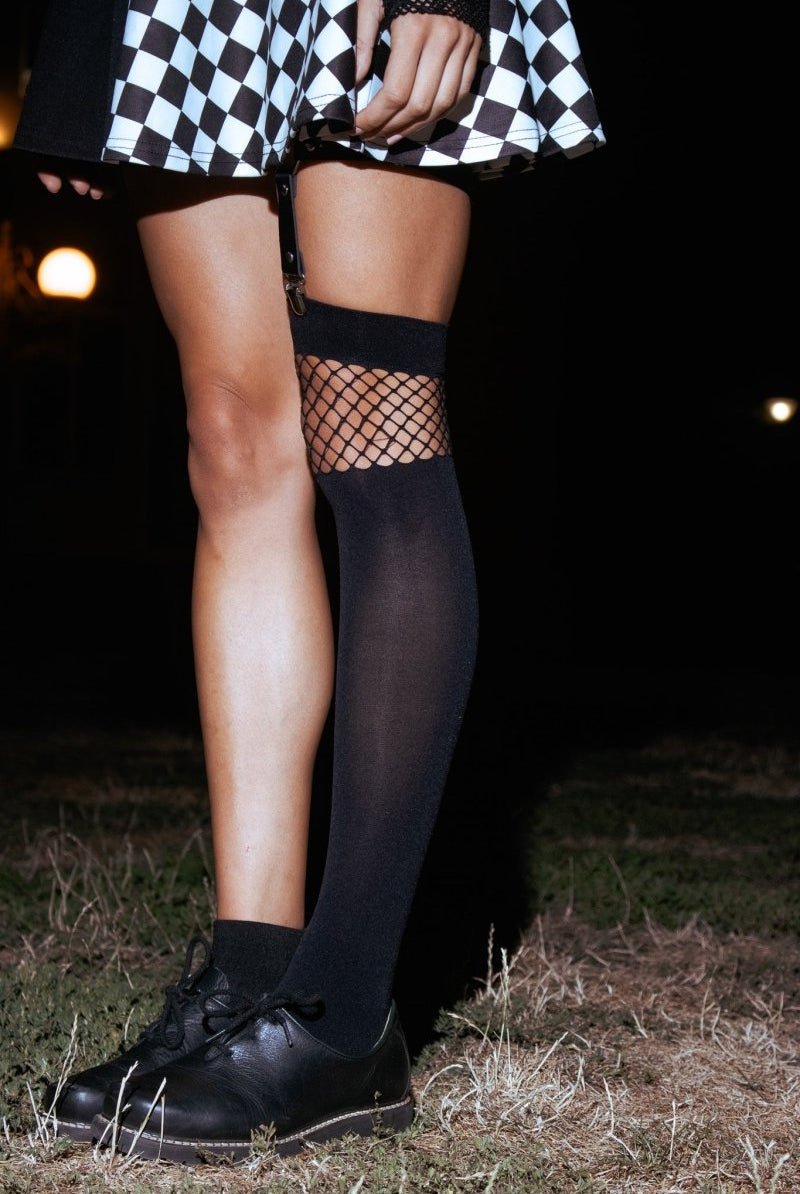
The over-the-knee striped sock is the piece Harriman singled out, so wear it on purpose. The Stripe Goth Knee Socks are white-striped, in cotton and nylon, about 52 cm long with no size options, $19.99. Show them with the Velvet Goth High Waist Shorts, which the listing describes as cotton corduroy with a button fly, 27 to 33 cm long, in S to 4XL, at $29.71 in S and $32.76 from M to 4XL.
On top, keep to one graphic. The Black Moon Phase Tee is cotton, short-sleeved, with a moon phase print, $32.32 in black in every size from S to 5XL. Add the studded choker from outfit 1 and you have the whole look in four pieces.
More trousers in the same shapes are in our trousers collection and our guide to goth pants; more chokers in the chokers and harness collection and our guide to chokers and collars.
Mall goth or Y2K goth?
Mostly the same wardrobe under a newer name. On the results page for "y2k goth", one first-page result is titled "Y2K Fashion Goth: Mall Goth Style", an Instagram post dates the look to the late '90s, and the searches people add are for trousers, shirts and clothing. So we read the two as one wardrobe with two names, which is our reading rather than a fixed definition. If you want the Y2K end of it, outfit 2, the small top over wide trousers, is the closest of the three. Striped socks and tights, chain belts and the rest of the accessories are in our guide to goth belts, tights and gloves.
Mall goth in larger sizes
The look rests on wide trousers, and ours stop sooner than we would like: the baggy trousers above go to XXL. For more room, Death's Miracle are grey flare jeans in cotton and polyester, sized on the listing by weight from XS (38 to 43 kg) to 4XL (80 to 90 kg), at $31.37 in XS and $36.71 from S to 4XL. A flare carries the same wide line from the knee down.
The other pieces, honestly: the Black Moon Phase Tee runs to 5XL and the corduroy shorts to 4XL, and the striped socks have no size options and run about 52 cm long, so check that length against your leg before you count on them clearing the knee. The two tees in outfit 1 stop at XL, and the striped sweater at L. The 90s guide's mall goth outfit swaps its trousers for a plaid mini that runs XS to 5XL. Our plus-size goth guide covers fit across the store, and the plus-size collection holds what reaches the largest sizes.
Frequently asked questions
What is the difference between goth and mall goth?
The music and the shop. Goth grew out of post-punk records and club nights of the late 1970s and 1980s; mall goth grew out of nu metal and industrial metal in the late 1990s, and was bought at mall chains. The clothes overlap on black, chokers and platforms, but mall goth's trousers are wider and it wears stripes and checks.
Why is it called mall goth?
Because its members spent their time in shopping malls and bought their clothes there, from Hot Topic above all. The word was first used against them by older goths, as a way of saying they had bought the look without the culture.
Is mall goth poser?
The word started out meaning exactly that: the founder of @1990smallgoth told Dazed in 2019 that it was the equivalent of being called a poser. Since then it has become the name of a style in its own right. Wikipedia records both views: some describe mall goth as part of goth, others as a separate subculture influenced by it.
Can I dress goth without being goth?
Yes. Mall goth is the proof: it was named for people who wore the clothes before, or instead of, the records. Wear what you like and listen to what you like, and if you want a starting point, our types of goth guide shows which looks came from which scene.
Start with the wide trousers and one choker. The rest of the 2000s can follow, or not.